
具体描述
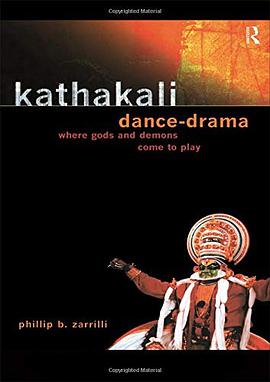
Kathakali, the distinctive and colourful dance-drama of Kerala in South-West India, is brought to life on the page for the first time in this unique book. During these performances heroes, heroines, gods and demons tell their stories of traditional Indian epics. The four Kathakali plays included in this anthology, translated from actual performances into English are: The Flower of Good Fortune The Killing of Kirmmira The Progeny of Krishna King Rugmamgada's Law One of the few books published on this genre, and based on extensive first hand research, the book: explores Kathakali's reception as it reaches new audiences both in India and the west includes two cases of controversial of Kathakali experiments explores the implications for Kathakali of Keralan politics Each play has an introduction and detailed commentary and is illustrated by stunning photographs taken during performances. A comprehensive introduction to Kathakali stage conventions, make-up, music, acting, and training is also provided, making this an ideal volume for both the specialist and non-specialist reader.
作者简介
Phillip Zarrilli was appointed Professor of Drama in 2000. As the faculty expanded, and other professors were appointed, Zarrilli's title was altered to Professor of Performance Practice to better reflect his extensive experience and research in intercultural performance and contemporary acting practice. In 2013 Zarrilli became Emeritus Professor of Performance Practice. Although he will no longer be teaching Undergraduate or Masters Level modules, he will contribute to the student experience through occasional strategic events, special lectures or workshops in which he shares his current professional work within the Department.
Prior to joining the faculty at Exeter, he was Professor of Theatre, Folklore, and South Asian Studies at the University of Wisconsin-Madison for many years. He has also taught at U.C.L.A., Northwestern, N.Y.U, and the University of Surrey.
Zarrilli is internationally known as a director, actor, and actor trainer. At this stage in his life, he is devoting his time to his work as Artistic Director of The Llanarth Group (founded in 2000), as a professional free-lance director, to intensive teaching either at his private studio in Wales or at several well known professional actor/performer training programmes in the world, and to continuing to reflect on and write about acting and performance.
Zarrilli has developed a unique, intensive pre-performative process for training actors which combines form training selected from the practices of yoga and Asian martial arts—kalarippayattu from Kerala, India, and taiqiquan Wu style from China. He teaches this pre-performative process of training actors at his private studio in Wales, and throughout the world. He regularly teaches and directs at the Intercultural Theatre Institute (Singapore) and the Norwegian Theatre Academy. Other recent residencies include the Lyceum (Athens/Epidavros Festival, Greece), Taipei Arts Festival, the BEYOND Intercultural dance festival/programme (ICK Amsterdam), Malta Arts Festival, Pas de Dieux Physical Theatre (Paris), Escrita na Paisagam Festival (Evora, Portugal), BITE Festival (USA), KNUA (Seoul, Korea). His book about this process of training, Psychophysical Acting: an intercultural approach after Stanislavski (Routledge Press, 2009) received the 2010 ATHE Outstanding Book of the Year Award at the ATHE convention in Los Angeles, August, 2010. The book was published in Mandarin translation as part of Zarrilli’s residency as a guest director at the 2014 Taipei Arts Festival. His training is also featured in the Practitioner series as part of the Routledge Digital Archive.
THE LLANARTH GROUP
When he moved to the UK in 2000, he established THE LLANARTHGROUP and the Tyn y parc CVN Kalari/Studio in West Wales. The Llanarth Group is an association of theatre/performance artists dedicated to producing international theatre of the highest quality through in-depth psychophysical training of actors from all cultures. Each production brings together a specific group of collaborators relevant to the aesthetic of a specific project. Small scale collaborations and new work are developed, rehearsed, and shared with local audiences (in preview free of charge) at the Ty’n y parc studio in West Wales. The work is created for audiences in Wales, the UK and beyond, and invites intercultural sharing of techniques, approaches to, and aesthetics of performance. Kaite O'Reilly is resident dramaturg for new work/collaborations.
The work of The Llanarth Group includes productions across a wide variety of aesthetics and dramaturgies, including:
2018 richard III redux OR Sara Beer [IS/NOT] Richard III, co-written with Kaite O’Reilly, Directed by Phillip Zarrilli, featuring Sara Beer. World premiere, March, 2018 and on tour in Wales, and on tour to Germany.
2018 And Suddenly I Disappear: The Singapore/UK ‘d’ Monologues by Kaite O’Reilly, Directed by Phillip Zarrilli, co-produced with Access-Pathways Productions (Singapore)—a Kaite O’Reilly Unlimited International commission.
2016: World premiere of Kaite O’Reilly’s Cosy. An Unlimited production in association with Wales Millennium Centre. Premiere: 08 March, with a tour of Wales.
2015 playing ‘the maids’: a creative response to Jean Genet’s the Maids, this entirely new co-created work is co-created with Gaitkrash (Ireland), Theatre P’yut (Korea) and two independent artists. Premiered at Chapter Arts Centre, Cardiff. Funded by Arts Council of Wales. Features four performers who are Exeter graduates including Jeungsook Yoo, Sunhee Kim, Jing Hong Okorn-Kuo, and Bernadette Cronin, as well as current faculty member, Adrian Curtin. Directed by Phillip Zarrilli. Dramaturg: Kaite O’Reilly
2012 The Echo Chamber: co-created by Kaite O’Reilly, Ian Morgan, Peader Kirk, and Phillip Zarrilli with Arts Council of Wales funding. Premiered at Chapter Arts Centre, Cardiff. (www.youtube.com/watch?v=fpSoq-qPvnI)
2010-2016 (continuing to tour on invitation) Told by the Wind: East Asian inspired work co-created by Kaite O’Reilly, Jo Shapland, and Phillip Zarrilli with funding from Arts Council of Wales and AHRC. Previewed at Evora Festival Portugal (2009) and has toured to Berlin, Chicago, Wroclaw, and most recently in 2013 to Tokyo Theatre Babylon. (http://vimeo.com/20741448).
2010 The Evora Books: a library of hands: commissioned by Escrita na Paisagem Festival de Performance e Artes da Terra, Evora, Portugal (curated by Jose Alberto Ferreira). Co-created by Phillip Zarrilli and Kaite O’Reilly. A site-specific performance at the Evora Library Reading Room.
2000-2012 (continuing to tour on invitation): The Beckett Project: productions of eight of Beckett’s 20 plays from 2000. Most recently: Play+ at Cork Opera House; Happy Days and 4shorts: on invitation of the Malta Arts Festival, 2012).
OTHER RECENT INTERNATIONAL WORK AS A DIRECTOR
2018: Beckett’s Footfalls and Play The National Theatre, Costa Rica, and in 2017 with The National Theatre Company, Costa Rica.
2015: Directed a major new production of Ota Shogo’s The Water Station with an international cast. Nordland Teater and on tour in Norway. Premiered 24 September.
2014 (and 2016) Invited Guest Director to the Taipei Arts Festival. Directed the world premiere of Kaite O’Reilly’s the 9 fridas with Mobius Strip Theatre in association with Hong Kong Rep. In October 2016 the production was re-rehearsed and performed at the Hong Kong Rep as part of the International Black Box Festival.
2010-2011: ...sweet...dry...bitter...plaintive' (Corpo-realities commission, 2010, also performed at the Manchester DECIBEL Festival, 2011). A Sankalpam production performanced at Laban Theatre, London, and on national tour throughout the UK.
2006: 4:48 Psychosis at KNUA (Seoul, Korea).
2004: The Dance of The Drunken Monk. A Sankalpam performed at the Percell Room, South Bank Centre, and on UK national tour.
1999-2008: Collaborations with bharatanatyam choreographers/dancer, Gitanjali Kolanad: Walking Naked and The Flowering Tree with Gitanjali Kolanad, 1999-2008 [premieres in Chennai, performances inToronto, UK, and world-wide].
2004 & 2008: Directed The Water Station and Attempts on her life in Singapore at Esplanade Theatres on the Bay for TTRP/ITI.
RESEARCH AND PUBLICATIONS
Zarrilli continues to be active as an author/researcher and regularly publishes essays and books.
Forthcoming from Routledge Press: a new sole authored book with Routledge Press, '[Toward] a Phenomenology of acting'. This new book will further his considerations of acting/performance from phenomenological perspectives, also informed by dynamic systems theory of cognitive science.
Forthcoming from Routledge Press: co-edited with T. Sasitharan and Anuradha Kapur, ‘Intercultural Acting and Actor/Performer Training’. An expanded version of the 2017 special issue of TDPT with the same title.
2010-2018 In 2010 Zarrilli was invited to join The International Research Institute, ‘Interweaving Performance Cultures’ at Freie Universitat, Berlin, as a Fellow. Since 2010 he has been resident in Berlin annually or bi-annually between one and three months. In 2012 he worked with the IRC on co-planning two international symposia on ‘Actor Training: Intercultural and Interdisciplinary Perspectives’—the first at ITI in Singapore in 2012, and the 2nd in Berlin later in 2013.
Zarrilli also gives either keynote addresses or special lectures. In 2018-19 he will give lectures at Exeter University and Birmingham University.
目录信息
读后感
用户评价
当我拿到《Kathakali Dance-Drama》这本书时,我脑海中浮现的画面是那些在舞台上用鲜艳的色彩和夸张的面具演绎着古老神话的舞者。我期待这本书能为我揭开卡塔卡利神秘的面纱,让我不仅仅是看到表面的热闹,更能深入理解其背后深厚的文化底蕴。我想知道,这种舞蹈形式是如何形成的?它的历史可以追溯到哪个时期?在漫长的发展过程中,它又经历了哪些重要的变革和演变?我更关心的是,卡塔卡利舞蹈是如何将文字、音乐、表演融为一体的。它是否有着一套严谨的程式化体系?每一位舞者是否都经过了严格的训练?书中是否会详细介绍不同角色(如神、魔、英雄)在妆容、服饰和表演风格上的差异?我希望这本书能够帮助我建立起一个关于卡塔卡利舞蹈的系统性认知,让我能够欣赏其艺术的独特性,并感受到它作为一种文化载体的独特价值。
这本书的封面设计就足够引人入胜,那是一种我从未见过的视觉冲击力。厚重的纸张,印刷精美的封面,似乎预示着里面有着不凡的内容。我迫不及待地想要知道,究竟是什么样的故事,能用如此华丽而复杂的舞蹈形式来呈现。我猜想,书中或许会深入探讨卡塔卡利的表演技巧,比如那些经过千年传承的独特手势(Mudras)、表情(Abhinaya)和步法。我非常想了解,演员们是如何通过这些非语言的元素,来表达人物的情感、性格,甚至是内心深处的冲突。同时,我也对卡塔卡利舞蹈所承载的传统故事感到好奇。它们是源自古老的史诗、神话,还是民间传说?这些故事是否反映了印度人民的价值观、道德观,或者他们对宇宙的理解?我希望这本书能够带我走进一个充满想象力与象征意义的世界,让我领略到卡塔卡利作为一种活态艺术的生命力,以及它在传承文化基因方面的重要性。
坦白说,《Kathakali Dance-Drama》这个书名一开始并没有立刻抓住我的眼球,因为它听起来比较学术化,我担心会是一本枯燥的理论书籍。然而,当我翻阅其中几页时,我被书中展现出的视觉效果深深吸引了。那些精美的插图,栩栩如生地描绘着卡塔卡利舞者的每一个细节,从他们那华丽的头饰、复杂的妆容,到他们每一个充满张力的身体姿态。我开始意识到,这本书可能不仅仅是关于理论的探讨,更是一次视觉的盛宴。我非常希望它能解释清楚,卡塔卡利舞蹈为何能够如此生动地传递故事和情感。它是否有着一套独特的叙事语言?这些色彩和面具背后又蕴含着怎样的象征意义?我渴望了解,是什么样的文化土壤孕育了如此独特而富有表现力的艺术形式,以及它在现代社会中是否依然保持着它的生命力和影响力。
这本书的名字叫《Kathakali Dance-Drama》,但说实话,我拿到书的时候,内心是带着一丝忐忑的。我一直对印度舞蹈有所耳闻,但卡塔卡利(Kathakali)这个名字对我来说,更像是一个遥远而神秘的传说。翻开书页,扑面而来的是一种浓郁的异域风情,但具体它讲了什么,我一开始并没有太明确的概念。我抱着一种探索未知的态度,试图去理解书中描绘的那些色彩斑斓的面具、夸张而富有力量的肢体语言,以及那些似乎蕴含着古老故事的故事情节。我期待能从文字和可能的插图中,感受到卡塔卡利舞蹈的独特魅力,了解它的起源、发展,以及它在印度文化中扮演的角色。我很好奇,这种被描述为“用肢体讲述故事”的舞蹈形式,究竟是如何实现的?它背后是否有深刻的哲学或宗教含义?这本书能否让我这个对卡塔卡利一无所知的人,也能感受到它的艺术价值和文化深度,甚至激起我对亲身观看一场卡塔卡利演出的渴望?这都是我阅读这本书之前,内心深处充满疑问的地方。
在拿到《Kathakali Dance-Drama》这本书之前,我对卡塔卡利舞蹈的了解可以说微乎其微,它对我来说是一个完全陌生的概念。我唯一能联想到的,是那些电视纪录片里零星闪过的、全身涂满色彩、戴着奇特面具的表演者,他们的动作似乎很缓慢,但又充满了力量。因此,我带着一种纯粹的好奇心去阅读这本书,希望能填补我知识上的空白。我希望书中能够以一种非常易懂的方式,介绍卡塔卡利舞蹈的基本要素,比如它的起源,它通常表演的故事类型,以及它与印度其他传统表演艺术的区别。我尤其想知道,卡塔卡利表演者是如何通过他们身体的每一个微小动作,来传达复杂的情感和故事情节的。这本书能否帮助我理解,为什么这种古老的舞蹈形式至今仍然能够吸引观众,它是否具有跨越时空的魅力,以及它对于现代观众来说,又意味着什么?