
具体描述
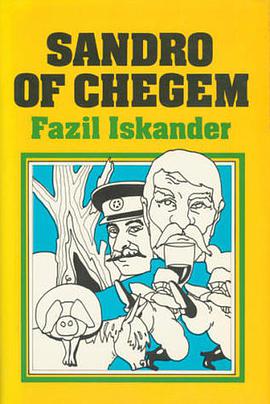
"Of all the writers in the USSR, Fazil Iskander (born 1929) is surely the one whose works can best survive translation and cultural export. One can easily imagine him becoming a best seller in this country. This is somewhat paradoxical, because, though he writes in Russian, Iskander comes from a tiny nation that few Americans have ever heard of—Abkhazia. This so-called republic lies beside Georgia on the Black Sea. As the world will discover sooner or later, Iskander is the Gabriel García Márquez of Abkhazia. The major work of Iskander's life is a novel called Sandro of Chegem. In a series of semi-independent tales, Iskander tells the 80-year story of Uncle Sandro from the 1880s to the 1960s—and Sandro's story is also the story of the Abkhazian people, with all their customs, superstitions, passions, and sufferings. In Iskander's case regionalism is not a barrier to understanding, because there is an epic, universal quality to his writings.…"
—Carl R. Proffer, The New Republic
作者简介
He was arguably the most famous Abkhaz writer, renowned in the former Soviet Union for his vivid descriptions of Caucasian life, mostly written in Russian. He has written various stories, most famously "Zashita Chika", which star a crafty and likable young boy named "Chik".
The most famous intellectual of Abkhazia, he distanced himself from the Abkhaz secessionist strivings in the late 1980s and criticised both Georgian and Abkhaz communities of Abkhazia for their ethnic prejudices. He warned that Abkhazia could become a new Nagorno-Karabakh.
He was probably best known in the English speaking world for Sandro of Chegem, a picaresque novel that recounts life in a fictional Abkhaz village from the early years of the 20th century until the 1970s, which evoked praise for the author as "an Abkhazian Mark Twain." Mr. Iskander's humor, like Mark Twain's, has a tendency to sneak up on you instead of hitting you over the head. This rambling, amusing and ironic work has been considered as an example of magic realism, although Iskander himself said he "did not care for Latin American magic realism in general". A section of the novel dealing with Sandro's encounter with Joseph Stalin was made into the Russian film Baltazar's Feasts, or a Night with Stalin in 1989.
Iskander lived in Moscow and was a writer for the newspaper Kultura.
目录信息
读后感
用户评价
读到《Sandro of Chegem》这本书,仿佛被一股陈年的、带着阳光味道的叙事洪流席卷。故事的开篇就以一种别样的节奏展开,不是那种直奔主题的紧凑,而是如同老者娓娓道来,将你一步步引入一个充满地域风情的世界。主人公桑德罗,他并非那种传统意义上的英雄,没有惊天动地的壮举,但他的存在本身就散发着一种古老而顽固的生命力。作者对细节的描绘,那些关于衣物、食物、甚至是空气中飘荡的尘埃的刻画,都极其生动,让人仿佛置身于那个遥远的、被时光打磨过的角落。书页翻动间,你能感受到一种深深的文化根基,一种根植于土地、根植于人性的故事。它不像那些快餐式的读物,读完就忘,而是会让你在合上书本后,依然回味无穷,思考其中蕴含的关于生活、关于存在的哲学。那种质朴而又深沉的叙事力量,是现代文学中难得一见的。
这本书带来的冲击,远不止于一个故事,更像是一次深入骨髓的体验。桑德罗这个人物,他身上的某种特质,一种近乎顽石般的坚韧,还有那种对生活最原始的执着,让人既感到陌生又莫名的熟悉。作者在刻画他时,没有回避他身上那些粗粝、甚至是不完美的地方,反而正是这些,让这个人物更加真实、更加立体,也更加令人难忘。我尤其喜欢作者对人物内心世界的描摹,那些看似不动声色的对话,往往蕴含着深邃的情感和复杂的思绪。这本书就像一个巨大的万花筒,每一次翻动,每一次阅读,都能从中发现新的色彩和图案。它挑战了我们对叙事的既有认知,用一种缓慢而有力的方式,揭示了生活本身的复杂性和深刻性。
初读《Sandro of Chegem》,我以为会是另一部普通的传记式小说,但很快,我就发现自己错了。作者的笔触有一种魔力,能够将那些平凡的日常,渲染得如史诗般壮阔。桑德罗的生命轨迹,并非一帆风顺,他经历的种种,有欢笑,有泪水,有得失,但贯穿始终的,是他那股不屈的意志和对生活的热爱。我被书中那些充满智慧的对白所吸引,它们像是古老的箴言,在不经意间点醒你的内心。这本书没有刻意制造戏剧性冲突,它的力量来自于对人性的细腻观察和深刻洞察。它让你在阅读中,不自觉地反思自己的生活,审视自己的选择。
《Sandro of Chegem》给予我的,是一种久违的阅读的厚重感。作者的文字如同陈年的佳酿,需要慢慢品味,才能体会其醇厚。桑德罗这个人物,他身上承载的不仅仅是他个人的故事,更是那个时代、那个地域的缩影。书中对社会变迁、人情冷暖的描绘,都显得那么真实而又充满力量。我欣赏作者不落俗套的叙事方式,他没有刻意去迎合读者的期待,而是遵循着自己内心的节奏,用一种真诚的态度去讲述。每一次阅读,都像是在与一位智慧的长者进行深度对话,受益匪浅。这本书填补了我内心深处对于一种纯粹、一种坚守的向往。
这本《Sandro of Chegem》简直是一次灵魂的洗礼。桑德罗的形象,不是那种一蹴而就的塑造,而是随着故事的推进,一点一滴地丰满起来,直到让你觉得他仿佛就活在你身边。我着迷于作者对环境的描绘,那些高耸的山峦,辽阔的草原,还有隐藏在细节中的民族风俗,都栩栩如生,将你完全带入那个世界。书中的人物,无论大小,都带着鲜明的个性和生命力,他们之间的互动,充满了张力与温情。它不是那种一读就让你热血沸腾的书,但它会像涓涓细流一样,慢慢渗入你的内心,改变你对一些事物的看法。它让我看到了,即使在最平凡的生活中,也能孕育出最伟大的精神。