具体描述
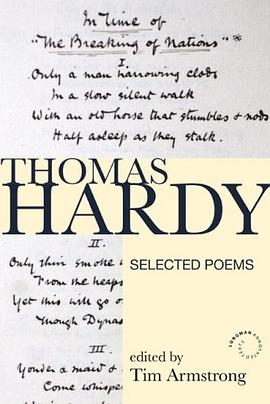
In Thomas Hardy: Selected Poems Tim Armstrong brings together over 180 poems in the first comprehensively annotated selection of Hardy's poetry. Unlike most previous selections, this edition preserves the shape of the poet's career by presenting the poems in the order in which they appeared in the Collected Poems of 1930, rather than re-ordering them thematically. Head notes to each poem give the reader information about its composition, publication, sources and metrical scheme; on-the-page notes list significant variants in Hardy's manuscripts, point out literary and other allusions, and give explanatory glosses. An appendix contains a selection of relevant passages from Hardy's notebooks, letters, and autobiography; and a bibliography suggests further reading. Tim Armstrong's critical Introduction discusses Hardy's career, his poetics, his use of memory and allusion and examines his position in the context of Victorian debates on aesthetics and belief. The generous selection of poems includes many lesser-known poems as well as those which have received most critical commentary, and the important elegiac sequence 'Poems of 1912-13' is included in its entirety.
Thomas Hardy’s literary world unfolds in the rugged, mist-laden landscapes of rural Wessex, where the clash between human ambition and the unyielding forces of fate shapes every life. His novels are steeped in a profound sense of place—village streets, weather-worn cottages, and the wild moors that stretch beyond sight—each setting breathing with history and tension. Hardy’s characters are often caught between duty and desire, tradition and change, their inner struggles mirroring the broader upheavals of Victorian England: industrial progress encroaching on agrarian life, shifting social mores, and the fragility of identity in a rapidly transforming world. In The Return of the Native, Eustacia Vye emerges not as a conventional heroine but as a fiery spirit unbroken by convention, her defiance rooted in a fierce need to define herself beyond marriage or societal expectation. Her journey through love, loss, and self-discovery reveals Hardy’s deep empathy for those marginalized by rigid class and gender structures. Similarly, Far from the Madding Crowd centers on Bathsheba Everdene, a woman of independent will who navigates heartbreak, rural economy, and community expectations with wit and resilience. Her choices—driven not by sentiment but by practicality and passion—reflect Hardy’s nuanced portrayal of female agency in a patriarchal society. Tess of the d’Urbervilles stands as one of the most harrowing narratives in English literature, tracing Tess’s tragic arc from innocence to ruin amid moral hypocrisy and social cruelty. Her story is not merely a tale of shame but an indictment of double standards and class injustice that condemn her despite no fault of her own. Hardy strips away romantic illusions, exposing the brutal intersection of nature, fate, and human cruelty in a world that offers little mercy. In Jude the Obscure, the aspirations of Jude Fawley—a working-class man consumed by scholarly dreams—expose the crushing barriers of educational privilege and social hierarchy. His doomed love for Sue Bridehead unfolds against a backdrop of intellectual stagnation and emotional desperation, culminating in a narrative that challenges notions of destiny, faith, and personal redemption. Through Jude’s journey, Hardy interrogates the illusion of upward mobility and the cost of unfulfilled potential. Each work by Thomas Hardy is anchored in meticulous naturalism: the weather mirrors inner turmoil, the land shapes character, and time erodes even the strongest wills. His prose blends lyrical description with psychological depth, inviting readers into intimate spaces where hope and despair coexist. Hardy’s characters are not heroes or villains but real people navigating complex emotions within rigid social frameworks. Their struggles—love lost, ambition unmet, identity fractured—resonate across generations as timeless reflections on what it means to be human in a world both beautiful and unforgiving.