
具体描述
作者简介
Published on the occasion od the Polish New Wave project, curated by Łukasz Ronduda and Barbara Piwowarska, organized by Archfilm/Centre for Contemporary Art Ujazdowski Castle, Anthology Film Archives, Musée d'Art Moderne et Contemporain de Strasbourg, Polish Cultural Institute New York, with the generous support of the Polish Film Institute, Czarna Renia Foundation and the Adam Mickiewicz Institute.
"The Polish New Wave project and its accompaning publication is a long overdue and illuminating attempt to capture the phenomenon of Polish New Wave. Although the term was occasionally used in discourse on Polish cinema, it never caught on or gained a coherent meaning, in contrast to neighbouring Czechoslovakia, not to mention France. It is thus not surprising that the impulse to interrogate Polish New Wave was a recent film, Piotr Uklańsli's Summer Love.
Some essay authors, such as Mateusz Warner, Tadeusz Lubelski and Łukasz Ronduda, put this invisibility or marginalisation of the true New Wave in Polish cinema at the centre of their analysis. Others, such as Kuba Mikurda, Iwona Kurz and Piotr Kletowski, focus on specific examples of New Wave, the films of Skolimowski, Królikiewicz, Piwowski or Żuławski. While examples presented are quite varied, comprising features and documentary films, and belong to different periods of Polish history, they are linked by the directors' urge to break free of the established patterns of filmmaking.
Although Polish New Wave concerns specifically Polish cinema, the observations it contains and the approaches it offers should also be useful to researchers interested in European cinema at large."
Ewa Mazierska
University of Central Lancashire, UK
"Polish New Wave presents cinema that examines and experiments with its own cinematic form. The direct inspiration for this project came from Summer Love, a recent feature film directed by Polish contemporary artist Piotr Uklański, which brings together the fields of contemporary art and professional film production. Existing in two parallel spheres (mass culture and the art institution), Summer Love can be described as the latest, radical new-wave gesture of Polish cinema. The idea of situating contemporary interdisciplinary artwork within the new-wave tradition has been further developed by the curators, serving as a pretext for the reconstruction of the history of Polish New Wave - a phenomenon that never existed.
The film program presents a selection of feature and documentary films made in the years 1964-2006. Part of an ongoing research into Polish cinema, this program features the work of filmmakers interested in the radicalisation of the filmic language. All of the works presented, each in their own way, transgress the traditional methods of narrative building characteristic of their genres. This unconventional treatment of the cinematic form situates these films somewhere between cinema and contemporary art. Due to the conscious conceptualisation and formal innovation, the majority of the works presented here could not enter mainstream circulation and were never fully appreciated by the conservative Polish film community; at the same time, the fact that many of them steered clear of using the discourse of contemporary art, had effectively excluded them from the context of the art institution. It needs to be pointed out that in the history of Polish cinema the New Wave, unlike the French Nouvelle Vague of the 1960's, never appeared as a precisely defined, distinct current. Therefore, by introducing the term 'Polish New Wave' we aim to define an ahistorical phenomenon permitting us to mark out a group of films that share a common domain between art and cinema, irrespective of the time and historical period of their making. (...)"
Curators' Introdiction
Łukasz Ronduda, Barbara Piwowarska
Contents
Curators' Introdiction
Łukasz Ronduda, Barbara Piwowarska
A Rebel à la Polonaise.
Mateusz Werner
Was There at Least a Bit of the New Wawe in Polish Cinema?
Tadeusz Lubelski
Skolimowski, Królikiewicz, Żuławski, Uklański. Excerpts from the History of Polish New Wave.
Łukasz Ronduda
Games, Masks, Yearnings, Escapes... Four Views on Jerzy Skolimowski's Early Works.
Konrad Klejsa
A Thing about Królikiewicz.
Kuba Mikurda
Andrzej Żuławski's The Thierd Part of the Night, The Devil and On the Silver Globe as Specimens of Polish Nev Wave Auteur Cinema.
Piotr Kletowski
Personal Search by Andrzej Kostenko and Witold Leszczyński.
Edwin Bendyk
Creative Document - a Paradoxical Genre. Skiing Scenes with Franz Klammer, Wanda Gościmińska. A Textile Worker, Inhale-Exhale.
Stefan Czyżewski
Not Having to Stick to the Point. The Fly Killer by Marek Piwowski.
Iwona Kurz
Between Events. Winding Paths by Andrzej Barański.
Piotr Marecki
The Hydro-Riddle. An Intertextual Cartoon.
Katarzyna Boratyn
Film Program
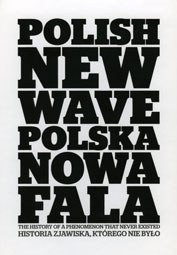
Polish Nev Wave. The History of a Phenomenon that Never Existed
edited by Łukasz Ronduda, Barbara Piwowarska
ISBN 978-83-61156-12-3
Publishers: Adam Mickiewicz Institute; CCA Ujzadowski Castle
Warsaw 2008
languages: english, polish
224 pages, hard cover
目录信息
读后感
用户评价
这部名为《Polish New Wave》的图书,从我阅读的角度来看,似乎更像是一部深刻剖析波兰电影黄金时代的文献集,而非传统意义上的小说或散文。书中对1950年代末至1970年代初那段特定历史时期,波兰电影界如何在一个相对封闭的政治环境下,孕育出如此多富有反思性和美学实验性的作品,进行了极其细致的梳理。我尤其欣赏作者在介绍安杰伊·瓦伊达(Andrzej Wajda)和克日什托夫·基耶斯洛夫斯基(Krzysztof Kieślowski)等大师的作品时,所采用的近乎学术研究的严谨态度。书中不仅仅停留在对故事情节的复述,而是深入挖掘了那些隐晦的社会批判符号,比如对“道德困境”和“集体记忆缺失”的探讨。文字的组织结构非常清晰,章节之间逻辑性强,仿佛是在带领读者进行一场循序渐进的鉴赏之旅。例如,有一章专门探讨了“历史的重负”如何影响了那个时期电影的叙事节奏和光影运用,通过对比几部标志性影片的镜头语言,成功地揭示了那个年代艺术家的内心挣扎与表达的局限。总的来说,这是一本需要耐心和一定电影知识背景才能完全领会的深度导读,对于想要了解波兰电影如何在全球范围内占据一席之地的爱好者来说,绝对是不可多得的宝藏。
这本书的结构设计非常巧妙,它不是线性时间叙事,而是采用了一种主题式的串联。例如,某一章节专注于“声音设计在构建政治隐喻中的作用”,另一章节则聚焦于“女性角色在父权社会中的挣扎与反抗”。这种跳跃式的回顾,反而让读者能更专注于作品本身的美学特征,而不是被冗长的历史背景所拖累。我个人尤其喜欢其中对于“沉默”与“潜台词”的分析部分,作者指出,在审查制度下,许多重要的信息只能通过演员的面部表情、环境的空旷感或不自然的停顿来传达。书中列举了大量的具体镜头进行视觉解码,这种“手把手教你解读”的细致程度,对于想要深入研究波兰电影语言的进阶读者来说,是极大的帮助。它并非高高在上的理论阐述,而是充满了对具体电影时刻的热爱和执着,仿佛作者本人就是那个时代最忠诚的目击者,用一种近乎诗意的散文笔调,描绘了影像背后的时代心跳。
坦白讲,这本书的阅读门槛相当高,它不适合那些期望获得快速、娱乐性知识的读者。我感觉作者是在对某一特定时期的波兰电影进行一场“考古式”的发掘。书中引用的注释和参考资料非常详尽,显示出作者在档案室中花费了大量时间。最让我感到震撼的是,作者试图去解构“民族叙事”的构建过程,探讨了波兰电影人如何平衡“爱国主义需求”与“个人艺术表达”之间的张力。文字风格趋向于冷静、客观,但字里行间流露出的那种对知识的敬畏和对历史的尊重,具有强大的感染力。它更像是一部为未来的学者准备的参考书,而非面向大众的科普读物。对于那些对政治、历史与艺术交织点的议题感兴趣的读者而言,这本书提供的视角是独一无二且极具洞察力的,它迫使你重新审视那些你自以为已经理解透彻的经典影片。
作为一名对欧洲艺术电影有长期关注的读者,我不得不说,这本书在对“新浪潮”这一概念进行本土化诠释上做得尤为出色。它成功地跳出了那种将波兰电影简单归类于“欧洲艺术片”的泛泛而谈,而是着重探讨了社会主义现实主义背景下,年轻一代导演如何通过借鉴法国、意大利新浪潮的手法,同时融入波兰本土独特的“现实主义美学”来表达异议。书中对于电影中反复出现的“局外人”形象的心理分析,令人深思。作者的语言非常精炼且富含画面感,尤其是在描述那些长镜头和室内场景的压抑气氛时,仿佛能透过文字直接感受到那个时代社会氛围的重量。更值得称赞的是,它没有回避关于资金短缺、设备落后等实际困难对艺术创作产生的影响,反而将这些限制视为催生独特美学的“催化剂”。读完后,我对波兰电影在夹缝中求生存、寻求表达自由的坚韧精神有了全新的认识,不再仅仅将其视为一种风格,而是一场关于生存与尊严的艺术抗争。
初翻开这本《Polish New Wave》,我首先被它那充满年代感的排版和大量黑白剧照所吸引,这本身就营造出一种沉浸式的怀旧氛围。然而,读进去之后才发现,这远非一本简单的“图鉴”或“回顾录”。作者似乎有一种近乎偏执的激情,去还原那个时代电影人的创作生态。最让我印象深刻的是对一些边缘性导演和未完成项目的描述,这些内容在主流的电影史书籍中常常被忽略。比如,书中花费了相当篇幅去分析了某一时期因审查制度而被迫修改结局的几部作品,以及导演们在私下笔记中流露出的那种近乎绝望的幽默感。这种挖掘“幕后故事”的笔法,让冰冷的电影史瞬间鲜活了起来。文字风格上,它采用了散文化的叙事,夹杂着许多当年报刊杂志的零散评论和导演访谈的片段,使得阅读体验如同拼凑一张复杂的历史拼图,充满了惊喜和意外的发现。它不只是在陈述“发生了什么”,更是在追问“为什么会是这样”,这种对“精神内核”的探究,远远超出了我对一本关于电影流派的书的预期。