
具体描述
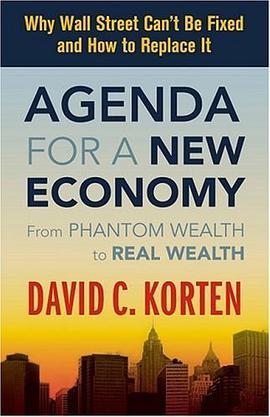
Today’s economic crisis is the worst since the Great Depression. However, as David Korten shows in this timely new book, the steps being taken to address it including pouring trillions of dollars into bailouts for the Wall Street institutions that created the mess – do nothing to deal with the reality of a failed economic system. The financial failure now in the public spotlight is only the tip of the iceberg. The system’s social and environmental failures are even more destructive. Putting patches on a failed system is like treating a cancer with band-aids. Korten identifies in this book the deeper sources of the failure in Wall Street institutions that have perfected the art of creating money out of nothing without producing anything of real value in return. Its major players engage in speculative trading, buy into asset bubbles, strip corporate assets, create debt pyramids, and engage in predatory lending in the mortgage and credit card markets. The success of Wall Street money managers up until the collapse created an economic mirage of phantom wealth that led us to believe that Wall Street was making us ever richer as a society even as we aggressively destroyed the economic, social, and natural capital that are the essential foundation of our well-being and of all real wealth. As the handsomely rewarded Wall Street money managers increased their claims on the shrinking pool of real wealth of everyone else, most people struggled ever harder to make ends meet even during the supposed economic boom. Korten argues that our hope lies not with Wall Street, but with Main Street, which is comprised for the most part of enterprises engaged in creating real wealth from real resources to meet real needs. Because the relationship between Wall Street and Main Street is rather like that of a cancer to its host, rather than seeking to fix Wall Street, we need to hasten its death. Korten outlines an agenda to liberate the latent entrepreneurial energies of Main Street from Wall Street’s deadly grip and bring into being a New Economy devoted to creating the real wealth needed to provide a better life for all while bringing human consumption into balance with finite ecosystems. By changing our economic priorities, measures of success, marketplace rules, power structures, sources of financing, and even the very way we create money, we can build a new economy that generates real wealth instead of phantom wealth. Korten’s intention is not to offer final answers, but rather to provoke discussion of options that powerful interests prefer not be mentioned. The many hard-hitting conclusions and recommendations presented in this book by this influential and respected author are sure to make it a controversial and widely read contribution to the current economic debate.
作者简介
In addition to an active schedule of writing and speaking on global issues, David C. Korten serves as president of the People-Centered Development Forum, chairs the board of YES! Magazine (http://www.yesmagazine.org), serves on the board of the Business Alliance for Local Living Economies. (http://www.livingeconomies.org), and co-chair the New Economy Working Group
目录信息
读后感
用户评价
这本书最让我感到惊喜的是它对“劳动”意义的重塑。在人工智能和自动化浪潮席卷而来的今天,很多人都在恐慌于“失业大军”的出现,但这本作品却提供了一种非常积极且富有洞察力的回应。它认为,技术进步的终极目标不应该是创造更多的工作岗位来填补时间,而恰恰是解放人类去做那些“更人性化”的事情。作者花了大量的篇幅去探讨“创造性劳动”和“关怀劳动”在未来经济中的核心地位,并提出了一整套支持这些非市场化劳动的经济激励机制。这种对人类价值的肯定,让人在面对科技冲击时,少了一份焦虑,多了一份对未来的憧憬。我尤其喜欢书中关于“时间银行”和“技能共享网络”的具体案例分析,它们不再是空泛的乌托邦设想,而是基于现有社区试点项目进行的细致描摹,充满了现实操作的可能性。这让整本书的基调从沉重的批判转向了充满活力的建设,让人看完后充满了“我也可以参与构建那个未来”的实际冲动。
这本书的叙事方式非常独特,它更像是一部侦探小说,而不是一本枯燥的学术著作。作者巧妙地设置了几个核心的“经济谜团”,比如为什么技术进步似乎没有带来预期的幸福感提升,以及为什么全球财富分配的极端不均仍在持续加剧。他不是直接给出答案,而是引导读者一步步剥开表象,深入到制度设计的底层逻辑中去探究。我印象最深的是它对“债务”的重新定义。书中用了很多生动的比喻,将现代金融体系中的衍生品和杠杆操作描述得如同一个精巧却极度脆弱的玻璃迷宫,一旦某个支点受损,整个结构都有倾覆的危险。这种描述方式极大地降低了理解门槛,即便是对宏观经济学不太了解的读者,也能感受到那种潜伏的危机感。而且,作者在论证过程中展现出的那种近乎偏执的细节考据能力,让人肃然起敬。他似乎对历史上的每一次经济危机都做了地毯式的扫描,然后将那些被主流叙事遗漏的微小决策点,清晰地呈现在我们面前,让我们明白,今天的困境并非偶然,而是无数次选择的累积效应。
这本书读下来,感觉作者的视角非常宏大,简直像是从未来穿越回来描绘我们这个时代的经济图景。我特别欣赏它探讨“价值”的那个部分,它没有陷入传统经济学的窠臼,而是深入挖掘了那些在GDP核算中常常被忽略的“无形资产”和“社会资本”。比如,书中对“注意力经济”的批判性分析,简直是振聋发聩。它指出,我们当前社会对“即时满足”的过度追逐,正在以一种非常隐蔽的方式侵蚀着长远的创新能力和人类的深度思考能力。作者提出的那种基于“生态平衡”而非“无限增长”的新经济模型,虽然听起来有些理想化,但其背后的逻辑推导却极其严谨,引用了大量的跨学科研究佐证,从复杂系统理论到生物学的自组织现象,都在为他的论点添砖加瓦。读完之后,你很难再用旧有的框架去审视那些关于效率和产出的讨论,它迫使你重新思考,一个健康的经济体究竟应该以何种“生命力”为衡量标准。这本书不仅仅是关于经济学,更像是一部关于人类文明走向的哲学宣言,其深度和广度远超一般的政策建议书。
如果要用一个词来形容这本书给我的整体感受,那就是“结构性的警醒”。它并不是那种一惊一乍的末日预言,而是冷静地、用一种近乎冰冷的理性,将我们这个经济体系内部的“结构性压力点”一一标示出来。它没有指责任何特定的个人或政党,而是将矛头指向了我们赖以生存的那些基本假设——比如资源的无限可得性、复利增长的必然性、以及人类的理性决策能力。书中的“系统反馈回路”分析部分,是我认为最精妙的地方,它展示了我们如何因为短期的、局部最优的决策,最终陷入了全局的、长期的困境。这种对反馈延迟和非线性效应的强调,深刻地解释了为什么危机往往来得如此迅猛和不可预测。它像是一个精密的工程手册,告诉你这艘庞大的经济巨轮在哪些关键部件上已经出现了难以察觉的疲劳裂纹。这本书的阅读体验是深刻而持久的,它不会让你读完后马上改变生活习惯,但它会永久性地改变你对“经济新闻”的解读方式,让你看到数据背后的驱动力,以及那些被主流话语所掩盖的深层矛盾。
我必须承认,这本书的某些章节读起来需要极大的耐心和专注力,它不是那种可以轻松翻阅的“速成读物”。作者在构建其理论体系时,尤其是在探讨“去中心化治理结构”的可行性时,大量引入了博弈论和网络科学的模型。对于我这样的非专业读者来说,其中涉及到的一些数学推导确实构成了不小的挑战,我甚至不得不暂停下来,查阅了几个相关的背景知识才能勉强跟上思路。然而,一旦跨越了这些技术性的障碍,你会被其最终呈现的愿景所震撼。它描绘了一个权力更加分散、社区自治性更强的未来图景,这与当下主流的“大政府干预”或“巨型企业垄断”的二元对立思维形成了鲜明对比。这本书的价值在于,它不仅指出了问题,更提供了一套从微观个体行为到宏观社会结构都能自洽的替代方案框架。虽然实施起来难度极大,但这种提供“可行路径”而非仅仅停留在批判的勇气,是极其宝贵的。它迫使我们思考,真正的“效率”是否一定需要集中控制,还是可以在分布式协作中自然涌现。