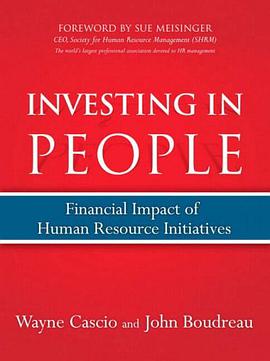

具体描述
A Logical, Proven Framework for Understanding the Economic Value of Human Resources Investments *How to choose Human Resources investments that deliver optimal strategic value--and eliminate those that don't *Best-practice metrics and analysis techniques for talent management, performance management, health and wellness programs, and much more Investing in People introduces a breakthrough approach to Human Resources (HR) measurement that systematically aligns HR investments with organizational goals and helps make HR the true strategic partner it needs to be. Wayne F. Cascio and John W. Boudreau show exactly how to choose, implement, and use metrics to improve decision-making, optimize organizational effectiveness, and maximize the value of HR investments. You'll master crucial foundational principles such as risk, return, and economies of scale--and use them to evaluate investments objectively in everything from work/life programs to training. Cascio and Boudreau also introduce powerful ways to integrate HR with enterprise strategy and budgeting and for gaining commitment from business leaders outside the HR function.If you truly want "a seat at the table"--or if you want to keep the one you have--you'll find this book utterly indispensable. Free software available online You don't need to be a math wizard to get results from Investing in People! Visit www.shrm.org/publications/books to access software that automates virtually all of this book's key formulas and calculations.Foreword xi Acknowledgments xiii About the Authors xiv Preface xv Plan for the Book xvii Chapter 1: Making HR Measurement Strategic 1 Chapter 2: Analytical Foundations of HR Measurement 21 Chapter 3: The Hidden Costs of Absenteeism 43 Chapter 4: The High Cost of Employee Separations 67 Chapter 5: Employee Health, Wellness, and Welfare 99 Chapter 6: Employee Attitudes and Engagement 125 Chapter 7: Financial Effects of Work-Life Programs 151 Chapter 8: Staffing Utility: The Concept and Its Measurement 171 Chapter 9: The Economic Value of Job Performance 195 Chapter 10: The Payoff from Enhanced Selection 223 Chapter 11: Costs and Benefits of HR Development Programs 245 Chapter 12: Talent-Investment Analysis: Catalyst for Change 271 Appendix A: The Taylor-Russell Tables 285 Appendix B: The Naylor-Shine Table for Determining the Increase in Mean Criterion Score Obtained by Using a Selection Device 297 Index 309
作者简介
目录信息
读后感
Read the 2008 version, therefore can't comment on the latest version's improvements wrt content and/or general editing.) Overall a competent book introducing the basic concepts in human capital analytics. It provides applicable analytic models, discusses ...
Read the 2008 version, therefore can't comment on the latest version's improvements wrt content and/or general editing.) Overall a competent book introducing the basic concepts in human capital analytics. It provides applicable analytic models, discusses ...
Read the 2008 version, therefore can't comment on the latest version's improvements wrt content and/or general editing.) Overall a competent book introducing the basic concepts in human capital analytics. It provides applicable analytic models, discusses ...
Read the 2008 version, therefore can't comment on the latest version's improvements wrt content and/or general editing.) Overall a competent book introducing the basic concepts in human capital analytics. It provides applicable analytic models, discusses ...
Read the 2008 version, therefore can't comment on the latest version's improvements wrt content and/or general editing.) Overall a competent book introducing the basic concepts in human capital analytics. It provides applicable analytic models, discusses ...
用户评价
我必须说,这本书的写作风格非常“反主流”,它挑战了太多行业内根深蒂固的“常识”。如果期待一本告诉你“只要善待员工,业绩自然会好”的鸡汤文,那这本书可能会让你失望。它的基调是严肃且务实的,甚至带着一丝“精英主义”的色彩,强调少数高绩效个体的杠杆作用,以及如何识别和隔离那些“机会主义者”。书中对“绩效考核的偏差修正”那一章,简直是为我量身定做的。我之前一直苦于如何公正地评估那些默默无闻却贡献巨大的幕后英雄,作者在这里提出了一种基于“影响力扩散系数”的评估方法,虽然初期实施起来有一定难度,但其逻辑的严密性令人信服。这本书的语言充满了力量感,句式短促有力,充满了行动导向的指令。它不是在“建议”,而是在“指导”——指导你如何做出艰难但正确的商业决策,即使这些决策在短期内可能不受欢迎。它是一本为那些愿意承担责任、敢于做“冷面管理者”准备的实用指南。
读完这本书,我产生了一种强烈的、近乎“顿悟”的感觉,仿佛之前对人力资源管理的诸多困惑,瞬间找到了一个清晰的逻辑框架来安放。它没有使用太多花哨的辞藻,语言极其凝练,每一个句子都像经过了千锤百炼。最吸引我的是作者对于“组织文化韧性”的探讨。他摒弃了那种流行的、过于理想化的“温馨家庭”式企业文化描述,而是将其视为一种动态的、需要持续“维护”和“迭代”的系统工程。书中对“有毒文化”的诊断和“赋能型结构”的构建部分,简直是犀利至极。我记得有一章专门讲了如何识别和处理“关键人才的隐性阻力”,这在现实工作中太常见了,但鲜有书籍能提供如此系统且可操作的干预步骤。这本书的价值在于,它敢于直面管理中的灰色地带,不回避冲突和矛盾,而是教你如何通过科学的方法论去驾驭它们。它更像是一个资深顾问在你耳边低语,告诉你成功和失败的真正分界线在哪里,而且这些经验是经过长期市场检验的,绝非纸上谈兵的空想。
这本书最大的亮点,在我看来,是它对“知识传承与系统记忆”的深刻洞察。我们都知道人才是公司的核心,但当核心人才离开时,知识的流失往往是致命的。作者没有停留在“建立知识库”这种初级层面,而是引入了“情境化学习矩阵”的概念,强调知识必须在特定的工作流程中被激活和重构,才能真正发挥价值。我特别欣赏它对“组织记忆丧失”的风险量化分析,这让我第一次意识到,我们每年因为员工离职而损失的隐性成本,可能远远超过招聘新人的显性成本。这本书的结构设计也非常巧妙,它像是一部层层剥茧的侦探小说,每一章都解开了一个关于人才管理的谜团。它的论述是高度数据驱动的,大量的图表和统计数据支撑着每一个观点,使得任何质疑的声音都会在详实的数据面前不攻自破。对于那些需要向董事会证明人力资源投入合理性的专业人士来说,这本书提供的不仅仅是理论,而是可以拿来“战斗”的武器和证据链。
这本书的叙事脉络非常宏大,它不仅仅局限于某个部门或某类行业的管理技巧,而是试图构建一个宏观的人力资本生态模型。作者的视野之开阔,令人印象深刻。他将人力资源的议题上升到了国家竞争力和长期社会福祉的高度来讨论。我尤其喜欢它对于“未来技能图谱”的预测部分,书中不仅指出了当前市场急需的技能,更深入分析了驱动这些技能需求背后的技术和社会变革趋势。这种前瞻性,让这本书超越了一般的管理书籍的范畴,具有了战略文献的意义。阅读过程中,我不断地思考我们自己公司在未来五年乃至十年的人才布局应该如何调整,它提供了一个强有力的理论支撑,让我能更好地向上级阐述变革的紧迫性和必要性。此外,书中对“跨代际沟通鸿沟”的分析也十分到位,它没有简单地归咎于年龄差异,而是深入剖析了信息获取方式和价值取向的根本不同,并给出了切实可行的融合方案。这是一部能让你“跳出眼前的沙盘”,审视全局的书。
这本书的叙事风格简直是教科书级别的,它以一种近乎冷酷的精准度,剖析了现代企业管理中那些最令人头疼的“人效”难题。作者似乎拥有某种透视能力,能一眼看穿那些光鲜亮丽的财报背后,隐藏的员工流失率和知识断层。我尤其欣赏它对“人才投资回报率”(ROTI)模型的构建,这个模型不是空泛的理论,而是结合了行为经济学和组织心理学的硬核工具。书中详尽地列举了数十个案例,从硅谷的初创公司到老牌制造企业的转型,无不印证了其观点的有效性。比如,其中一个案例分析了某科技巨头如何通过精细化的“微激励”机制,成功将一个长期处于低迷状态的部门的创新产出提高了近四成。那种层层递进的逻辑推演,让人在阅读时会不自觉地拿起笔,在旁边的空白处记录自己的思考和联想。它不是一本读完就束之高阁的书,更像是一本需要时常翻阅、随时查阅的“工具手册”。对于那些真正想在竞争白热化的市场中,依靠人力资本实现弯道超车的管理者来说,这本书简直是一剂强心针,让你重新审视那些被轻易忽略的“软性资产”的真正价值。
想把书甩老板脸上
想把书甩老板脸上
😉
想把书甩老板脸上
想把书甩老板脸上