
具体描述
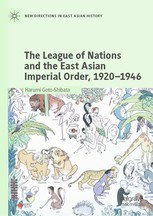
Well-grounded on abundant Japanese language sources which have been underused, this book uncovers the League of Nations’ works in East Asia in the inter-war period. By researching the field of social and other technical issues, namely, the trade in narcotics, the trafficking of women and the work in terms of improving health provision and providing economic advice to Nationalist China, it not only examines their long-term impacts on the international relations in the region but also argues that the League’s works challenged the existing imperial order of East and Southeast Asia. The book offers a key read for academics and students of international history and international relations, and others studying Japan or East Asia in the twentieth century.
作者简介
Harumi Goto-Shibata is Professor of International History at the Department of Advanced Social and International Studies, Graduate School of Arts and Sciences, University of Tokyo, Japan. Her prior publications include Japan and Britain in Shanghai, 1925-31 (Macmillan, St Antony’s series, 1995) as well as three single-authored books, and two co-edited books in Japanese.
目录信息
Part I The League of Nations as Forums and Actors
2 Social and Humanitarian Issues of the Leagueof Nations 17
The Emergence of Social and Humanitarian Issuesin the Covenant of the League 17
Japan’s Participation in the League of Nations 24
The League’s Arrival in East Asia 33
3 Challenging the Imperial Order: Control of Opium 43
Setting the Scene—Until the First World War 44
Establishing the OAC47The OAC at Work on East Asian Questions 51
The Participation of the United States 54
The Geneva Opium Conference 56
Change in the Opium Policies in the British Empireand the Commission of Enquiry 61
Lack of Reforms in the Japanese Empire 64
The Bangkok Conference and Further Reforms 66
The Impact of the OAC and Its Limits 69
4 Expanding the Range: Japan’s Reactionto the Technical Co-operation with China 79
The Developmental Phase 80
Co-operation in Flood Relief 89
The Manchurian Crisis 93
How to Finance the Co-operation 96
Technical Co-operation Politicized 102
5 The TWC as Another Forum and Women 111
The TWC and the Commission of Enquiry 112
Russian Women Refugees in China and the Remaining Imperial Order 114
Difficulties in Solving the Problem 116
The Lack of Financial Resources 120
The TWC as Another Forum 122
Part II Contested Power and Authority
6 Japan’s Withdrawal and China’s Request for a Seaton the Council 129
Trying to Continue Partial Co-operation 130
China’s Failure to Be Re-elected to the Council139Enter the Soviet Union 141
China’s Aspiration to Be a Permanent Member 142
Japan’s Formal Departure 145
A New Non-permanent Seat for an Asian State 147
7 Who Controls the Co-operation?: TechnicalCo-operation after the Outbreak of the Sino-JapaneseWar157The TCC in 1936 158
Technical Co-operation after the Outbreakof the Sino-Japanese War162Continuing for the Second Year167Who Controls the Co-operation? 170
Aid to China 175
The League or the Local Authorities 179
The Question of Empires: Co-operationin the Yunnan–Burma Borderland in 1939 187
The South-Western Part of China 188
Robertson’s Epidemiological Survey on the Burma Road 189
Co-operation or Intervention 194
The End of the Technical Co-operation 197
9 The Limits of the League’s Control of Opium 205
To the United States 206
The Declaration of the British and the Dutch Governmentsin November 1943 207
Examining the Application of the New Policy 212
Prepared ‘Policy as Regards Opium in Burma’ and ItsLimits 215
The League of Nations and the Question of Opium Eating 218
10 East Asia in the Architecture of the Post-War World: From the League to the UN Economic and Social Council 223
The Bruce Report 224
Rajchman’s Plan for the United Nations Health Organization 227
Establishing the ECOSOC 229
Establishing the CND 233
The Prospect of the CND and Burma’s New Policy 237
The Experience of the League of Nations 242
11 Conclusion 249
Achievements and Continuities 249
Discontinuities and a New Departure 252
Bibliography 257
Index283
· · · · · · (收起)
读后感
用户评价
从文笔风格来看,此书的语言呈现出一种特有的、近乎冷峻的客观性,这种风格极其适合处理敏感且充满争议的历史议题。作者似乎有意保持一种距离感,避免过多的情感代入,而是让史实本身去说话。这种克制,反而增强了论点的说服力。我尤其欣赏作者在处理涉及多方利益冲突时的平衡感,它不像某些著作那样带有明显的倾向性,而是努力去还原各个参与方在特定时刻的理性选择(即使这些选择最终导致了灾难性的后果)。这种对“有限理性”的刻画,使得书中的历史人物不再是脸谱化的好人或坏人,而是被困在结构性限制中的行动者。当我读到关于特定国际调查团的报告被搁置或曲解的章节时,那种无力感油然而生——这不仅仅是特定历史阶段的悲剧,更像是对所有试图建立普世规范的机构所面临的永恒挑战的深刻反思。
这本厚重的著作,光是书名就透露出一种严肃的学术气息。《远东帝国秩序与国际联盟,1920-1946》这样的标题,无疑会吸引那些对战间期国际关系史、尤其是东亚地区复杂地缘政治感兴趣的读者。我拿起它时,首先感觉到的是作者在梳理庞大史料时所展现出的那种扎实的功底。从封面上就能预感到,这不是一本轻快的通俗读物,而更像是深入历史肌理、挖掘档案细节的深度研究。我期待着它能提供一个全新的视角,去审视那个被我们惯常以二战视角来框定的时代。特别是“国际联盟”这个关键词,它代表着一种理想主义的尝试,而“东亚帝国秩序”则象征着现实的残酷角力。如何将这两者在特定的历史时段——1920年代的喧嚣到1940年代的终结——进行有效的整合和分析,是这本书最大的看点。它承诺的不仅仅是罗列事件,而是要揭示机制,剖析国际机构在面对区域强权扩张时的困境与无效,这对于理解当代国际体系的根源性缺陷,具有极高的参考价值。我猜测,作者一定花了大量时间在各国的外交档案中穿梭,试图还原那些不为人知的幕后博弈。
对于那些希望通过这本书来寻找简单答案的读者来说,可能会感到有些吃力。它不提供“谁是最终的罪魁祸首”这种简单的结论,而是将我们带入一个充满灰色地带的复杂网络中。它要求读者具备一定的历史背景知识,才能完全跟上作者对复杂外交术语和区域政治演变的推演。然而,正是这种不提供廉价安慰的态度,才让这本书的价值得以凸显。它迫使我们正视历史的复杂性,认识到国际规范的建立是何其艰难,又何其容易被强权侵蚀。读完之后,我的脑海中不再是关于“九一八事变”或“满洲国成立”的孤立印象,而是清晰地看到了这些事件如何被嵌入到一整套正在瓦解的国际法律和道德框架之中。这是一种对历史“生态系统”的深刻洞察,远超一般的历史叙事所能达到的深度。
这本书的结构安排也十分巧妙,它不仅仅是时间线上的线性叙述,更像是围绕几个核心的结构性问题展开的螺旋式上升。我注意到,作者在论述中频繁穿插了对既有学术观点的批判与修正,这使得全书充满了学术对话的张力。它不是简单地复述已知史实,而是不断地在挑战历史学界长期以来对“国联为何失败”的解释框架。它似乎在暗示,失败的原因并非仅在于美国的缺席或英法的软弱,而在于国际联盟在设计之初,就内含了对现有帝国主义权力结构的妥协与默认。这种对结构性缺陷的挖掘,使得原本可能略显沉闷的条约文本分析变得生动起来,因为它直接关系到成千上万人的命运。可以说,它为研究20世纪早期国际体系的内在矛盾提供了一个极具启发性的分析模型,是那种需要反复阅读并做笔记的“工具书”级别的著作。
阅读体验上,我不得不说,这书的论证逻辑如同精密的外科手术般严谨,丝毫不拖泥带水,直击历史的核心矛盾。它似乎摒弃了那种宏大叙事的窠臼,转而聚焦于具体的外交政策制定、条约谈判的微妙措辞,以及各国代表在日内瓦会议上的具体发言。对于我这样的历史爱好者来说,最过瘾的莫过于看到那些似曾相识的事件,被放在一个更广阔、更具结构性的框架下去重新解读。比如,那些我们通常认为是中国内政或日本单方面行动的事件,在这本书里,它们被置于国际联盟体系的折射之下,其性质和影响被重新定义。作者似乎在强调,当时的东亚问题并非孤立存在,而是与欧洲的权力平衡、全球经济秩序紧密交织的产物。这种穿透历史迷雾、将区域问题全球化的处理方式,让人对“一战后国际秩序的遗产”有了更深一层的理解。它迫使我们跳出民族主义叙事,以一种更具批判性的眼光去审视那个时代的“文明”与“野蛮”的界限是如何被权力重新划定的。