
具体描述
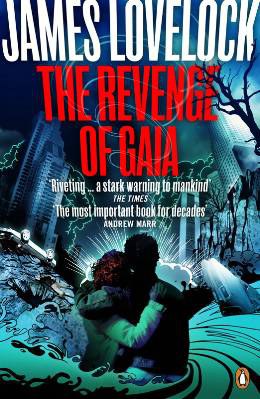
For millennia, humankind has exploited the Earth without counting the cost. Now, as the world warms and weather patterns dramatically change, the Earth is beginning to fight back. James Lovelock, one of the giants of environmental thinking, argues passionately and poetically that, although global warming is now inevitable, we are not yet too late to save at least part of human civilization. This short book, written at the age of eighty-six after a lifetime engaged in the science of the earth, is his testament.
作者简介
Interview
The legendary James Lovelock, originator of the idea of Gaia, makes a brilliantly argued plea that we must change our way of life – before it is too late.
Here James explains the Gaia Theory, his views, global warming and us.
Some of our readers won’t have heard of Gaia Theory. Could you explain what it is?
Just over forty years ago I introduced the hypothesis that supposed our planet had, since life appeared on it, kept the climate and atmospheric composition favourable for its inhabitants. The novelist William Golding, a friend and neighbour, suggested that I call it Gaia after the ancient Greek Goddess of the Earth.
As with most large and incomplete hypotheses it was fiercely challenged by Life and Earth scientists; its only supporters among scientists were a few climatologists and the distinguished biologist, Lynn Margulis. The hypothesis made a number of predictions, such as that life in the oceans would make volatile substances needed to complete the natural cycles of iodine and sulphur. Over the years most of the Gaia predictions have been found to be true, none have been falsified. This and the development of mathematical models of a self regulating Earth allowed the evolution of Gaia Theory which is now main stream in science. Gaia theory views the Earth as a self regulating system made up from all living things, and of the surface rocks, oceans and atmosphere. The goal of the self regulation is to sustain habitability. Most scientists, particularly in the USA, dislike the word Gaia because of its New Age associations and prefer to talk of the theory as part of Earth System Science.
You have been writing about Gaia for some years now and The Revenge of Gaia is your most trenchant book yet. Have your views changed, or is it that the world has changed?
My views on Gaia and on its importance for humanity have not changed; indeed they have been strengthened by confirmatory evidence. A glance at my 1979 first book, Gaia: A new look at Life on Earth will confirm the consistence of the Gaian view, very little that was written then has needed changing; but the world is changing fast because we are taking fossil fuels from Gaia’s bank seventy times faster than she can afford to deposit from her income. Our indebtedness is now beyond all possibility of repayment.
What do you think will happen to Britain if we continue to allow global warming at the same rate?
We have to realise that many if not most climate scientists are concerned that the Earth system, Gaia, is close to or beyond the point of no return and beyond that point will move of its own accord to a new and hotter stable state. When this happens nothing the people of the world do will alter the outcome other than slightly hasten or delay it. We of the UK are responsible for only 2 percent of global emissions and if we gave up all fossil fuel use tomorrow and stopped all abuse of natural ecosystems, it would have no effect on the course of events. This being so, I think that all our efforts should go towards sustaining civilization on these islands and to helping and advising other nations to do the same in their parts of the world.
We have to understand that it is far too late now to aim for sustainable development or to expect that renewable energy will be a solution. All of our resources and efforts should go towards protecting our cities against the consequences of rising sea levels and storms of unprecedented severity and we must start now to plan secure and reliable supplies of food and energy; as in the Second World War we may have to grow most of our food and we will need a robust program of new nuclear power stations. Even if they are perceived to be dangerous, which they are not, their dangers are trivial compared with those that will surely come from the changing Earth.
The time scale of change can only be predicted approximately but our children and grandchildren are likely to suffer the worst effects.
What about the rest of the world?
The world’s great centres of population, China, India and South East Asia are likely to suffer more from climate change than we do. Possibly the shores of the Arctic Ocean and Northern Europe will be the most habitable parts of the planet. Some parts of the African, Asian and American continents will remain habitable but a great deal of what is now rich with life, the Amazon forest and other tropical forests are likely to become scrub and desert. Supplies of food and fuel from overseas that we now take for granted are likely to be unavailable.
What should the Government be doing about the problems of Global warming?
Our government has to start listening to its scientific, engineering and climatologist advisers instead of acting on the out dated recommendations of some of its own members, who still seem to be marching to Aldermaston with the CND and hoping for a nuclear free Britain. They do not understand that we are in a new century where wholly different disasters loom. Most importantly, they must stop trying to meet the unrealistic and insufficient targets of Kyoto and start thinking of the needs of their citizens.
What should individuals be doing about it?
There is much that each of us can do personally to lessen the effects of global heating on our lives and those of our descendants but we can not now undo the harm already done. What we have to do is to prepare for a much diminished world with living standards not greatly different from those of the Second World War and then seize the chance of rebuilding a civilization that is truly in harmony with the rest of Earthly life.
We have to accept with all our heart and mind that Gaia, the great Earth system, exists to keep our planet always habitable for life. We have put the needs of people before those of the Earth and are about to reap the consequences. Until as individuals we realise the true nature of our plight we will be unable to respond appropriately. When we do understand we will have a chance of re-entering the community of Gaia.
目录信息
读后感
用户评价
从装帧和排版来看,这绝对是一部精心制作的书籍,实体书的质感本身就为阅读体验加分不少。然而,真正让我爱不释手的是其独特的语言风格——它像是一部融合了古典史诗的厚重感与赛博朋克小说中那种碎片化、高密度的信息流的混合体。作者的句子结构变化多端,有时是简洁有力的断句,极具冲击力;有时则是复杂迂回的长句,充满了修饰和内心辩驳,完美模拟了角色在极端压力下的思维混乱和逻辑重构过程。这种对语言工具的娴熟运用,让读者在理解情节的同时,也在欣赏一种文学上的高度技巧。我很少遇到能将如此沉重的哲学议题,用如此兼具美感和力量的语言表达出来的作品。读完后,我有一种强烈的冲动,想要去重读那些最关键的段落,去细细品味那些措辞背后的深意,这无疑是一部值得被反复阅读和深入研究的文本。
我必须承认,我是一个极其挑剔的科幻迷,很多作品在设定上总有这样那样的逻辑漏洞或者为了戏剧冲突而牺牲现实基础。但在这部作品中,我几乎找不到明显的硬伤。作者对于技术细节的推敲,那种严谨的“自洽性”,让人由衷佩服。它构建的那个核心冲突点,看似是关于资源的争夺,实则更深层次地触及了人类集体潜意识中对“秩序”和“混乱”的永恒恐惧与向往。书中关于“记忆”和“身份重塑”的章节,简直是神来之笔。它探讨了当物理实体不再重要,信息流才是真正的生命载体时,我们如何定义“自我”。我读得汗毛直竖,因为这不仅仅是未来设定,它尖锐地指向了我们当下对大数据和社交媒体依赖的未来隐忧。这种既有宏大叙事骨架,又不失微观哲学思辨的作品,绝对是近年来难得一见的佳作。
这部小说的开篇就如同被投入了一颗深水炸弹,瞬间将我从日常的琐碎中拽了出来,直面一个宏大而又令人不安的未来图景。作者构建的世界观极其精妙,那种细腻的笔触描绘出的社会结构和科技水平,让人在惊叹之余,又感到一种难以言喻的寒意。特别是对于权力运作的剖析,那种深层次的、近乎病态的控制欲,通过几个关键角色的内心独白和行动被展现得淋漓尽致。我常常在阅读时不得不停下来,去思考现实世界中那些隐晦的权力边界是否也正以一种更温柔却更具侵蚀性的方式在起作用。角色塑造方面,没有绝对的善恶之分,每个人物都带着他们沉重的历史和难以言说的动机,他们的选择充满了灰色地带,这让故事的张力持续保持在高位。读完第一部分,我感觉自己仿佛经历了一场思想上的洗礼,对“进步”这个词汇有了全新的、更加警惕的理解。那种沉浸感,不是简单的娱乐,更像是一场对人类未来走向的严肃预演。
这本书真正触动我的地方,在于其对“希望”的刻画。在如此一个黑暗、压抑的世界设定下,很多小说会走向彻底的虚无主义。但这里的角色们,即便是身处绝境,他们对美好事物的微弱坚持,对逝去人性的追忆,反而构成了最耀眼的光芒。这种希望不是廉价的“好人终将胜利”的口号,而是建立在对残酷现实有着清醒认识的基础上的,是一种近乎本能的、挣扎着的生命力。我特别喜欢其中一段关于一个老人在废墟中种植稀有植物的描写,那段文字的语言风格突然变得极其柔和,充满了对生命本身的敬畏。它像是给整个冰冷的故事注入了一股暖流,让人在绝望中找到了一丝喘息的空间。这种复杂的、多层次的情感调动,使得作品远超一般的类型文学范畴,上升到了探讨存在意义的高度。
说实话,这本书的叙事节奏一开始有些挑战性,它不像传统畅销小说那样一上来就抛出高潮迭起的情节,而是更像一位技艺娴熟的指挥家,耐心地铺陈每一个音符,让情绪在缓慢的积累中酝酿出最终的爆发力。我尤其欣赏作者在环境描写上所展现出的那种近乎诗意的残酷。那些被遗弃的城市废墟,或是那些在极端气候下勉强维持的生存社区,都带有强烈的视觉冲击力。你几乎能闻到空气中的铁锈味和腐败的气息。更重要的是,作者巧妙地将这些环境描写融入到人物的心理活动中,环境不再是背景,而是直接塑造角色命运和思维模式的参与者。这种高度的有机统一性,使得整个故事的文学价值得到了极大的提升。我用了比预期更长的时间来阅读,不是因为文字晦涩,而是因为我需要时间去消化那些充满隐喻和象征意义的场景,那种慢品细尝的阅读体验,如今在快餐文化盛行的当下,显得尤为珍贵。