
具体描述
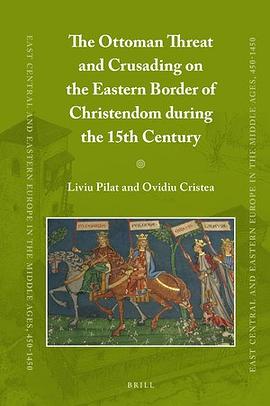
In The Ottoman Threat and Crusading on the Eastern Border of Christendom during the Fifteenth Century Liviu Pilat and Ovidiu Cristea focus on less-known aspects of the later crusades in Eastern Europe, examining the ideals of holy war and political pragmatism. They analyze the Ottoman threat and crusading as political themes through a unifying vision based in the political realities of the fifteenth century and the complex relationship between crusading, Ottoman expansion, and the political interests of the Christian states in the region. Approaching the relationship between the borders of Christendom and crusading as a highly complex phenomenon, Pilat and Cristea introduce new elements to the image of Latin Christendom's frontier from the perspective of Catholic-Orthodox relations, frontier ideology, and crusading rhetoric in political propaganda.
作者简介
Liviu Pilat, Ph.D. (2007), "Alexandru Ioan Cuza" University, is Professor of Medieval History at that university. He has published monographs and articles on various aspects of Central and Eastern Europe political history in the fifteenth century.
Ovidiu Cristea, Ph. D. (2003), Institute of History "Nicolae Iorga", is senior researcher at the same centre of historical research. He has published monographs and articles concerning the Venetian presence in the Black Sea and the Mediterranean in the fourteenth to sixteenth centuries, on the Later Crusades and on the political history of late medieval Wallachia and Moldavia.
目录信息
List of Maps and Illustrations
Introduction
The Sources
Ottoman Threat and Crusading
Frontier Societies and the Eastern Border of Christendom
Crusading, Information and Propaganda
1 Crusade and Commercial Hegemony in the Black Sea from the Fourth Crusade to the Ottoman Conquest
The Fourth Crusade and its Consequences in the Black Sea Area
The Genoese Hegemony in the Black Sea, the Venetian Reaction and the Crusade
The Hungarian—Venetian Rivalry and the Ottoman Threat
From the “War of Tenedos” to the Crusade of Nicopolis
Kilia as an Outpost in Hungary’s Crusading Projects
2 The Eastern Border and the Struggle for Supremacy in the Northern Black Sea
Ottoman Threat, Christian Solidarity and Political Rivalry
The Eastern Border in Sigismund of Luxembourg’s Plans
Ottoman Threat and Crusading in Jagiello’s Policy
Witold’s Ambition to Control North-Western Black Sea
A Failed Anti-Ottoman Campaign
The Eastern Border and the Teutonic Knights
Schismatics, Heretics and Crusaders
3 The Union of Florence, Crusade and Ottoman Hegemony in the Black Sea
The Fail of the Union in Eastern Europe
Crusade Plans and Political Contradictions
John Hunyadi, Kilia and the Fall of Constantinople
The Eastern Border of Christendom, Mehmed II and the Byzantine Legacy
Crusading Versus Economic Interests
4 Crusade and Political Propaganda in the Last Years of Mehmed II
The Crusade of Pope Sixtus IV
A Schismatic Crusader
Diplomatic Actions of Venice
A Great Christian Victory
Matthias Corvinus Propaganda
A Plan of the Annihilation of Mehmed II and the Fall of Caffa
Moldavia the “Gateway of Christendom”
The Campaign of Mehmed II in Moldavia
One Battle, More Victories
A New Crusade Plan: Reconquest of Caffa
The Crusade of Otranto and its Eastern Implications
5 The Eastern Border of Christendom and the Ottoman Conquest of Black Sea
The Ottoman Campaign of 1484 and Venetian Intelligence
Ottoman Threat Ascending
Ottoman Pressure and Crusading in Poland
A Failed Crusade Expedition
The Eastern Border and the Congress of Rome
Coalition against Jagiellons
6 The Crusade against Ottomans and the Political Backdrop in East-Central Europe at the End of the Fifteenth Century
The “Crusade” of Jan Olbracht
Crusade Rhetoric and Political Propaganda
Crusade Rumours in Venice and Ottoman Propaganda
New Plans of Crusade
Between Crusade and the Defence of the Greek-Orthodox Faith
Discussions on Crusade in Muscovy
The Peace
Conclusion
Bibliography
Index
· · · · · · (收起)
读后感
用户评价
从装帧和排版来看,这本书无疑是一部严肃的学术力作,但它的阅读体验却远超一般的学术著作。作者似乎深谙如何用视觉元素来辅助理解复杂的历史地理概念。那些精心绘制的地图、详细的家族谱系图,以及对重要堡垒遗址的插图说明,都极大地提升了读者的空间感和历史代入感。特别是当他描述某次边境拉锯战的地理细节时,你可以清晰地在脑海中勾勒出那些山隘和河流的走向,这对于理解军事行动的成败至关重要。这种对细节的关注,不仅服务于学术的精准性,更重要的是,它极大地丰富了读者的想象空间,使得那些遥远的地名不再是冰冷的符号,而是充满了历史重量和血腥记忆的具体场所。
这本书带给我最大的震撼,在于它对“信息战”和“叙事权”的早期形态的细致描摹。在那个通讯远不如今日发达的时代,关于“东方敌人的形象塑造”是如何影响欧洲各国决策层和普通民众的,是本书一个非常引人入胜的侧面。作者通过分析当时的宗教布道文书、皇家信件以及民间吟游诗人的歌谣,生动地展示了“奥斯曼威胁”是如何被工具化,用以巩固内部权力或为对外扩张寻找合法性的。这种对宣传机器的早期运作机制的洞察,放在当今信息爆炸的语境下阅读,也具有令人警醒的现实意义。它提醒我们,历史事件的表象往往是由权力的叙事所塑造的,而真正的历史真相则深藏于那些被有意无意忽略的角落之中。我对作者挖掘这些“边缘文本”的能力表示由衷的敬佩。
这部作品简直是一场跨越时空的盛宴,阅读体验极其丰富和立体。作者在处理史料时展现出的那种近乎偏执的严谨性令人印象深刻,仿佛他不仅是历史学家,更像是一位深入现场的考古学家,对每一个角落都进行了细致入微的探查。我尤其欣赏他如何巧妙地将宏观的战略态势与微观的个体经验编织在一起。例如,在描述某个关键战役的背景时,他并没有停留在简单的军事部署上,而是深入挖掘了前线士兵的物资补给链条的脆弱性,以及地方贵族在资源分配上的微妙博弈。这种多层次的叙事策略,使得原本可能显得干枯的边境冲突历史焕发出了勃勃生机。读罢此书,你不仅会掌握十五世纪东西方接触点的基本脉络,更会开始思考“威胁”与“防御”在不同文化语境下是如何被定义和感知的。书中对那些在历史边缘地带挣扎求存的小型军事社群的关注,也为我们理解那段复杂时期的社会结构提供了宝贵的视角。
坦率地说,初翻开这本书时,我还有些担心它会陷入那种枯燥的、纯粹的编年史窠臼,但很快我的疑虑就被彻底打消了。这本书的论证结构堪称教科书级别,层次分明,逻辑推进一气呵成,读起来有一种抽丝剥茧、豁然开朗的快感。作者的行文风格带着一种冷静的、近乎哲学的思辨色彩,他并不急于给出简单的“谁对谁错”的道德判断,而是致力于揭示冲突背后的深层结构性原因。比如,他对“十字军精神”在十五世纪的变异和衰退所做的分析,就极其深刻地触及了中世纪晚期欧洲身份认同的危机。他成功地将神学辩论、地缘政治角力以及经济利益的驱动力融为一炉,构建了一个令人信服的论证体系。对于那些习惯了快速阅读的现代读者来说,这本书可能需要你慢下来,细细品味那些精心构建的长句和复杂的论述,但付出的时间绝对是值得的。
这本书的价值不仅在于它梳理了十五世纪一个特定时段的军事冲突史,更在于它提供了一个观察“欧洲内部同一性”构建过程的独特窗口。作者非常敏锐地指出,面对外部的强大压力时,原本四分五裂的欧洲政治实体是如何在“共同的敌人”这一概念下,找到暂时的政治和意识形态上的共识。这种共识的建立是脆弱的、充满算计的,但它确实推动了某些跨国界机构(如教廷的协调作用)的发展。我对其中关于不同王权对“十字军事业”投入程度差异的比较分析尤为着迷,它揭示了国家利益与宗教理想之间永远存在的张力。总而言之,这是一本视野开阔、论证扎实,并且能够引导读者进行深度反思的重量级著作。