
具体描述
Imagine that you are reading a book abouI the Cosmos. You<br >find it so interesting that you go out and buy a telescope. One<br >fine clear moonless night you set up your tel~scope and focus<br >on the brightest star in the sky. It is a planet, not a star, with<br >a reddish spot and several moons. Excited, you look up the<br >planets in your book about the Cosmos. You read a descrip-<br >tion of the planets. You read a sentence about a large yellow-<br >ish planet with a red spot and several moons. You recognize<br >both the description and the picture. Clearly, you have been<br >looking at Jupiter.<br > You have no difficulty at all in saying that it is Jupiter,<br >not Mars or Saturn, even though the object you are looking<br >at is something you have never seen before and is hundreds<br >of millions of miles distant.<br > Now imagine that you are reading the newspaper. You<br >come to the astrology column. You may or may not believe<br >in astrology, but to judge from the popularity of astrology<br >these days, you will probably read your horoscope. Accord-<br >ing to a recent poll, more Americans set store in astrology<br >than in science or God.<br > You are an Aries. You open your newspaper to the<br >astrology column and read an analysis of the Aries personal-<br >ity. It says among other things:<br >You have the knack of creating an atmosphere of<br >thought and movement, unhampered by petty<br >jealousies. But you have the tendency to scatter<br >your talents to the four winds.<br >Hm, you say, quite true. I m like that.<br > Suddenly you realize you ve made a mistake. You ve<br >read the Gemini column. So you go back to Aries:<br >Nothing hurts you more than to be unjustly mis-<br >treated or suspected. But you have a way about<br >LOST IN THE COSMOS<br >you, a gift for seeing things through despite all ob-<br >stacles and distractions. You also have a desperate<br >need to be liked. So you have been wounded more<br >often than vou will admit.<br >Hm, you say, quite true. I m like that.<br > The first question is: Why is it that both descriptions<br >seem to fit you--or, for that matter, why do you seem tc<br >recognize yourself in the self-analysis of all twelve astrolog-<br >ical signs? Or, to put it another way, why is it that you car<br >recognize and identify the planets Jupiter and Venus so read<br >fly after reading a bit and taking one look, yet have so much<br >trouble identifying yourself from twelve descriptions when<br >presumably, you know yourself much better than you knox~<br >Jupiter and Venus?<br > (2) Can you explain why it is that there are, at las<br >count, sixteen schools of psychotherapy with sixteer<br >theories of the personality and its disorders and that patient<br >treated in one school seem to do as well or as badly a<br >patients treated in any other--while there is only one gener.<br >ally accepted theory of the cause and cure of pneumococca<br >pneumonia and only one generally accepted theory of the<br >orbits of the planets and the gravitational attraction of ou<br >galaxy and the galaxy M31 in Andromeda? (Hint: If yot<br >answer that the human psyche is more complicated than th~<br >pneumococcus and the human white-cell response or th~<br >galaxies or Einstein s general theory of relativity, keep il<br >mind that the burden of proof is on you. Or if you answe<br >that the study of the human psyche is in its infancy, remem<br >ber then this infancy has lasted 2,500 years and, unlike phys<br >ics, we don t seem to know much more about the psych<br >than Plato did.)<br ><br >
作者简介
目录信息
读后感
用户评价
我在阅读过程中,注意到作者在构建其论述框架时,似乎借鉴了非常多跨学科的知识体系。比如,他提到某些心理学上的“认知偏差”时,会非常巧妙地穿插一段关于黑洞视界边缘的物理学类比,将抽象的心理现象具象化为宇宙中的不可抗力。这种融合并非生硬的堆砌,而是水到渠成的,仿佛作者本人就是一位横跨文理的学者,将不同领域的规律视为同一套宇宙法则的不同表象。这种广博的知识背景让整本书的论点显得异常坚实和立体,它避开了许多同类书籍中常见的“心灵鸡汤”式的空泛,而是建立在某种更接近于自然规律的坚实基础上。我甚至能从中嗅到一丝对复杂系统理论的敬畏,作者似乎在暗示,我们的“自我”与宇宙的运行机制,在底层逻辑上或许有着惊人的相似性。这种将宏大叙事与个体经验精准对接的手法,极大地提升了阅读的智力愉悦感,让人在学习新概念的同时,也对世界的运行方式有了更深一层的理解。
这本书的结构安排,在我看来,更像是一场精心编排的音乐会,而非枯燥的演讲。它不是简单地从A点线性发展到Z点,而是充满了回旋、变奏和高潮。有些章节读起来像是一首悠扬的小夜曲,节奏缓慢,情绪细腻,专注于探讨个体微小的挣扎与渴望;而紧接着,下一章可能就像一场磅礴的交响乐,突然将视角拉升到宇宙尺度的冷漠与宏大,用近乎冷峻的笔调审视人类的渺小。这种情绪的张弛有度,让阅读体验充满了活力,读者永远不会感到沉闷或预料之中。这种起伏感带来的阅读快感,是那种一马平川、平铺直叙的著作所无法比拟的。我发现自己会在被突如其来的宏大叙事震撼后,需要暂停片刻,调整呼吸,才能更好地迎接下一段更私密的情感剖析。这不仅是一本书,更像是一次有节奏的心灵按摩,它知道何时该施加压力,何时又该给予温柔的抚慰。
这本书的开篇语,我得说,简直是神来之笔。它没有直接抛出宏大的理论,也没有用那些陈词滥调来套近乎,而是用了一种极其个人化、近乎絮语的方式切入,仿佛是一位久未谋面的老友,在深夜的咖啡馆里,轻声对你诉说着他最近对“存在”的困惑与顿悟。那种叙述的节奏感把握得极好,时而急促如流星划过,时而舒缓如行星缓缓自转,读起来让人完全沉浸其中,仿佛自己的意识也跟着作者的思路,在不同的维度间穿梭。我发现自己不自觉地停下来,反复咀嚼那些富有哲思的句子,它们不像教科书那样生硬,而是像经过千锤百炼的诗歌,每一个词语的堆砌都充满了刻意的留白,给了读者极大的想象空间去填补自己的感悟。这种叙述的“留白艺术”,恰恰是区分一本优秀书籍和普通读物的关键所在。它拒绝一味地灌输,而是选择引导,邀请你一同参与到这场精神的探险中去,这是一种非常高明的交流方式,让人感觉自己是被尊重和需要的倾听者,而非被动的信息接收者。
这本书在语言的“质感”上,着实让我耳目一新。它几乎完全摒弃了现代流行读物中那种为了追求亲近感而刻意使用的网络化、口语化的表达,转而回归到一种更具文学性的、经过时间沉淀的“书面语”风格。这种语言风格带来的疏离感,反而形成了一种奇特的“保护层”,让读者得以站在一个更客观的立场去审视那些关于“自我”的尖锐问题,而不至于被过于直白的煽情卷入情绪的泥沼。那些长句的运用,结构复杂却逻辑清晰,如同精密的钟表构造,每一个从句都精准地服务于主旨的表达。我能感受到作者在遣词造句上的那种近乎苛刻的自我要求,仿佛每一个词汇都经过了星光和时间的筛选。这种对语言纯净度的坚守,在这个信息碎片化时代显得尤为珍贵,它迫使我慢下来,去体会每一个词汇携带的全部能量和历史重量,从而让阅读过程变成了一种对语言本身力量的重新发现和敬畏。
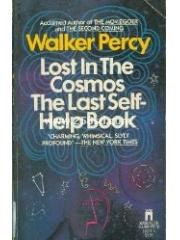
这本书的封面设计简直是视觉上的盛宴,那种深邃的靛蓝与星尘般的银白交织在一起,营造出一种既神秘又引人遐思的氛围。我一拿到手,就被那种厚重的质感吸引住了,纸张的触感细腻光滑,翻页时发出的沙沙声也仿佛带着某种宇宙的低语。这本书的装帧工艺显然是下足了功夫,书脊的烫金字体在光线下熠熠生辉,即便是放在书架上,它也像是一个艺术品,散发着难以言喻的吸引力。我尤其喜欢它内页的排版,字体的选择非常古典雅致,行距和页边距的处理恰到好处,让人在长时间阅读时眼睛也不会感到疲惫。虽然我还没完全深入内容,但仅从这“外衣”来看,作者或出版方对“宇宙”和“自我探索”这一主题的理解就已经通过视觉语言传达到了位。这种对细节的极致追求,让我对这本书的内容充满了更高的期待,它似乎在无声地告诉我,这里面承载的不仅仅是文字,更是一次精心准备的、沉浸式的体验。我甚至会特意挑一个安静的夜晚,在柔和的灯光下,慢慢地品味每一次触碰和翻阅的瞬间,这本身就是一种仪式感十足的享受,远超我以往阅读其他书籍的体验。