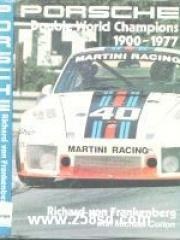

具体描述
Ferdinand Porsche, engineering genitts, and the very beginnings of the legend<br > created in the twentieth Century<br >i P=ri8 Exhil:i~ion-kohner-<br > Firs~ racing Pots=he"<br > THEY called it the exhibition of the century, and it far excelled its predecessors of 1878<br > and 1879; pavilions were bigger, more visitors came, more countries were represented.<br > and more specialized groups of exhibits were shown. Without doubt, science and<br >~engineering were the focal points of this Paris exhibition in the year 1900. The Eiffel<br > Tower, built in 1889, stood proudly above it all, a powerful symbol of technical progress.<br > This time the entire exhibition was lit by the new-fangled electric arc-lights and there was<br > even an Electricity palace . All branches of engineering were on show: rapid-firing guns<br >and machine guns, multi-spindle lathes, enormous cranes, the Edison X-ray camera,<br >electric conveyors, a 2,500hp steam engine by Borsig, an 18 ft high stationary engine by<br >Lanz, and, of course, there were also motor-cars.<br > In 1894 the first motor race had taken place. It was a long-distance run from Paris to<br >. Rouen, and a Daimler-engined car had been declared the winner. Then came a race from<br >Paris to Bordeaux. Through these events the motor vehicle became popular and the<br >demands made by these races advanced the early designs. In those days talk was only<br >about the French and German makes. Germany had seen the pr<>duction of the first cars,<br >while France staged the first competitions; other nations only started to produce motor<br >vehicles worthy of competition at the turn of the century.<br > In Austria the first self-propelled vehicle, which could be properly called a motor-car<br >had been built in 1875. This, the Marcus car, had actually been driven a short distance on<br >the roact, but to lVlarcus fell a typical inventor s fate, he was not in a position to improve<br >his invention nor to popularize it to the extent of putting it into production. The first<br >firm in Austria to take up car production in a proper commercial way was Jacob Lohner<br >& Co.<br > This company had been founded in 1891 and was one of the oldest coach-builders in<br >Austria. They built beautiful horse-drawn carriages some of which were vet3, luxurious,<br >and Jacob Lohner became K.u.K. Hofkutschenhauer _ in other words, Coach-builder to<br >his Imperial Majesty On 1st December 1896 Lohner decided to build motor-cars in<br >emulation of such gre~t ones as Dalmler, Benz, and Panhard of France. Yet Lohner<br >wanted to plough his OWn furrow; he thought that electric power would be preferable to<br >the internal comhustion engine. As supplier to the Imperial Court, he considered that it<br >would he necessary to build nmtor-cars acceptable at Court and worthy of being driven to<br >
作者简介
目录信息
读后感
用户评价
这本书的设定中,对于社会阶层的固化描绘得极其深刻且令人不寒而栗。它不是那种简单的富人与穷人对立,而是建立了一套基于基因序列和历史贡献度的严苛等级制度。底层人民甚至连拥有自主选择职业的权利都没有,他们的生活轨迹被精确计算,仿佛是庞大机器中的螺丝钉。作者花了大量的篇幅来展现这种“无声的压迫”,那种从出生起就被判定的命运感,非常具有现实的讽刺意味。我记得有一个情节,一个底层家庭的孩子因为展现了微小的天赋,被上层精英机构检测到,随后便引发了一系列关于“人才征用”的伦理争论,整个社会机器如何冷酷地吞噬个体的自由意志,被刻画得入木三分。这本书的价值,或许不在于它提供了多少激动人心的冒险,而在于它提供了一个极端化的社会模型,促使读者去反思我们自己世界中那些看不见的、但同样强大的阶层壁垒。
我是在一个周末的雨天,窝在沙发里,抱着这本厚重的精装书读完的。它最让我着迷的,是作者对于“人性在极端压力下的蜕变”这一主题的深刻挖掘。书中的主角,一个原本只是个小小的机械师,因为一场意外卷入了核心的秘密斗争。他的成长线处理得极为细腻真实,没有那种突如其来的“开挂”升级。他犯错、他恐惧、他怀疑自己的一切选择,每一次的进步都伴随着沉重的代价。有一幕,他为了保护一个无辜的平民,不得不做出了一个违背他内心原则的决定,那种内心的挣扎和自我厌弃,通过作者精妙的内心独白展现得淋漓尽致,我甚至能感受到他指尖的颤抖。这种对角色心理深度的刻画,远超出了普通商业小说的范畴。它探讨的不仅仅是生存,更是“如何保持人性完整性”的哲学命题。读完后,我久久不能平静,合上书本,仿佛那个世界还残留在我的呼吸之间,那种压抑又充满希望的感觉,非常独特。
这本小说,说实话,初读时差点被它庞大的世界观给劝退。作者构建了一个极其复杂的权力结构,涉及了数个星系和古老的家族恩怨。情节推进得非常缓慢,前三分之一的时间都在铺陈背景、介绍形形色色的角色及其错综复杂的关系网。我尤其印象深刻的是对那个被称为“中枢议会”的描写,其内部的尔虞我诈、暗流涌动,几乎让人窒息。有几场重要的政治辩论戏,写得如同棋局推演,每一步都充满了试探和陷阱,简直是教科书级别的权谋展示。然而,这种精细到令人发指的设定,也让一些渴望快节奏体验的读者感到疲惫。我不得不承认,当我终于理清了主要派系的首领和他们的核心诉求后,故事的张力才真正爆发出来。那场发生在第三颗卫星上的突袭战,描写得宏大而残酷,硝烟弥漫的战场、损耗惨重的舰队,都让人感受到战争的真实重量,而非仅仅是数字和火力。整本书给我的感觉是,它更像是一部史诗级的编年史,而非传统意义上的爽文,需要极大的耐心去细品。
坦率地说,故事的后半部分,我个人认为节奏有些失衡。前半段的阴谋布局和人物塑造堪称完美,节奏紧凑,悬念迭起。但进入到“大决战”阶段,似乎作者急于收束过多的线索,导致一些关键性的转折显得过于仓促。特别是那个最终反派的动机揭示,虽然理论上说得通,但情感上的冲击力却明显不足,像是一个早有预兆的、但执行得略显粗糙的“收尾”。我原本期待一个更加令人拍案叫绝的、意想不到的深层原因,结果却落入了一个相对传统的情节套路中。另外,书中引入了太多支线人物,虽然他们各自的故事线都有其闪光点,但最终有几条线索明显没有得到足够的关注和交代,留下了不少开放性的遗憾。这就像看了一场精彩的交响乐,但在最后的尾声部分,指挥家似乎有些心不在焉,收束得不够圆满。
这本书的文笔风格,用“华丽”二字形容可能都不够,更像是一种古典主义的复古美学融入了科幻设定。它大量运用了长句和复杂的从句,描述景物时,会引用大量不常见的古典意象,即便是描写一艘飞船的外壳,也能写出如同文艺复兴时期雕塑一般的质感和光影效果。例如,书中描述一座漂浮在气态巨行星上的城市时,用了整整三页的篇幅来描绘不同时间点阳光穿过大气层折射出的色彩变化,以及那些古老建筑上苔藓的纹理。这阅读体验非常挑剔,如果你习惯了干脆利落的叙事,可能会觉得它拖沓冗余。但我个人非常享受这种沉浸式的、被文字的洪流裹挟着前进的感觉。它更像是文学作品,而非类型小说,需要读者投入心力去解码那些层层叠叠的比喻和象征,才能真正体会到作者的匠心。







![[黄梅戏]玉堂春 下(VCD) pdf epub mobi 电子书 下载](https://doubookpic.tinynews.org/913d0adf9cb14e6c22b9852318d1dd074cee2ed1ef4ab80e32e01e493551a22c/book-default-lpic.gif)