
具体描述
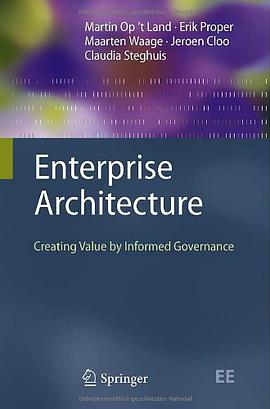
Twenty years after the first publications and books on enterprise architecture, the domain is evolving from a technology-driven towards a more business-driven approach, thus empowering decision makers to adapt and transform an enterprise in order to keep up with changing business needs. At the same time the discipline of enterprise architecting has matured, leading to a better understanding of the profession of an enterprise architect. With this book, the authors aim to provide an overview of enterprise architecture including the process of creating, applying and maintaining it, thus taking into account the perspectives of CxOs, business managers, enterprise architects, solution architects, designers and engineers. They explore the results that are produced as part of an enterprise architecture, the process by which these are produced, and the role the architect plays in this process. As such, they do not describe a specific method for developing an enterprise (IT) architecture, nor do they define a specific modeling language for enterprise architecture, rather they offer the reader a fundamental way of thinking about enterprise architecture, which will enable him to select and apply the right approach, architecture framework and tools that meet the objective and context of the architecture work at hand. This approach is emphasized by discussion statements at the end of each chapter, sparking thoughts about benefits, shortcomings, and future research directions. Covering both theoretical foundations and practical use, and written in close collaboration between industry professionals and academic lecturers, Enterprise Architecture thus offers an ideal introduction for students in areas like business information systems or management science, as well as guidance and background for professionals seeking a more thorough understanding of their field of work.
作者简介
Martin Op ’t Land is Principal Consultant and Enterprise Architect at Capgemini and has over 16 years of experience in the field of enterprise architecture, mostly in the finance and public sectors. In addition, he is involved in research in the field of enterprise engineering and architecting. His current research focuses on methods for splitting and allying organizations.
Erik Proper is Principal Consultant at Capgemini and Professor in Information Systems at the Radboud University Nijmegen. He has a mixed industrial and academic background. His interests lie mainly in the field of conceptual modeling, enterprise modeling, enterprise engineering and enterprise architecting. He was co-initiator of the ArchiMate project, and currently also serves on the board of the ArchiMate foundation as well as the Netherlands Architecture Forum (NAF).
Maarten Waage is Enterprise Architect at Capgemini. He has over 10 years of experience in creating and applying enterprise architecture, mostly in the context of complex business/IT transformations of large organizations (both profit and not-for-profit).
Jeroen Cloo is Senior Consultant and Enterprise Architect at SeederDeBoer. With a degree in Technology Management, he started as a consultant over 10 years ago. He has been involved in multiple enterprise architecture engagements in different sectors.
Claudia Steghuis is Senior Consultant at Capgemini, with about 2 years of experience in enterprise architecture.
目录信息
读后感
之前也一直在用EA 前一段时间了解到了ProcessOn 一款HTML5开发的在线作图工具,基本和一个visio很类似,但比visio好用多了,即开即用永久免费! 现在ProcessOn也支持UML建模了,还是很支持推荐的!
之前也一直在用EA 前一段时间了解到了ProcessOn 一款HTML5开发的在线作图工具,基本和一个visio很类似,但比visio好用多了,即开即用永久免费! 现在ProcessOn也支持UML建模了,还是很支持推荐的!
之前也一直在用EA 前一段时间了解到了ProcessOn 一款HTML5开发的在线作图工具,基本和一个visio很类似,但比visio好用多了,即开即用永久免费! 现在ProcessOn也支持UML建模了,还是很支持推荐的!
之前也一直在用EA 前一段时间了解到了ProcessOn 一款HTML5开发的在线作图工具,基本和一个visio很类似,但比visio好用多了,即开即用永久免费! 现在ProcessOn也支持UML建模了,还是很支持推荐的!
之前也一直在用EA 前一段时间了解到了ProcessOn 一款HTML5开发的在线作图工具,基本和一个visio很类似,但比visio好用多了,即开即用永久免费! 现在ProcessOn也支持UML建模了,还是很支持推荐的!
用户评价
如果非要挑出一些让初学者望而却步的地方,那就是这本书对“术语”和“模型”的密集使用。它假设读者已经对诸如TOGAF、Zachman等主流框架有一定的基础认知,并在这些基础上进行了更深层次的创新和突破。对于完全没有接触过企业架构概念的读者来说,前几章的阅读体验可能会比较晦涩,感觉像是在啃一块硬骨头。然而,一旦跨越了这道门槛,你会发现这些看似复杂的模型,实际上是对现实世界中无数混乱交互的精妙抽象。作者并没有停留在模型本身的介绍,而是着重展示了如何“运用”这些模型来解决实际的跨部门协作难题。例如,书中关于“领域驱动设计(DDD)与企业架构的集成”的章节,简直是为微服务时代的架构师量身定做。它提供了一种结构化的方法,让你能够清晰地界定服务边界,避免了在微服务实践中常见的“分布式单体”陷阱。这体现了作者的功力:将最前沿的技术趋势,用最严谨的架构思维进行重构和落地。
这本书的深度和广度简直令人咋舌,它不仅仅是一本关于技术架构的指南,更像是一本关于商业战略与信息技术深度融合的哲学著作。作者以一种近乎手术刀般的精准,剖析了当前企业在数字化转型浪潮中所面临的结构性困境。我尤其欣赏其中关于“价值流驱动”架构设计的阐述,它彻底颠覆了我过去那种自上而下、自下而上纯技术堆砌的思维定式。书中花了大量篇幅去探讨如何将复杂的业务目标层层分解,并映射到具体的IT能力和服务上,这种“业务-技术”双螺旋的构建逻辑,为那些在“IT部门是成本中心”泥潭中挣扎多年的管理者指明了方向。它不是空谈理论,而是充满了可操作性的框架和案例,比如如何建立跨职能的架构评审委员会,以及如何使用成熟度模型来衡量架构演进的步伐。读完第一部分,我感觉像是经历了一次对自身工作方式的彻底洗礼,那些曾经模糊不清的战略意图,突然间变得清晰可见,仿佛迷雾散去,露出了清晰的航道。对于任何希望将IT真正转化为核心竞争力的企业高管或架构师来说,这本书都是一本不可或缺的“战略地图”。
从内容的可移植性和跨行业适用性来看,这本书表现出了惊人的韧性。它没有被任何特定的技术栈或行业法规所束缚。无论你是在金融、制造、电信还是公共服务领域,只要你的组织面临着规模化、复杂性和快速变化带来的挑战,书中的原则都具有极强的指导意义。我特别留意了书中关于“架构负债”的量化和管理方法。不同于其他书籍仅仅将架构负债视为一种隐性成本,作者提供了一套可视化的工具集,用于评估负债的“健康风险”和“业务影响度”,并将其纳入年度预算规划的考量之中。这使得架构治理从一种“感觉”变成了可量化的“指标”。总而言之,这是一部需要反复研读的典籍,而不是一次性读完的快餐读物。每隔一段时间重读,都会有新的领悟,因为它所构建的思维框架,能够随着我们自身经验的增长而展现出更深层次的内涵和价值。
这本巨著的价值,尤其体现在它对“治理”和“文化”的深刻洞察上。架构的制定容易,但如何确保它在成百上千的开发人员和产品经理手中得到一致的贯彻和执行,才是真正的难点所在。作者非常细致地描绘了从“蓝图绘制”到“日常决策”的全流程治理机制。我特别欣赏书中关于“去中心化决策”与“集中式标准”之间平衡的探讨。它提出了一个非常精妙的框架,用来界定哪些决策必须由中央架构师团队拍板,哪些可以授权给领域团队快速执行。这避免了传统治理模式中常见的“僵化审批”和“流程堵塞”。此外,书中关于“架构师角色演变”的论述,也让我茅塞顿开——架构师不再是高高在上的设计者,而是赋能者、协调者和冲突的调解人。这本书实际上是一本关于“如何打造一个高效能技术组织的社会学指南”,技术只是表象,人与流程才是核心。
这本书的文字风格,说实话,初读时颇有挑战性,因为它不像市面上那些快餐式的管理书籍那样提供立即可用的“三步走”方案。它更像是一部严谨的学术论文与实践手册的完美结合体。作者的论证过程环环相扣,充满了对历史经验的深刻反思——他没有回避过去那些失败的架构实践是如何产生的,而是将其归因于方法论的缺失和组织文化的惰性。我深感震撼的是关于“遗留系统现代化”那一章,作者提出的渐进式替换策略,避免了传统“大爆炸”式重构的巨大风险。他强调的不是推翻重来,而是如何通过建立清晰的“契约”和“隔离层”,让新旧系统能够和平共存并逐步迭代。这种务实到近乎保守的策略,恰恰体现了对真实企业复杂性的深刻理解。阅读过程中,我不得不时常停下来,对照自己公司当前的系统图谱进行比对和反思,这种强烈的代入感和批判性阅读体验,是很多浮于表面的书籍所无法给予的。它迫使你思考,你的“当前状态”在未来五年、十年会变成什么样,并为你准备好应对变化的工具箱。