
具体描述
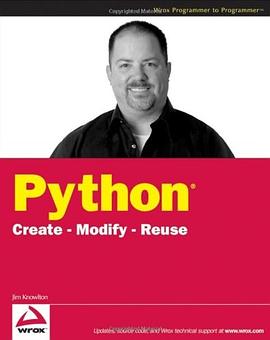
Python: Create-Modify-Reuse is designed for all levels of Python developers interested in a practical, hands-on way of learning Python development. This book is designed to show you how to use Python (in combination with the raw processing power of your computer) to accomplish real-world tasks in a more efficient way. Don't look for an exhaustive description of the Python language––you won't find it. The book's main purpose is not to thoroughly cover the Python language, but rather to show how you can use Python to create robust, real-world applications. In this respect, the goal is similar to foreign-language books that identify themselves as “conversational,” focusing on the vocabulary and concepts that people will need the most. Likewise, I focus specifically on the Python knowledge needed to accomplish practical, specific tasks. Along the way, you will learn to create useful, efficient scripts that are easy to maintain and enhance. This book is for developers with some experience with Python who want to explore how to develop full-blown applications. It is also for developers with experience in other languages who want to learn Python by building robust applications. It is well-suited for developers who like to “learn by doing,” rather than exploring a language feature by feature. To get the most out of the book, you should understand basic programming principles. Because this book is project-based, you can approach it in numerous ways. You can, of course, read it from cover to cover. Chapters 2 through 8 each cover a different project, so the chapters are independent of each other. However, because each chapter project is covered individually, there may be some overlap of information. I also sometimes refer to explanations of particular topics covered in previous chapters. This will help to reinforce important concepts. The end of the book contains two appendixes. The first one is a listing of Python resources you can check out for more information. The second one will help you with installing additional components used in some of the examples. This book starts with a basic overview of the Python language, designed for those familiar with other languages but new to Python. It is followed by several chapters, each of which describes a complete project that can be used as-is or modified and extended to suit your particular purposes. You'll find applications that access databases, take advantage of web technologies, and facilitate network communications, to name a few. In addition, and more important than the technologies you will be introduced to, you will learn how to use Python to solve real challenges. Following these chapters are two chapters that cover accessing operating system resources and debugging and testing, respectively. Each project chapter contains complete instructions describing how to install and use the application, so you can actually see the program run as you learn how to construct and use it, including how the project was designed and prototyped. This book is intended to be both a reference guide and a learning aid, teaching you how to build solutions with Python and providing reference information on a wide variety of Python programming concepts. It is hoped that this book will help you have fun with Python and build useful applications, and—unlike my experience with building a deck—without sore thumbs. This book is framed around the code itself. This is because developers are typically looking for how to do something; and, as with many activities, you learn how to do something by watching how others do and trying it yourself. If you want to know how a for loop works, you'll find for loops in my code, but that's not the thrust of the book. Instead, this book shows you how to do things: how to build a content management system, how to build a test management system, how to set up a system for tracking customer follow-up, and so on. Along the way, you'll learn how to communicate with a SQL database, how to act as a web server or communicate with one, how to access operating system services, and more. There are three basic components to the book: Chapter 1 is a brief overview of the Python language. Chapters 2–8 cover seven different programming projects, which illustrate various technologies and techniques available to Python developers. Chapters 9–10 cover additional, advanced topics, which will help you as you build Python projects. The project chapters have a consistent structure: Overview: What does the application do? Using the program Design How it all fits together Modules involved Code and code explanation Module/class 1 explanation Module/class 2 explanation Minor code file explanation Testing, including suggested tests Modifying the project, including some suggested adaptations Summary Each project is designed with classes that can be reused and accessed for multiple purposes. This is one of the main benefits of object-oriented programming, so designing for reusability is a main focus of the book. The book contains the following chapters: 1. Python Basics This chapter is a basic primer on the Python language, and it functions as either a quick tutorial for experienced programmers new to Python or a refresher for programmers with Python experience. Part I: The Projects 2. Directory/File Snapshot Program This project demonstrates how to interact with files, create and manipulate data structures, and provide user output. It also touches on code design issues to improve code maintainability. Often when installing or uninstalling software, or verifying changes to a file system, it can be valuable to take a “snapshot” of the files and directories, along with their size and last-modified time. The script introduced in this chapter does just that. This chapter also explores how to capture a directory listing into a Python list, and explains how to query this list for particular values. 3. DVD Inventory System This project takes advantage of Python’s capability to access and manipulate data in a SQL database. The application enables multiple users to log in to a website that provides access to a DVD inventory database. Permissions are set such that some users can add, modify, or delete entries, whereas other users have read-only access to the data. 4. Web Performance Tester This project shows how to communicate with a Python web server and retrieve information regarding how long it takes to receive requested items from the web server. Although writing Python programs to work on a single computer can be useful, the real power of Python can be seen when it is used to script communication between computers on a network. Most networks contain several web servers. A nice feature of Python is that it can act as a lightweight server for various Internet protocols, such as HTTP (web) and ftp. This application enables you to monitor performance of HTTP traffic on your network. 5. Customer Follow-Up System This project shows how to present a web form to the user and retrieve data from it, how to automatically format and send e-mail through an SMTP server, and how to generate an HTML-formatted report. The task for the second example is to automatically generate a customer comments e-mail message based on information the customer enters in a form. It uses the mod_python Apache module to take the information entered in the HTTP form and then utilizes a Python script on the web server to send that information to an SMTP server for mail delivery. 6. Test Management/Reporting System This project makes use of the unittest module to run tests against an existing application, and creates a framework for reporting test results. Testing is a vital process for developing software. This application enables users to run tests for a given piece of software, to list the previous test runs by date, to show test run results for any previously run tests, and to output the results of any test run as HTML for viewing in a web browser. 7. Version Management System This project connects to a list of servers via telnet, checks the application version of a pre-set application list, and displays its results both as output and to a log file. Often, a system administrator needs to patch systems or ensure that systems have the latest application versions installed. This script is an easy way to accomplish that task. It makes use of Python’s capability to emulate a telnet client and log in to remote systems and perform functions on that remote system. 8. Content Management System This project explores Plone, a popular content management system based on Python and Zope (a Python-based application server). Because Python is a very mature language, numerous applications have been built on top of it. A great thing about working with Python-based applications is that you get the benefit of a full-blown application but you can still use Python to configure and customize it. Part II: Advanced Topics 9. Interacting with the Operating System When writing scripts “in the real world,” often it is critical to be able to access services available through (and particular to) the operating system you happen to be on. For example, suppose you wanted to read or modify the Window Registry? Or you wanted to get the Linux process ID of a particular process that is running? Is such a thing even possible? Definitely—and this chapter shows you how. 10. Debugging and Testing Because I am a software tester myself, testing is a subject that is certainly close to my heart. In this chapter, I discuss why testing is important, how to put the right amount of testing into your code, and how writing automated tests can help you to actually write code more quickly. You’ll look at PyUnit, the automated testing framework for Python, and learn how to use it to test the riskiest parts of a script. You’ll also explore the Python de...
作者简介
Jim Knowlton is a software quality engineer with Automatic Data Processing (ADP), Inc., where he
leads quality assurance efforts on ADP ’ s computer telephony integration and network video projects.
He has been instrumental in introducing automated testing methodologies to their QA effort. He has
more than fifteen years of experience in the software industry, including clients such as Symantec,
Novell, Nike, and Zions Bank. He has extensive experience in open - source technologies, including
Python, Ruby, PHP, Apache, and MySQL, and has also worked extensively in the areas of systems
management and enterprise security. Jim holds a bachelor of arts degree in management and is currently
working on a master of software engineering degree at Portland State University.
目录信息
读后感
Python: Create-Modify-Reuse is designed for all levels of Python developers interested in a practical, hands-on way of learning Python development. This book is designed to show you how to use Python (in combination with the raw processing power of your com...
Python: Create-Modify-Reuse is designed for all levels of Python developers interested in a practical, hands-on way of learning Python development. This book is designed to show you how to use Python (in combination with the raw processing power of your com...
Python: Create-Modify-Reuse is designed for all levels of Python developers interested in a practical, hands-on way of learning Python development. This book is designed to show you how to use Python (in combination with the raw processing power of your com...
Python: Create-Modify-Reuse is designed for all levels of Python developers interested in a practical, hands-on way of learning Python development. This book is designed to show you how to use Python (in combination with the raw processing power of your com...
Python: Create-Modify-Reuse is designed for all levels of Python developers interested in a practical, hands-on way of learning Python development. This book is designed to show you how to use Python (in combination with the raw processing power of your com...
用户评价
这部《Python》的封面设计就足够吸引人,简洁却充满力量,仿佛预示着这本书将带我进入一个全新的编程世界。我是一名对计算机科学充满好奇的学生,虽然接触过一些基础的编程概念,但一直未能找到一本能够系统性地引导我深入理解Python的教材。在翻阅这本书之前,我尝试过不少在线教程和零散的书籍,它们往往碎片化,难以形成完整的知识体系。然而,当我拿到这本书的那一刻,我便感受到了一种截然不同的期待。这本书的排版清晰,章节划分逻辑严谨,从最基础的变量、数据类型开始,逐步深入到函数、类、模块等核心概念。更令我惊喜的是,书中大量的代码示例都经过精心设计,不仅能够清晰地展示概念,而且附带了详尽的解释,让我能够理解每一行代码的运作原理。作者在解释复杂概念时,使用了类比和图示,使得学习过程更加生动有趣,我不再感到枯燥乏味,而是仿佛在与一位经验丰富的导师进行对话。尤其是在讲解面向对象编程的部分,书中通过实际项目案例,逐步构建起一个完整的类,让我深刻理解了封装、继承和多态的实际应用。这种循序渐进的学习方式,让我能够扎实地掌握Python的精髓,为我后续的学习打下了坚实的基础。我迫不及待地想将书中介绍的每一个技巧都运用到我的学习和项目中去,相信这本书定能成为我探索Python世界的得力助手。
这本书的价值在于它不仅仅是一本关于Python语法的书,更是一本关于如何用Python解决实际问题的指南。作为一名在职开发者,我深知理论知识的重要性,但更看重的是能够将所学转化为实际效益。这本书在这方面做得非常出色。它提供了大量与实际开发场景紧密相关的项目和示例,涵盖了Web开发、自动化脚本、数据分析等多个领域。我特别喜欢书中关于Web开发的章节,它循序渐进地讲解了如何使用Flask框架构建一个简单的Web应用,让我能够快速地了解Web开发的流程和核心技术。书中对错误处理和调试的深入探讨,也让我学到了许多调试技巧,能够更有效地定位和解决代码中的bug。此外,书中对代码风格和最佳实践的强调,也让我意识到了编写可读、可维护的代码的重要性。这本书的内容非常丰富,但讲解却丝毫不过于冗长,每一部分都直击核心,让我能够高效地学习。我将这本书视为我日常开发工作的重要参考,它不仅帮助我提升了Python技能,也拓宽了我的技术视野。
我是一名非计算机专业的学生,一直对数据科学领域非常感兴趣,而Python正是进入这个领域的敲门砖。在选择学习资料时,我非常谨慎,希望找到一本既能系统讲解Python基础,又能与数据科学应用相结合的书籍。这本《Python》正是我的首选。它以一种非常直观和有趣的方式介绍了Python的基础知识,让我这个编程新手也能轻松上手。书中在讲解完基础语法后,便迅速地引入了NumPy和Pandas等数据科学核心库,并提供了丰富的案例来演示如何使用这些库进行数据处理、分析和可视化。我记得在学习Pandas时,书中有一个通过处理真实世界数据集来进行探索性数据分析的章节,我跟着书中的步骤,一步一步地对数据进行清洗、转换和可视化,从中获得了许多有价值的洞察。这种理论与实践相结合的学习方式,让我能够快速地将Python应用到我感兴趣的数据科学领域。这本书不仅教会了我Python编程,更让我对数据科学产生了浓厚的兴趣,它为我打开了通往这个精彩世界的大门。
从我接触到这本书开始,我就被它严谨的逻辑和丰富的内涵所吸引。这本书不仅仅是教授Python语言本身,更是在引导读者理解编程的思想和方法。作者对每一个概念的解释都力求精准和透彻,例如在讲解数据结构时,不仅仅列举了列表、元组、字典等,还深入分析了它们在不同场景下的适用性和性能差异。我最喜欢的是书中关于算法和数据结构在Python中的实现的部分,这让我能够将抽象的理论知识与具体的代码相结合,更好地理解算法的运行机制。书中提供了许多经典的算法示例,例如排序算法、搜索算法等,并详细解释了它们的实现细节和时间复杂度。这对于我理解计算机科学的基础理论非常有帮助。这本书的另一个亮点是它对Python生态系统的介绍,包括常用的第三方库和框架,以及如何使用它们来解决更复杂的问题。我从中了解到了像Scikit-learn、TensorFlow等在机器学习领域非常重要的库,并对它们产生了浓厚的兴趣。这本书不仅提升了我的Python编程能力,更深化了我对计算机科学的理解。
这部《Python》给我带来的最大价值在于它能够帮助我培养一种“Pythonic”的思维模式。在学习过程中,作者不仅仅是传授语法和API,更重要的是引导我理解Python语言的设计哲学和社区文化。书中对Python的包管理、虚拟环境、测试驱动开发等方面的介绍,让我能够更规范、更高效地进行软件开发。我特别欣赏书中关于如何利用Python进行数据可视化的详细讲解,通过Matplotlib和Seaborn等库,我能够将抽象的数据转化为直观的图表,这对我进行数据分析和报告撰写非常有帮助。书中提供的每一个案例都经过精心挑选,贴近实际应用,让我能够学以致用。这本书不仅仅是一本技术指南,更是一本关于如何成为一名优秀Python开发者的“武功秘籍”。它让我明白,技术本身是不断发展的,但掌握正确的思维模式和学习方法,才能在技术的海洋中乘风破浪。我从中获得的不仅仅是Python的知识,更是一种持续学习和不断进步的动力。
这本书的写作风格非常独特,它没有使用那种枯燥乏味的教科书式语言,而是充满了作者的个人见解和思考,读起来非常生动有趣。我尤其欣赏书中对“少即是多”的编程理念的推崇,这让我明白如何写出简洁而富有表现力的Python代码。书中提供了许多“最佳实践”的建议,涵盖了代码的可读性、可维护性、效率等方面,这些都是在实际开发中非常重要的指导。我记得书中关于使用生成器来处理大型数据集的例子,让我学到了如何优化内存使用,避免程序崩溃。这本书更像是一位经验丰富的同行,与我分享他的编程心得和技巧。它的内容非常丰富,但又不会让人感到 overwhelming,每一章都独立成篇,又相互关联,构成了一个完整的知识体系。我将这本书视为我持续学习Python的宝贵资源,它不仅帮助我提升了编程技能,更培养了我作为一名开发者应有的严谨和思考。
我是一名对编程充满热情但时间有限的在职人士,寻求一本能够快速入门并掌握Python核心技能的书籍。这本书恰好满足了我的需求。它以非常精炼的语言和清晰的结构,帮助我快速掌握了Python的基础知识。我尤其喜欢书中对“Pythonic”风格的强调,这让我明白如何写出更简洁、更易读的代码。书中关于函数式编程的介绍,为我打开了新的思路,让我能够以更优雅的方式处理数据。我最受启发的是书中关于如何利用Python进行自动化办公的章节,我尝试了书中介绍的一些脚本,成功地将我日常一些繁琐的重复性工作自动化,大大节省了我的时间和精力。这本书的优点在于它并没有过多地纠缠于深奥的理论,而是更注重实际应用和高效学习。它让我相信,即使是编程新手,也能够通过这本书快速上手Python,并将其应用于实际工作生活中。这本书是我学习Python道路上的一个重要里程碑,它不仅传授了我知识,更给了我解决实际问题的信心。
这部《Python》的深度和广度都超出了我的预期。作为一名有一定编程基础的开发者,我一直希望能够找到一本能够帮助我提升Python技能的书籍,而这本书恰好满足了我的需求。书中对Python的各项特性的讲解都非常深入,例如对生成器、装饰器、上下文管理器等高级概念的剖析,让我豁然开朗。我尤其赞赏作者在讲解这些概念时,没有仅仅停留在理论层面,而是结合了大量的实际应用场景,让我能够理解这些高级特性在实际开发中的价值。书中提到的并发编程和异步IO的部分,对于我目前正在进行的项目非常有启发性。我尝试了书中介绍的`asyncio`库,并将其应用到我的代码中,显著提升了程序的响应速度和效率。此外,书中对Python性能优化的讨论,也让我受益匪浅,学习到了一些能够让我的代码运行得更快的技巧。这本书不仅仅是一本技术手册,更像是一位经验丰富的导师,通过这本书,我不仅巩固了已有的知识,还学习到了许多新的、实用的编程技巧,让我能够更自信地应对各种复杂的编程挑战。
在我接触编程的过程中,遇到过不少教材,但很少有能够像这本《Python》一样,让我感受到如此深刻的学习动力。这本书不仅仅是教我如何使用Python,更是激发了我对编程本身的热情。作者在讲解每一个概念时,都融入了对这个概念背后原理的深入剖析,让我不仅仅是“知其然”,更能“知其所以然”。我尤其欣赏书中关于元编程和反射机制的章节,这让我看到了Python语言的强大和灵活性,也为我打开了深入探索Python底层运行机制的大门。书中提供的许多代码示例,都充满了巧妙的设计和深刻的洞察,让我能够从中学习到如何编写更优雅、更高效的代码。这本书不仅仅是技术书籍,更像是一次思想的启迪。它让我明白,编程不仅仅是写代码,更是一种创造性的过程,一种解决问题的艺术。我将这本书视为我编程生涯中的一本“必读”之作,它不仅提升了我的技术水平,更丰富了我对编程的认知。
作为一名初学者,我一直被编程的神秘感所吸引,但又常常因为复杂的语法和概念而望而却步。直到我偶然发现了这本《Python》,它彻底改变了我对编程的看法。这本书的语言风格非常亲切,仿佛是为我量身定做的。作者并没有使用过于专业和晦涩的术语,而是用一种非常易于理解的方式来讲解每一个知识点。我尤其喜欢书中关于“如何像Pythonic一样思考”的章节,它不仅仅是教授语法,更是引导我理解Python的设计哲学,让我明白如何写出优雅、高效的代码。书中大量的练习题和小型项目,让我有机会将所学知识付诸实践,每一次的成功都给我带来了巨大的成就感。我记得在学习文件操作的那一章,书中提供了一个从CSV文件中读取数据并进行简单分析的小项目,我按照书中的步骤一步一步完成,最终得到了我想要的结果,那种喜悦是难以言喻的。这本书不仅教会了我如何写代码,更培养了我解决问题的能力和独立思考的习惯。它的内容涵盖了Python的方方面面,从基础的语法到进阶的库应用,都讲解得非常透彻。我能够感受到作者在编写这本书时所付出的心血和热情,这种热情也感染了我,让我更加热爱学习Python。
这本书对初学者来说,代码讲解得不够详细,对于有经验的开发人员又太过浅显。不过初学者随便翻翻还是有价值的,介绍了很多常用module
这本书对初学者来说,代码讲解得不够详细,对于有经验的开发人员又太过浅显。不过初学者随便翻翻还是有价值的,介绍了很多常用module
让我想起了大一的C语言作业
这本书对初学者来说,代码讲解得不够详细,对于有经验的开发人员又太过浅显。不过初学者随便翻翻还是有价值的,介绍了很多常用module
这本书对初学者来说,代码讲解得不够详细,对于有经验的开发人员又太过浅显。不过初学者随便翻翻还是有价值的,介绍了很多常用module