
具体描述
Why are some countries better than others at science and technology (S&T)? Written in an approachable style, The Politics of Innovation provides readers from all backgrounds and levels of expertise a comprehensive introduction to the debates over national S&T competitiveness. It synthesizes over fifty years of theory and research on national innovation rates, bringing together the current political and economic wisdom, and latest findings, about how nations become S&T leaders. Many experts mistakenly believe that domestic institutions and policies determine national innovation rates. However, after decades of research, there is still no agreement on precisely how this happens, exactly which institutions matter, and little aggregate evidence has been produced to support any particular explanation. Yet, despite these problems, a core faith in a relationship between domestic institutions and national innovation rates remains widely held and little challenged. The Politics of Innovation confronts head-on this contradiction between theory, evidence, and the popularity of the institutions-innovation hypothesis. It presents extensive evidence to show that domestic institutions and policies do not determine innovation rates. Instead, it argues that social networks are as important as institutions in determining national innovation rates. The Politics of Innovation also introduces a new theory of "creative insecurity" which explains how institutions, policies, and networks are all subservient to politics. It argues that, ultimately, each country's balance of domestic rivalries vs. external threats, and the ensuing political fights, are what drive S&T competitiveness. In making its case, The Politics of Innovation draws upon statistical analysis and comparative case studies of the United States, Japan, South Korea, China, Taiwan, Thailand, the Philippines, Argentina, Brazil, Mexico, Canada, Turkey, Israel, Russia and a dozen countries across Western Europe.
作者简介
Mark Zachary Taylor is Associate Professor of Political Science, Georgia Institute of Technology
目录信息
Acknowledgements
Dedication
Country Codes
Cardwell's Law
1 Introduction: The Puzzle of Cardwell's Law
2 Measuring the Black Box
3 Cardwell's Law in Action
How Do Nations Innovate?: Policies and Institutions
4 Does Technology Need Government?: The Five Pillars of Innovation
5 "Why Nations Fail": Capitalism, Democracy, and Decentralization
6 How Nations Succeed: Networks, Clusters, and Standards
Why Do Nations Innovate?: Creative Insecurity
7 Technological Losers and Political Resistance to Innovation
8 Creative Insecurity: Olson's Nemesis
9 Critical Cases of Creative Insecurity
10 Conclusion: Creative Insecurity and its Implications
Appendices-Definitions, Measurement, and Data
A1 The Great Definitions (Non-) Debate
A2 A Brief History of Measurement
A3 Tour of Innovation Measures, Data, and Sources
References
Index
· · · · · · (收起)
读后感
用户评价
从语言风格上来说,这本书的写作非常流畅且富有吸引力。作者的语言既学术性又不失可读性,他能够用清晰、简洁的语言表达复杂的思想,让即使不是专业背景的读者也能轻松理解。
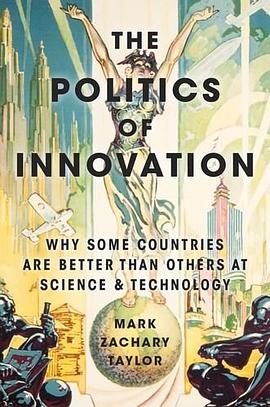
这本书的封面设计就足以让人眼前一亮,一种既现代又带有复古质感的字体,将“The Politics of Innovation”这几个词巧妙地融合在一种抽象的、富有动态的视觉元素中,仿佛在预示着书中所探讨的主题——创新并非总是线性或理性的,而是充满了政治博弈、权力结构以及不同利益方之间的复杂互动。我在书店里第一次看到它时,就被这种视觉语言所吸引,它不仅仅是一个标识,更像是一个精心设计的引信,点燃了我对书中内容的强烈好奇。
这本书最让我印象深刻的是,作者成功地将抽象的政治理论与具体的创新案例相结合。他能够非常流畅地在宏观的政治分析和微观的案例细节之间切换,让读者既能把握整体的脉络,又能体味到每一个细节的丰富性。
这本书的结构安排也相当精妙,它没有采用单一的叙事线索,而是通过多个相互关联的案例研究,层层递进地展现了创新的政治维度。我特别喜欢作者处理不同议题的方式,既有对重大历史性创新的回顾,也有对当前前沿科技的深入探讨,例如人工智能、生物技术等等。
《The Politics of Innovation》是一本非常适合那些希望深入理解创新背后逻辑的读者。它不仅仅是关于技术本身,更是关于技术如何被开发、被推广、被应用,以及这些过程如何塑造我们的社会。
这本书的作者显然做足了功课,对于每个案例的研究都显得严谨而透彻。他引用的文献和数据都非常扎实,并且能够清晰地勾勒出各个利益相关方在创新过程中的立场和策略。这种基于证据的分析,让我对书中提出的观点深信不疑。
阅读这本书的过程中,我常常会停下来思考,反思我们自己所处的社会和环境中,是否存在类似的政治博弈正在影响着创新。作者并没有提供简单的是非判断,而是鼓励读者进行批判性思考,去辨析隐藏在创新背后的各种力量。
我一直对技术创新及其社会影响非常感兴趣,但很多时候,市面上关于创新的书籍要么过于技术化,充斥着我难以理解的专业术语,要么过于泛泛而谈,缺乏深入的分析。然而,当我翻开《The Politics of Innovation》的扉页,我立刻感受到了它与众不同之处。作者似乎有一种特殊的洞察力,能够将复杂的创新过程剖析得淋漓尽致,并且将其置于一个宏大的政治和社会背景之下进行审视。
我必须说,这本书极大地拓展了我对“创新”这个词的理解。过往,我可能更多地将其与技术突破、产品迭代联系起来,但《The Politics of Innovation》让我意识到,创新本质上是一种社会建构,它受到政治决策、经济利益、文化价值观以及权力分配等多种因素的深刻影响。
总而言之,《The Politics of Innovation》是一本我认为非常值得一读的书。它不仅能够增长知识,更能引发思考,帮助我们更深刻地认识我们所处的这个充满变化的时代。