具体描述
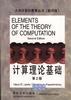
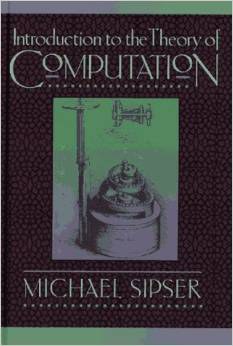
本书由计算理论领域的知名权威Michael Sipser所撰写。他以独特的视角,系统地介绍了计算理论的三个主要内容:自动机与语言、可计算性理论和计算复杂性理论。绝大部分内容是基本的,同时对可计算性和计算复杂性理论中的某些高级内容进行了重点介绍。作者以清新的笔触、生动的语言给出了宽泛的数学原理,而没有拘泥于某些低层次的细节。在证明之前,均有“证明思路”,帮助读者理解数学形式下蕴涵的概念。同样,对于算法描述,均以直观的文字而非伪代码给出,从而将注意力集中于算法本身,而不是某些模型。新版根据多年来使用本书的教师和学生的建议进行了改进,并用一节的篇幅对确定型上下文无关语言进行了直观而不失严谨的介绍。此外,对练习和问题进行了全面更新,每章末均有习题选答。
作者简介
迈克尔·西普塞(Michael Sipser) 美国麻省理工学院数学系教授,计算机科学和人工智能实验室(CSAIL)成员。2004~2014年任数学系主任,2014年起任理学院院长。他痴迷于复杂性理论,目前从事理论计算机科学与其他数学课程的教学工作已超过30年。
目录信息
To the student...........................iv
To the educator..........................v
The frst edition..........................vi
Feedback to the author......................vi
Acknowledgments.........................vii
Preface to the Second Edition.........................ix
Preface to the Third Edition.........................xi
0 Introduction.........................1
0.1 Automata, Computability, and Complexity.............1
Complexity theory.........................2
Computability theory.......................3
Automata theory..........................3
0.2 Mathematical Notions and Terminology..............3
Sets.................................3
Sequences and tuples.......................6
Functions and relations......................7
Graphs...............................10
Strings and languages.......................13
Boolean logic............................14
Summary of mathematical terms.................16
0.3 Defnitions, Theorems, and Proofs.................17
Finding proofs...........................17
0.4 Typesof Proof............................21
Proof by construction.......................21
Proof by contradiction.......................21
Proof by induction.........................22
Exercises, Problems, and Solutions...................25
PartOne: AutomataandLanguages...................29
1 RegularLanguages...................31
1.1 Finite Automata...........................31
Formal defnition of afnite automaton.............35
Examples of fnite automata....................37
Formal defnition of computation................40
Designing fnite automata.....................41
The regular operations......................44
1.2 Nondeterminism...........................47
Formal defnition of a nondeterministic fnite automaton....53
Equivalence of NFAs and DFAs.................54
Closure under the regular operations...............58
1.3 Regular Expressions.........................63
Formal defnition of a regular expression............64
Equivalence with fnite automata.................66
1.4 Nonregular Languages........................77
The pumping lemma for regular languages...........77
Exercises, Problems, and Solutions...................83
2 Context-Free Languages...................101
2.1 Context-Free Grammars.......................102
Formal defnition of acontext-free grammar..........104
Examples of context-free grammars...............105
Designing context-free grammars................106
Ambiguity.............................107
Chomsky normal form......................108
2.2 Pushdown Automata.........................111
Formal defnition of a pushdown automaton...........113
Example of pushdow automata.................114
Equivalence with context-free grammars.............117
2.3Non-Context-Free Languages....................125
The pumping lemma for context-free languages.........125
2.4 Deterministic Context-Free Languages...............130
Properties of DCFLs.......................133
Deterministic context-free grammars..............135
Relationship of DPDAs and DCFGs...............146
Parsing and LR(k) grammars...................151
Exercises, Problems, and Solutions...................154
PartTwo: Computability Theory...................163
3 The Church–Turing Thesis...................165
3.1 Turing Machines...........................165
Formal defnition of a Turing machine..............167
Examples of Turing machines...................170
3.2 Variants of Turing Machines.....................176
Multitape Turing machines....................176
Nondeterministic Turing machines................178
Enumerators............................180
Equivalence with other models..................181
3.3 The Defnition of Algorithm....................182
Hilbert’s problems.........................182
Terminology for describing Turing machines..........184
Exercises, Problems, and Solutions...................187
4 Decidability...................193
4.1 Decidable Languages.........................194
Decidable problems concerning regular languages.......194
Decidable problems concerning context-free languages.....198
4.2 Undecidability............................201
The diagonalization method...................202
An undecidable language.....................207
A Turing-unrecognizable language................209
Exercises, Problems, and Solutions...................210
5 Reducibility...................215
5.1 Undecidable Problems from Language Theory..........216
Reductions via computation histories...............220
5.2 A Simple Undecidable Problem...................227
5.3 Mapping Reducibility........................234
Computable functions.......................234
Formal defnition of mapping reducibility............235
Exercises, Problems, and Solutions...................239
6 Advanced Topicsin Computability Theory...................245
6.1 The Recursion Theorem.......................245
Self-reference...........................246
Terminology for the recursion theorem.............249
Applications............................250
6.2 Decidability of logical theories...................252
A decidable theory.........................255
An undecidable theory.......................257
6.3 Turing Reducibility..........................260
6.4 A Defnition of Information.....................261
Minimal length descriptions...................262
Optimality of the defnition....................266
Incompressible strings and randomness.............267
Exercises, Problems, and Solutions...................270
Part Three: Complexity Theory...................273
7 Time Complexity...................275
7.1 Measuring Complexity........................275
Big-O and small-o notation....................276
Analyzing algorithms.......................279
Complexity relationships among models.............282
7.2 The Class P..............................284
Polynomial time..........................284
Examples of problems in P....................286
7.3 The Class NP.............................292
Examples of problemsin NP...................295
The Pversus NP question....................297
7.4 NP-completeness...........................299
Polynomial time reducibility...................300
Defnition of NP-completeness..................304
The Cook–Levin Theorem....................304
7.5 Additional NP-complete Problems.................311
The vertex cover problem.....................312
The Hamiltonian path problem.................314
The subset sum problem.....................319
Exercises, Problems, and Solutions...................322
8 Space Complexity...................331
8.1 Savitch’s Theorem..........................333
8.2 The Class PSPACE.........................336
8.3 PSPACE-completeness.......................337
The TQBF problem........................338
Winning strategies for games...................341
Generalized geography......................343
8.4 The Classes L and NL........................348
8.5 NL-completeness..........................351
Searching in graphs........................353
8.6 NL equals coNL...........................354
Exercises, Problems, and Solutions...................357
9 Intractability...................363
9.1 Hierarchy Theorems.........................364
Exponential space completeness.................371
9.2 Relativization.............................376
Limits of the diagonalization method..............377
9.3 Circuit Complexity..........................379
Exercises, Problems, and Solutions...................38
10 Advanced Topicsin Complexity Theory...................393
10.1 Approximation Algorithms.....................393
10.2 Probabilistic Algorithms.......................396
The class BPP...........................396
Primality..............................399
Read-once branching programs..................404
10.3 Alternation..............................408
Alternating time and space....................410
The Polynomial time hierarchy..................414
10.4 Interactive Proof Systems......................415
Graph nonisomorphism......................415
Defnition of the model......................416
IP=PSPACE...........................418
10.5 Parallel Computation........................427
Uniform Boolean circuits.....................428
The class NC...........................430
P-completeness..........................432
10.6 Cryptography.............................433
Secret keys.............................433
Public-key cryptosystems.....................435
One-way functions.........................435
Trapdoor functions........................437
Exercises, Problems, and Solutions...................439
Selected Bibliography...................443
Index...................448
· · · · · · (收起)
读后感
本书的作者是著名的计算理论方面专家,麻省理工学院应用数学系主任 M. Sipser。全书分为11章,并附有部分习题解答。全书思路清晰,由浅入深,内容详细,是一本零起点学习计算理论的理想教材。我是出于研究需要阅读此书的。其中第零章简要介绍了所需要的基本数学知识。第一到三...
在所有我看过的计算理论、可计算性、计算复杂度的教材中,Sipser的这本Introduction to the Theory of Computation是最适合入门的。把计算理论这么个艰深的学问讲解得清晰简洁,直观易懂。而且涵盖了计算理论的各个经典内容。作为一本introduction,真是再好不过了。 计算理论...
如果你周围的人在说P, NP之类,而你还不知道这些概念,请捧起这本书! 之后,如果你还想去解决它们,寻求解决思路可以参考这本Metaheuristics For Hard Optimization
RT,英语真心一般啊,想看看有木有翻译版本的,Introduction to the Theory of Computation,第二版,请各位大神指导一下,请告知翻译版本的书名,出版社等信息 RT,英语真心一般啊,想看看有木有翻译版本的,Introduction to the Theory of Computation,第二版,请各位大神指...
RT,英语真心一般啊,想看看有木有翻译版本的,Introduction to the Theory of Computation,第二版,请各位大神指导一下,请告知翻译版本的书名,出版社等信息 RT,英语真心一般啊,想看看有木有翻译版本的,Introduction to the Theory of Computation,第二版,请各位大神指...
用户评价
这本书的行文风格堪称教科书写作的典范,它成功地在保持高度数学严谨性的同时,注入了一种引导性的、富有洞察力的叙述口吻。作者似乎深谙理论知识的“陡峭曲线”对读者的挑战,因此,在引入每一个核心概念时,都会先给出一个直观的、甚至带有历史背景的铺垫,而不是直接抛出冷冰冰的定义。这种“慢热”的开篇,极大地降低了读者的心理门槛。我特别欣赏作者在处理复杂证明时所展现出的耐心,他不会跳过任何一个看似微不足道的中间步骤,每一个逻辑跃迁都有充分的理由支撑,这使得我能够完全跟随作者的思路进行“同步思考”,而不是被动地接受结论。当面对那些需要大量背景知识才能理解的定理时,作者会适时地插入一些简短的“注记”或“拓展阅读”的提示,这种细致的关怀,让整本书的阅读体验充满了被指导感,而不是被灌输感。
这本书的装帧设计确实很考究,封面选择了深邃的藏青色,配上烫金的书名和作者信息,显得既古典又现代,很有学术书籍的厚重感。初次捧读时,我立刻被它散发出的那种严谨气息所吸引。内页的纸张选择也非常出色,触感温润,字迹清晰,即便是长时间阅读也不会感到视觉疲劳。排版上,作者非常注重逻辑层次的清晰展现,无论是复杂的数学公式推导还是晦涩的理论阐述,都被巧妙地分段、配图,使得阅读路径非常顺畅。特别是那些关键定理的证明过程,往往会用不同的字体或边框突出显示,这对于初学者来说无疑是极大的帮助,能让人一眼抓住重点。书中的插图和图示并非简单的装饰,而是深入浅出地解释了抽象概念的有效工具,比如在描述自动机模型时,那些精心绘制的状态转移图,几乎让人能亲手触摸到那个计算过程。这本书在细节之处体现了出版方的专业水准,整体而言,光是作为案头工具书陈列,也足以令人心生敬意。
这本书的语言风格,用“精准而又富有节奏感”来形容最为贴切。它避免了过度口语化的叙述,保持了高度的学术规范,但在关键转折处,作者会使用一些非常精炼的总结性语句,如同音乐中的强音,瞬间将读者的注意力重新聚焦。例如,在介绍NP完全性理论时,那种从P类到NP类再到NPC类的层层递进和递减感,被作者通过句式的长短交替和关键词的重复强调,营造出一种强烈的、不可抗拒的逻辑推力。读起来,你不会感到像是在啃一块坚硬的石头,而更像是在攀登一座设计精妙的阶梯,每一步都有清晰的落脚点,而且每登高一层,视野都会豁然开朗。这种对叙事节奏的精确掌控,使得原本枯燥的数理逻辑充满了探索的乐趣,让人愿意一次又一次地翻阅和回味那些看似简单的定义背后蕴含的巨大信息量。
这本书的内容组织,简直是一次对计算本质的系统性“考古”。它没有急于展示最前沿的研究成果,而是以一种近乎博物馆导览的方式,带领读者回溯计算理论的基石。从最初的图灵机模型,到可计算性理论的奠基性工作,再到复杂性理论的经典划分,每一步都走得踏实而有力。我发现,作者对不同计算模型之间的等价性论证着墨甚多,并且总是能清晰地指出,某种模型的能力边界究竟在哪里,以及为什么会存在这种边界。这种对“边界”和“局限性”的深刻挖掘,远比单纯罗列模型要来得有价值。在涉及形式语言和自动机理论的部分,作者的处理方式尤其高明,他巧妙地将正则表达式、上下文无关文段等概念,与实际的编译原理和程序设计语言的结构联系起来,让抽象的理论有了可以触摸的应用场景,这对于那些希望将理论与工程实践相结合的读者来说,无疑是至关重要的。
阅读过程中,我发现本书的习题设计是其教学价值的又一重要体现。这些练习题绝非简单的概念重复或机械计算,它们更多是设计用来检验读者对核心思想的理解深度和逻辑构建能力的。有些习题是要求对某个经典证明进行变体分析,考察的是思维的灵活性;而另一些则需要读者亲手构造出一个满足特定复杂性要求的系统,这需要将理论知识内化为解决问题的工具。更难能可贵的是,书后(或配套资源中)对部分难题的解答思路是相当详尽的,它不仅仅给出了最终答案,更重要的是剖析了求解过程中的关键决策点和可能的误区。这种“手把手”的辅导机制,极大地弥补了课堂学习中老师无法顾及到每一个学生思维盲点的不足。对于自学者而言,这套习题系统几乎可以充当一位耐心的、极具经验的私人导师。
译者和原作表达上没有很大的区别,都很抽象。
译者和原作表达上没有很大的区别,都很抽象。
译者和原作表达上没有很大的区别,都很抽象。
译者和原作表达上没有很大的区别,都很抽象。
译者和原作表达上没有很大的区别,都很抽象。