
具体描述
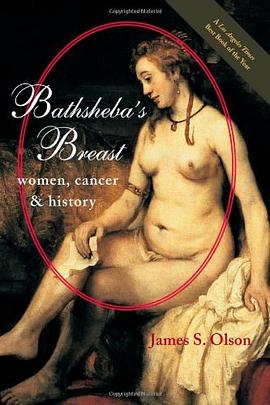
"Breast cancer may very well be history's oldest malaise, known as well to the ancients as it is to us. The women who have endured it share a unique sisterhood. Queen Atossa and Dr. Jerri Nielsen-separated by era and geography, by culture, religion, politics, economics, and world view-could hardly have been more different. Born 2,500 years apart, they stand as opposite bookends on the shelf of human history. One was the most powerful woman in the ancient world, the daughter of an emperor, the mother of a god; the other is a twenty-first-century physician with a streak of adventure coursing through her veins. From the imperial throne in ancient Babylon, Atossa could not have imagined the modern world, and only in the driest pages of classical literature could Antarctica-based Jerri Nielsen even have begun to fathom the Near East five centuries before the birth of Christ. For all their differences, however, they shared a common fear that transcends time and space." -from Bathsheba's Breast In 1967, an Italian surgeon touring Amsterdam's Rijks museum stopped in front of Rembrandt's Bathsheba at Her Bath, on loan from the Louvre, and noticed an asymmetry to Bathsheba's left breast; it seemed distended, swollen near the armpit, discolored, and marked with a distinctive pitting. With a little research, the physician learned that Rembrandt's model, his mistress Hendrickje Stoffels, later died after a long illness, and he conjectured in a celebrated article for an Italian medical journal that the cause of her death was almost certainly breast cancer. A horror known to every culture in every age, breast cancer has been responsible for the deaths of 25 million women throughout history. An Egyptian physician writing 3,500 years ago concluded that there was no treatment for the disease. Later surgeons recommended excising the tumor or, in extreme cases, the entire breast. This was the treatment advocated by the court physician to sixth-century Byzantine empress Theodora, the wife of Justinian, though she chose to die in pain rather than lose her breast. Only in the past few decades has treatment advanced beyond disfiguring surgery. In Bathsheba's Breast, historian James S. Olson-who lost his left hand and forearm to cancer while writing this book-provides an absorbing and often frightening narrative history of breast cancer told through the heroic stories of women who have confronted the disease, from Theodora to Anne of Austria, Louis XIV's mother, who confronted "nun's disease" by perfecting the art of dying well, to Dr. Jerri Nielson, who was dramatically evacuated from the South Pole in 1999 after performing a biopsy on her own breast and self-administering chemotherapy. Olson explores every facet of the disease: medicine's evolving understanding of its pathology and treatment options; its cultural significance; the political and economic logic that has dictated the terms of a war on a "woman's disease"; and the rise of patient activism. Olson concludes that, although it has not yet been conquered, breast cancer is no longer the story of individual women struggling alone against a mysterious and deadly foe.
作者简介
目录信息
读后感
用户评价
这本书的独特之处在于它的语言张力。它不是那种华丽辞藻的堆砌,而是以一种近乎残忍的简洁勾勒出每一个场景,每一个瞬间。这种克制反而产生了巨大的爆发力,仿佛所有的情感都被压缩到了一个极小的容器里,只待一个恰当的时机便会喷薄而出。我发现自己不得不放慢阅读速度,去细嚼那些看似简单的词汇,因为它们承载了远超字面意思的重量。作者对于节奏的把控达到了大师级别,在最紧张的时刻,笔触会突然变得轻描淡写,而在最平静的段落,却暗藏着即将到来的风暴。这种张弛有度的叙事,让读者始终保持着一种被微妙牵引的状态。我不得不承认,最初我有点抗拒这种风格,因为它要求读者付出比一般小说更多的注意力,但一旦习惯,那种被文字雕刻的快感是无与伦比的。它让你意识到,优秀的文字不光是用来讲述故事的,更是用来塑造体验的。
这本书的哲学思辨性远超其情节本身。它提出了许多关于存在、记忆和身份认同的深刻问题,而且拒绝提供任何简单的答案。与其说我在读一个故事,不如说我在参与一场关于“我是谁,我为何存在”的漫长对话。作者似乎对人类固有的叙事冲动抱有一种审慎的态度,不断地打破我们对连贯性的期待。书中多次出现的重复的主题和意象,像是某种仪式性的符号,每次出现都有新的解读空间,这极大地丰富了文本的层次感。我花了很长时间去研究那些反复出现的象征物,它们似乎是构建整部作品形而上学框架的关键。对于那些热衷于文本分析和深层解读的读者来说,这本书简直是一座取之不尽的宝藏。它不只是一个娱乐性的读物,更像是一次精神上的洗礼,迫使你重新审视自己构建世界的方式。每次重读,都会有新的领悟,这才是真正经得起时间考验的文学作品的标志。
这本书的叙事结构简直像一团缠绕的丝线,初读时让人有些摸不着头脑,但一旦适应了作者那种跳跃式的思维,你会发现其中蕴含着一种近乎迷幻的魅力。它不是那种会直接喂给读者答案的故事,更像是一场邀请,邀请我们潜入角色的内心深处,去感受那些未经修饰的、甚至有些混乱的情绪和记忆。我尤其欣赏作者在处理时间流逝上的手法,它不是线性的,而是像碎片一样散落在页面的各个角落,需要读者自己去拼凑出一个完整的画面。这种阅读体验是极具挑战性的,但也带来了巨大的满足感,每当你将两个看似无关的场景联系起来时,都会有一种豁然开朗的感觉。文风上,它充满了古典的韵律感,但又不乏现代的尖锐和讽刺,这种奇妙的融合使得即便是描述日常琐事,也带上了一层奇异的滤镜。如果你期待一本情节驱动的小说,你可能会失望,但如果你渴望一场智力上的冒险,一次对叙事边界的探索,那么这本书绝对值得你投入时间去细细品味。它更像是一件需要被“体验”而非“阅读”的艺术品,留白之处,恰恰是想象力驰骋的最佳疆场。
读完这本书,我感觉自己刚刚完成了一场漫长而疲惫的潜水。作者对环境和气氛的营造达到了一个令人窒息的程度,那种压抑感,那种仿佛连空气中都弥漫着潮湿和霉味的质感,通过文字精准地传递了出来。这里的“世界观”构建得非常精妙,它不是宏大的史诗,而是聚焦于一个极其狭小、封闭的空间,然而在这个微观世界里,人性的复杂和黑暗却被放大到了极致。我常常需要停下来,深呼吸,才能继续往下读,因为那种深入骨髓的孤独感和无望感实在太具穿透力了。书中的人物对话少得可怜,更多的依赖于内心独白和环境的象征意义。这使得阅读过程变得非常内向,几乎是在和自己的意识搏斗。我尤其注意到作者对光影的运用,阴影总是占据了主导地位,即便是最微弱的光亮,也显得格外珍贵和脆弱。对于喜欢探索心理阴暗面、痴迷于氛围小说的人来说,这本书无疑是教科书级别的范本,它毫不留情地撕开了表象,直指那些我们不愿承认的深层恐惧。
这本书的视角转换极其大胆和频繁,让人有一种被置于多重视角下的奇特体验。有时是第一人称的私密絮语,有时是冷漠的第三人称观察,更有几次,视角仿佛脱离了任何主体,成了一种纯粹的、记录式的扫描。这种不稳定的叙事立场,极大地模糊了真实与虚构的界限,也使得人物的动机变得扑朔迷离,你无法轻易地站队或评判任何角色。我必须非常专注地追踪每一个段落的主语变化,否则很容易迷失在叙事的迷宫中。这种手法并非为了炫技,而是服务于核心主题:即客观真实性的不可得。它挑战了读者对传统小说结构中“可靠叙述者”的依赖。整体阅读下来,感觉就像是目睹了一场发生在意识边缘的戏剧,演员和布景都在不断溶解和重塑。对于追求叙事实验的读者来说,这是极度令人兴奋的阅读体验,它证明了小说这种文体仍有巨大的、未被完全探索的可能性。
借标记 Bathsheba survives
借标记 Bathsheba survives
借标记 Bathsheba survives
借标记 Bathsheba survives
借标记 Bathsheba survives