
具体描述
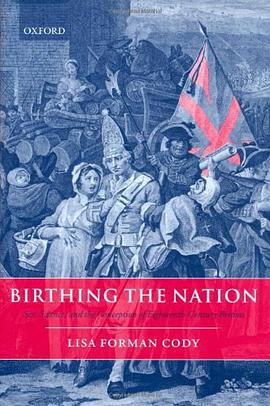
How could the professional triumph of man-midwifery and contemporary tales of pregnant men, rabbit-breeding mothers, and meddling midwives in eighteenth-century Britain help construct the emergence of modern corporate and individual identities? By uncovering long-lost tales and artefacts about sexuality, birth, and popular culture, Lisa Forman Cody argues that Enlightenment Britons understood themselves and their relationship to others through their experiences and beliefs about the reproductive body. "Birthing the Nation" traces two intertwined narratives that shaped eighteenth-century British life: the development of the modern British nation, and the emergence of the male expert as the pre-eminent authority over matters of sexual behaviour, reproduction, and childbirth. By taking seriously contemporary caricatures, jokes, and rumours that used gender, birth, and family to make claims about religious, ethnic and national identity, Cody illuminates an entirely new view of the eighteenth-century public sphere as focused on the bodily and the bizarre. In a monarchy arbitrated by its official religion, regulation of reproduction and childbirth was vital to the very stability of British political authority and the coherence of British culture, challenged as it was by Catholicism, the French Revolution, and social change. In the late seventeenth century, the English feared the power of female midwives to control the destiny of the royal family, yet men-midwives and male experts had hardly proved their superiority to manage the successful birth of children. By the mid-eighteenth century, however, male midwives became experts over the domestic world of pregnancy and childbirth, largely replacing female midwives among the middling and elite families. Cody suggests that these new professionals provided a new model for masculine comportment and emergent intimate relationships within the middle-class and elite home. Most surprisingly, Cody has discovered many interconnections between obstetrics and politics, and shows how male experts transformed what had once been the private, feminine domain of birth and midwifery into topics of public importance and universal interest, leading even Adam Smith and Edmund Burke to attend lectures on obstetrical anatomy. This is the first book to place the eighteenth-century shift from female midwives to male midwives as the dominant experts over childbirth in a larger cultural and political context. Cody illuminates how eighteenth-century Britons understood and symbolized political, national, and religious affiliation through the experiences of the body, sex, and birth. In turn, she takes seriously how the political arguments and rhetoric of the age were not always made on disembodied, rational terms, but instead referenced deep cultural beliefs about gender, reproduction, and the family.
作者简介
目录信息
读后感
用户评价
这部作品的叙事结构简直让人拍案叫绝,作者巧妙地运用了多重视角,在宏大的历史背景下,却能精准地捕捉到那些微小到几乎被人遗忘的个体命运的褶皱。读着读着,我仿佛置身于那个风云变幻的时代,不仅仅是阅读文字,更像是亲身经历了一场漫长而复杂的社会转型。尤其欣赏作者在描绘人物内心挣扎时的细腻笔触,那些纠结、矛盾与最终的选择,都充满了令人信服的人性深度。它没有简单地给出黑白分明的答案,而是将历史的复杂性,以一种近乎温柔却又极其犀利的方式摊开在读者面前。那种层层递进的张力,让你在翻页时总带着一丝不安的期待,想知道接下来这个“国家”的命运将如何被这些凡人所塑造或颠覆。叙事节奏的掌控炉火纯青,高潮迭起却又处处留白,给了读者广阔的想象空间去填补那些未言明的历史暗流。这本书的魅力就在于,它让你在阅读历史事件的同时,也深刻反思了“我们”是如何成为今天的“我们”的,那种对时代脉络的深度挖掘,远超一般通俗读物的范畴。
从整体的阅读体验来说,这本书的“沉浸感”是无与伦比的。它不是那种读完就能轻松放下的休闲读物,它需要你投入时间去消化和梳理那些复杂的社会网络和错综的人物关系。我特别喜欢它在收尾部分的处理,它没有选择一个明确的“结局”,而是留下了一个开放性的、充满余音的场景,仿佛在告诉我,关于“国家”的构建与挣扎,其实从未真正停止。这种开放性,反而让书的生命力得以延续,每隔一段时间重读,都会有新的体悟,仿佛历史的车轮仍在继续转动,而我们都身处其中。这种回味无穷的品质,是衡量一部伟大作品的重要标准。它挑战了读者对既定叙事的习惯性接受,强迫我们重新审视那些被时间磨平棱角的集体记忆,用一种近乎考古学家般的严谨和热情,去重新挖掘那些被埋藏的真相和感受。这是一部需要被认真对待和反复咀嚼的杰作。
这本书最令人称道之处,在于其对权力结构和意识形态冲突的剖析,简直是冷峻得令人心寒。它没有采取高屋建瓴的宏观分析,而是通过一个个具体且令人心碎的“案例”,展示了体制如何一步步侵蚀个体自由,又是如何利用美好的愿景来包装残酷的现实。我特别关注了其中关于知识分子群体在剧变时期所面临的集体困境,那种既想保持清醒又不得不做出妥协的内心撕扯,被描绘得入木三分。它不回避那些历史进程中必然伴随的血腥与谎言,但它也捕捉到了在最黑暗的时刻,人性中依然闪现出的微弱火花——也许是一次无声的反抗,也许是一段私密的诗歌,这些微小的抵抗构成了对主流叙事有力的反驳。阅读这样的作品,需要一定的心理准备,因为它要求你直面那些被历史教科书有意无意抹去的部分。它像一面镜子,照出了我们这个时代依然存在的某些结构性问题,让人在合上书本后久久不能平静。
我必须承认,在阅读过程中,我对其中几位主要角色的命运感到极度不适,但这恰恰说明了作者成功地塑造了他们的真实性。这些人物身上没有传统英雄主义的光环,他们充满了缺点、私心和致命的弱点,他们的“伟大”往往是在错误的时间做出了勉强正确的选择,或者是在正确的时刻被自身的局限所拖垮。特别是那位在不同阶段反复出现的女性角色,她的每一次隐忍与爆发,都与时代的洪流紧密相连,她的个人悲剧成了时代悲剧最微观也最刺痛人心的注脚。我经常会想,如果我是她,我会怎么做?这种强烈的代入感,使得这本书不仅仅是一部历史回顾,更像是一部关于“选择的伦理学”的深刻探讨。它的成功之处在于,它拒绝提供一个“模范人物”,而是呈现了一幅由无数普通人(或半吊子英雄)构成的群像,他们的迷茫和挣扎,才更贴近我们对历史的真实感知。
从文体上看,这本书的语言风格非常独特,它混合了一种古典的庄重感和现代的锐利讽刺,读起来有一种奇特的韵律感。作者似乎对词语的挑选有着近乎偏执的追求,每一个形容词、每一个动词的摆放,都精准地卡在了它该在的位置上,使得句子本身就具有了一种雕塑般的美感。我注意到,书中多次使用了大量的象征性意象,比如反复出现的某种特定颜色的光影,或者某种特定的自然现象,这些意象不仅仅是背景装饰,更是推动情节发展、暗示人物命运走向的关键线索。对于语言爱好者来说,这本书无疑是一场盛宴,它迫使你放慢速度,去品味那些被匆忙阅读的文字中蕴含的深层意图。但与此同时,这种华丽的辞藻堆砌偶尔也会带来阅读上的挑战,需要读者投入更多的精力去解码作者精心编织的文字迷宫。不过,一旦你适应了这种节奏,便会被其无与伦比的文学张力牢牢吸引住,感受文字本身超越故事内容的力量。