
具体描述
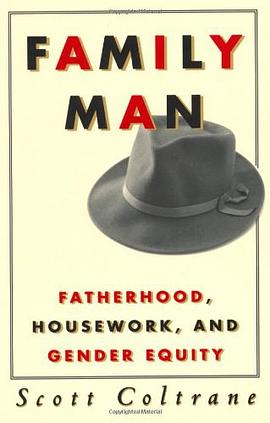
The typical American family has changed dramatically since the days of "Ozzie and Harriet" and "Father Knows Best." Double-income families are now the rule, and fathers are much more involved in raising the children and cleaning house. Reactions to these changes have been diverse, ranging from grave misgivings to a sense of liberation and new possibility. Groups as diverse as Promise Keepers, the Million Man March, and Robert Bly's mythopoetic men's movement tell us that fathers are important. From the fundamentalist right to the feminist left, opinions about the changing nature of the family-and the consequent rethinking of gender roles-have been vehement, if not always very well-founded. In Family Man, sociologist Scott Coltrane brings a wealth of compelling evidence to this debate over the American family. Drawing on his own extensive research and many fascinating interviews, Coltrane explodes many of the common myths about shared parenting, provides first-hand accounts of men's and women's feelings in two-job families, and reveals some innovative solutions that couples have developed to balance job and family commitments. Readers will find an insightful discussion of precisely how and why family life has changed, what forms it may take in the future, and what new kinds of fathers may be on the horizon. The author firmly places these questions within a broad contextual framework. He provides, for instance, an illuminating history of the family that shows that, far from being a fixed structure, the family has always adapted to changing economic, social, and ideological pressures. And by examining how families operate in a variety of non-industrial societies, he demonstrates that our own notions of gender-specific work and parenting roles are culturally rather than biologically determined, and thus inherently flexible. And indeed these roles are changing. While contemporary American women still perform the bulk of domestic tasks, Family Man gives us decisive evidence that men are becoming increasingly involved in both housework and childrearing. Coltrane argues convincingly that this trend will continue. Given the current economic situation-with two-job households now the norm-and the gradual ideological shift away from restrictive gender roles, more and more couples will find it both necessary and desirable to share the workload. More important, Coltrane suggests that as fathers participate more fully in raising their children and performing traditionally female household tasks, men will themselves be transformed by the experience in profoundly positive ways and American society as a whole will move closer to true gender equity. Family Man succeeds brilliantly in bringing clarity, perspective, and above all hope to a discussion that is too often shrill, chaotic, and beset with the rhetoric of nostalgia. It shows us not only exactly where the family is today, but where it has been and what it may become.
作者简介
目录信息
读后感
用户评价
坦白讲,这本书的阅读体验是层次分明的,初读时你会被其冷静的叙事笔触所吸引,但随着深入,你会发现其内核的炙热与痛苦。作者没有回避人性的弱点和自私,主角的某些决定虽然令人费解,但却无比真实——因为它们符合人在巨大压力下可能做出的选择。我特别喜欢那种渗透在字里行间的黑色幽默感,它不是那种让你捧腹大笑的段子,而是一种看透生活本质后的无奈自嘲,它让沉重的议题变得可以承受。这本书对我最大的启发在于,它让我意识到,维持一个家庭的正常运转,往往需要付出比想象中多得多的“情感劳动”和“隐形牺牲”。作者没有把任何角色塑造成绝对的好人或坏人,每个人都在自己的轨道上尽力而为,却又不可避免地相互伤害。这种对复杂人性的坦诚书写,使得全书的情感厚度远超一般的家庭故事。它不提供廉价的慰藉,而是提供了一种深刻的理解,一种对平凡英雄主义的致敬。
这本书的书名让人浮想联翩,我满怀期待地翻开了它,希望能一窥现代社会中“一家之主”的内心世界和他们所面临的种种挑战。从故事的开篇来看,作者似乎很擅长描绘日常生活中的细微之处,那些看似波澜不惊的场景下,涌动着复杂的情感暗流。我特别欣赏作者对人物性格的刻画,主角的犹豫、责任感与自我实现的挣扎,都展现得淋漓尽致。他不是一个脸谱化的英雄,而是一个在柴米油盐中努力保持体面和尊严的普通人。书中的对话设计得非常精妙,充满了潜台词,每一次交流都像是刀光剑影,揭示了家庭成员间微妙的权力关系和情感依赖。尤其是家庭聚会那一章,那种略带尴尬却又温情的氛围,简直能让人产生强烈的共鸣,仿佛自己也坐在那张餐桌旁,感受着空气中弥漫的未说出口的话语。阅读过程就像是抽丝剥茧,慢慢揭开了一个看似完美的家庭结构下,隐藏着的裂痕和未解的心结。这种真实感,是很多同类型小说所欠缺的,它没有刻意去煽情或制造戏剧性的高潮,而是让读者在平静的叙述中体会到生活的重量。
说实话,这本书的叙事节奏掌握得非常老道,一开始我有点担心它会过于平淡,但随着情节的推进,那种如同慢火炖煮般的气氛逐渐酝酿出一种令人窒息的张力。作者显然对社会阶层的细微差异有着敏锐的洞察力,通过主角的工作和社交圈子的变迁,巧妙地反映出当代社会中“成功”与“安稳”之间的永恒悖论。我注意到作者大量使用了环境描写来烘托人物心境,比如城市中高耸入云的玻璃幕墙和主角那间略显拥挤的书房之间的对比,这种空间上的疏离感,精准地映射了人物内心的隔阂。更令人拍案叫绝的是,作者对时间线的处理,经常采用插叙和蒙太奇的手法,将过去的回忆片段精准地嵌入到当下的决策之中,使得人物的每一个选择都有了深厚的历史根基,而不是凭空产生的冲动。读到一半时,我发现自己完全代入了主角的视角,开始反思自己生活中那些被视为理所当然的界限和妥协。这本书的魅力就在于它提供了一个绝佳的镜子,让我们得以审视自己是否也在不自觉中,为了维持某种表面的“稳定”而牺牲了真正的自我。
这部作品的结构布局极具匠心,它如同一个精密的钟表,每一个齿轮——无论是家庭成员、同事、还是偶遇的路人——都精确地咬合在一起,共同驱动着时间的流逝和人物命运的轨迹。我注意到,作者非常擅长运用象征手法,比如书中反复出现的“钥匙”和“老照片”,它们不仅仅是道具,更是承载着过去承诺与现在负担的重量。故事的高潮并非来自于传统的冲突解决,而是一种近乎宿命般的接受与和解,这种处理方式显得极其成熟和克制。它展现了生活本身的面貌:很多痛苦并不会消失,它们只是被包裹起来,成为我们继续前行的一部分。我个人认为,这本书最成功的地方在于其百科全书式的社会观察,它囊括了职场压力、中年危机、代际沟通障碍等多个维度,但所有的观察都汇聚到核心:一个人如何在新旧观念的夹缝中,定义自己的存在价值。读完后,我产生了一种强烈的渴望,想要重新审视我自己的生活选择,这种“自我审视”的冲动,是衡量一本好书的重要标准。
这本小说在文学手法上的探索非常大胆,它不像传统的家庭伦理剧那样专注于某一特定事件的爆发,而是将重点放在了“持续性的存在状态”的描绘上。语言风格上,它呈现出一种近乎散文诗般的细腻质感,尤其是在描写清晨的宁静或者深夜独处的时刻,文字仿佛被赋予了光影和温度。我尤其喜欢作者对“沉默”的运用,那些未曾说出口的对话,往往比任何激烈的争吵都更具杀伤力。它不是那种读完后让你拍案叫绝的爽文,而是一种需要反复咀嚼、细细品味的文学作品。每次放下书本,我的脑海中都会回荡起某个场景的片段,可能是孩子们在公园里的笑声,也可能是主角在深夜对着电脑屏幕发呆的侧影,这些碎片化的记忆组合起来,构成了一个完整而又充满缺憾的生活图景。这本书迫使我停下来思考,到底什么是真正的“责任”?它仅仅是经济上的供养,还是精神上的共鸣与支持?作者似乎在挑战我们对传统家庭角色的固有认知,他没有给出标准答案,只是提供了一个观察的视角,一个复杂的生态系统。