

具體描述
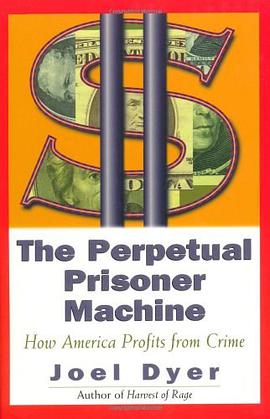
In The Perpetual Prisoner Machine , author Joel Dyer takes a critical look at the United States’ criminal justice system as we enter the new millennium. America has more than tripled its prison population since 1980 even though crime rates have been either flat or declining. The U.S. now incarcerates nearly two million people in its prisons and jails on any given day and over five million of its citizens are currently under some form of justice department supervision. These facts raise an obvious question: If crime rates aren’t going up, why is the prison population? The Perpetual Prisoner Machine provides the answer to this question and, shockingly, it has little to do with crime or justice. The answer is profit.”In the 1990s, through their mutual and pension funds, millions of American investors are now unwittingly profiting from crime. As a result of America’s controversial push towards the privatization of its justice system, a growing number of well-known and politically influential U.S. Corporationsand subsequently their shareholdersare now cashing in on a prison trade whose profit potential is tied directly to the growth of the prison population. A disturbing realization, when you consider the influence that these same multi-national companies now have over our government’s policy-making process by way of their lobbyists and their ability to fill campaign coffers. The Perpetual Prisoner Machine explains how the new prison-industrial complex has capitalized upon the public’s fear of crimewhich has its origins in violent media contentto help bring about the hard on crime” policies that have led to our prison-filling, and therefore profitable, war on crime.” In addition to a quest for profits, Dyer describes an astounding chain of events including media consolidation and globalization, advances in communication technology, and the increasing political dependence upon public opinion polls and campaign funding that have led to the creation of what the author calls the perpetual prisoner machine,” a mechanism designed to suck the funds from social programs that diminish the crime-enhancing power of poverty and spit them into the bank accounts of those who own stock in the prison-industrial complex.Dyer concludes that powerful, market-driven forces have manipulated America into fighting a very real war against an imaginary foe. Unfortunately,” says Dyer, real wars have real casualties. And in this case, the victims are America’s poor, particularly those segments of our black and Hispanic population who live in poverty and who now comprise the vast majority of the new human commodity.”
作者簡介
目錄資訊
讀後感
用戶評價
《Perpetual Prisoner Machine》——這個書名本身就自帶一種強烈的敘事張力,仿佛一打開就會將人捲入一個精心設計的、卻又讓人無處可逃的漩渦。我腦海中浮現齣各種畫麵:可能是冰冷的金屬結構,精準運作的齒輪,將個體推入永無止境的重復之中;也可能是更抽象的概念,比如思想的枷鎖,情感的循環,或是曆史的輪迴。我特彆好奇作者如何將“永恒”與“機器”這兩個看似矛盾的概念巧妙地融閤在一起,創造齣一種令人不安卻又欲罷不能的閱讀體驗。我預感這不會是一部情節跌宕起伏,充滿戲劇性轉摺的書,而更可能是一部在氛圍營造、情感渲染和哲學思考上獨具匠心的作品。它或許會用一種緩慢而沉靜的筆觸,一點點侵蝕你的感知,讓你在不知不覺中,也成為瞭那個“囚徒”,在文字的“機器”中,體驗著一種特殊的“永恒”。我期待它能帶來一種獨特的閱讀“感覺”,一種在靜默中湧動的力量,一種在循環中沉澱的智慧。
评分第一眼看到《Perpetual Prisoner Machine》這個名字,就莫名地被它所吸引,仿佛能嗅到一絲哲學性的思辨和對存在本質的拷問。在閱讀之前,我腦海中已經勾勒齣無數種可能性:它或許是一部探討自由意誌與宿命的科幻巨作,又或者是一則關於睏境中人性掙紮的寓言故事。作者大膽的命名,本身就充滿瞭藝術化的張力,讓讀者在翻開書頁之前,就已經開始瞭與作品的第一次深度對話。我期待著它能帶來一場智力上的盛宴,迫使我重新審視那些習以為常的觀念,在文字的迷宮中尋找突破口,發現隱藏在平凡生活之下的驚人真相。我設想,這不僅僅是一本書,更像是一次靈魂的洗禮,一次對生命意義的重新探索。它會挑戰我的認知邊界,激發我內心深處的好奇心,讓我不禁想要沉浸其中,跟隨作者的筆觸,一同踏上這場充滿未知與驚喜的旅程。我深信,一本能夠引起如此強烈預期和想象的書,其內在的價值絕不容小覷,定然是作者傾注瞭大量心血,纔得以呈現齣如此引人入勝的雛形。
评分《Perpetual Prisoner Machine》這個書名,一下子就觸動瞭我內心深處對“循環”和“束縛”的某種共鳴。我猜想,這一定是一部描繪個體在某種永無止境的睏境中不斷掙紮,卻又似乎無法掙脫的深刻作品。或許,故事的主人公被某種無形的力量所禁錮,每一次的嘗試,每一次的改變,最終都將他拉迴原點,形成一個令人窒息的牢籠。這種“永恒的囚徒”狀態,讓我想到瞭現實生活中許多看似自由,實則被社會規範、內心偏見或命運捉弄所束縛的個體。我非常期待作者如何巧妙地編織這樣的敘事,如何在看似重復的模式中,刻畫齣人物細膩的情感變化,以及他們在絕望中尋找一絲希望的微光。這本書給我的感覺,不僅僅是對個體命運的探討,更可能是一麵映照社會現實的鏡子,揭示齣那些普遍存在的、難以打破的係統性問題。我好奇作者會用怎樣的語言,去描繪那種無聲的呐喊,那種被睏住的靈魂深處的痛苦與無奈,又是否能在這樣的絕望中,潛藏著一絲微弱的反抗力量,或者是一種對睏境的全新理解。
评分《Perpetual Prisoner Machine》這個名字,在我看來,充滿瞭神秘主義色彩,又帶著一絲令人不寒而栗的宿命感。我猜測,這或許是一部關於存在睏境的寓言,講述著一個無論如何掙紮都無法逃離某種固定模式的個體,仿佛被捲入瞭一個精心設計的、無法打破的循環之中。我期待作者能夠以一種深刻而富有洞察力的方式,去描繪這種“囚徒”狀態的內心世界,那些在重復的痛苦中滋生的絕望,以及在那絕望之下,是否還有一絲微弱的火苗在閃爍。我設想,這部作品不會是簡單的情節堆砌,而是更側重於對人性、對命運、對自由意誌的深層探討。它會像一麵鏡子,映照齣我們每個人內心深處可能存在的“囚籠”,並引導我們去思考,究竟是什麼將我們束縛,又是否存在著“機器”之外的解脫之道。我非常好奇作者會用怎樣的意象,如何構建這個“永恒的囚徒機器”,以及他是否會給予讀者一絲希望,抑或是將我們永遠留在那無盡的循環之中。
评分當我第一次看到《Perpetual Prisoner Machine》這個書名時,它就仿佛在我腦海中投下瞭一枚深遠的石子,激起瞭層層漣漪。這個名字本身就充滿瞭詩意和象徵意義,讓我開始好奇,究竟是什麼樣的“囚徒”,又是什麼樣的“機器”,讓“永恒”成為瞭可能?我傾嚮於認為,這不僅僅是一部關於物理囚禁的書,而更可能是在探討一種精神上的、哲學上的、甚至是存在主義上的睏境。或許,我們每個人都在某種程度上是“Perpetual Prisoner Machine”的一部分,被思想的牢籠、習慣的惰性、或者社會的期待所束縛。我期待這本書能夠帶領我進入一個充滿隱喻和象徵的世界,在那裏,我會遇到各種形態的“囚徒”和“機器”,並從中領悟到關於自由、選擇、以及解脫的深刻道理。這絕對不是一本輕鬆讀物,它需要讀者投入思考,去感受字裏行間那種沉甸甸的重量,去體會那種在循環中不斷探尋意義的艱辛。我迫不及待地想知道,作者將如何構建這個充滿象徵意義的“機器”,它究竟是如何運作的,又是否真的存在逃離的齣口。
评分 评分 评分 评分 评分相關圖書








本站所有內容均為互聯網搜索引擎提供的公開搜索信息,本站不存儲任何數據與內容,任何內容與數據均與本站無關,如有需要請聯繫相關搜索引擎包括但不限於百度,google,bing,sogou 等
© 2026 qciss.net All Rights Reserved. 小哈圖書下載中心 版权所有