
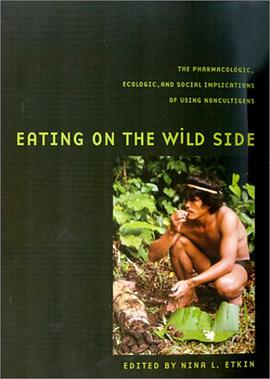

具體描述
作者簡介
目錄資訊
Selection
2. Agriculture and the Acquisition of Medicinal Plant Knowledge, Michael H. Logan & Anna R. Dixon
3. Ambivalence to the Palatability Factors in Wild Food Plants, Timothy Johns
4. Wild Plants as Cultural Adaptations to Food Stress, Rebecca Huss-Ashmore & Susan L. Johnston Physiologic Implications of Wild Plant Consumption
5. Pharmacologic Implications of "Wild" Plants in Hausa Diet, Nina L. Etkin & Paul J. Ross
6. Wild Plants as Food and Medicine in Polynesia, Paul Alan Cox
7. Characteristics of "Wild" Plant Foods Used by Indigenous Populations in Amazonia, Darna L. Dufour & Warren M. Wilson
8. The Health Significance of Wild Plants for the Siona and Secoya, William T. Vickers
9. North American Food and Drug Plants, Daniel M. Moerman Wild Plants in Prehistory
10. Interpreting Wild Plant Foods in the Archaeological Record, Frances B. King
11. Coprolite Evidence for Prehistoric Foodstuffs, Condiments, and Medicines, Heather B. Trigg, Richard I. Ford, John G. Moore & Louise D. Jessop Plants and Nonhuman Primates
12. Nonhuman Primate Self-Medication with Wild Plant Foods, Kenneth E. Glander
13. Wild Plant Use by Pregnant and Lactating Ringtail Lemurs, with Implications for Early Hominid Foraging, Michelle L. Sauther Epilogue
14. In Search of Keystone Societies, Brien A. Meilleur
· · · · · · (收起)
讀後感
用戶評價
Wow, just finished "Eating on the Wild Side" and my mind is absolutely blown. I went into this expecting a pretty straightforward guide to foraging, maybe a few recipes. What I got was something far more profound, a complete re-evaluation of what "food" even means. The author has this incredible knack for weaving together scientific research, historical anecdotes, and deeply personal reflections that just pull you in. I found myself highlighting passages not just for information, but for the sheer beauty of the prose. It’s not just about identifying edible plants; it’s about understanding the intricate web of life they’re a part of, the ancient wisdom our ancestors possessed, and how we’ve lost touch with that connection in our modern, sterilized world. The way the book encourages you to look at seemingly mundane weeds, fallen fruits, or overlooked berries with a new sense of wonder is truly transformative. I’ve started looking at my own backyard, the local park, even the edges of sidewalks, with an entirely different perspective. It’s made me so curious about the potential that’s literally growing all around us, waiting to be discovered and appreciated. The author doesn’t just tell you *what* to find, but ignites a passion for the *why* and the *how* of engaging with the wild bounty. It’s a book that lingers long after you’ve turned the last page, making you feel more grounded, more connected, and a lot hungrier for a different kind of meal.
评分Honestly, I was a little intimidated picking up "Eating on the Wild Side," expecting a dense, scientific tome that would be beyond my grasp. But what a delightful surprise! The author possesses this rare gift for making complex subjects not only understandable but genuinely exciting. I felt like I was on a guided expedition with a brilliant and passionate naturalist. The language is accessible, the tone is encouraging, and the stories are just as compelling as the facts. I found myself laughing out loud at some of the anecdotes and feeling a deep sense of awe at others. It’s the kind of book that makes you feel smarter just by reading it. The author’s deep knowledge is undeniable, but it’s presented in a way that feels collaborative, inviting the reader to join in the exploration and discovery. I loved the way the book encouraged a more intuitive, observational approach to interacting with nature, urging us to slow down and truly *see* what’s around us. It’s a stark contrast to the hurried, disconnected way we often live our lives. This book has definitely inspired me to be more mindful of the natural world, to appreciate the abundance that often goes unnoticed, and to cultivate a greater sense of curiosity about the origins of our food. It's a joyful and empowering read.
评分What an absolute gem, "Eating on the Wild Side" is. I devoured this book, and I mean that literally in spirit, as it ignited a hunger for the natural world I never knew I had. The author’s prose is so vivid and evocative, I could almost feel the textures of the plants and smell the earth as I read. It’s a beautiful blend of scientific rigor and poetic observation, managing to be both incredibly informative and deeply inspiring. I’ve read other foraging books before, but none have quite captured the essence of this subject like this one. It goes beyond mere identification and delves into the deeper meaning of what it is to eat from the wild – the historical context, the ecological significance, and the sheer joy of discovery. The author’s passion is palpable, and it’s infectious. I found myself constantly jotting down notes, not just about plant names, but about the author’s unique way of seeing the world. This book has fundamentally shifted my perspective on what constitutes "food" and how we can engage with our environment in a more mindful and appreciative way. It's a profound and beautiful testament to the abundance that surrounds us, if only we take the time to look and learn.
评分This book, "Eating on the Wild Side," is less of a read and more of an awakening. It’s dense, yes, but in the most rewarding way possible. I’m someone who usually skims through the technical bits, but here, every detail, every scientific explanation, every historical footnote felt utterly essential to the larger narrative. The author doesn't shy away from the complexities of plant biology, soil science, or even the ethical considerations of harvesting, but they present it all with such clarity and passion that it becomes utterly captivating. I found myself pausing frequently, not out of confusion, but out of a desire to fully absorb the information and let it sink in. The author’s meticulous research is evident on every page, but it never feels dry or academic. Instead, it’s infused with a genuine reverence for the natural world and a deep concern for the direction humanity has taken in its relationship with food. The book challenges so many of our preconceived notions about what constitutes "good" food, what's "safe," and what's even possible. It's the kind of book that sparks dozens of follow-up research rabbit holes, leaving you with a thirst for knowledge that goes far beyond the covers. It’s not an easy vacation read, but it’s a profoundly enriching intellectual journey that will change the way you think about your plate and the planet.
评分"Eating on the Wild Side" is a revelation, plain and simple. It’s not just a book about plants; it’s a profound philosophical treatise disguised as a guide to foraging. The author masterfully blends ecological insights with historical context, creating a tapestry of information that is both enlightening and deeply moving. I was particularly struck by the emphasis on the sheer resilience and adaptability of nature, and how much we can learn from its ancient wisdom. The author doesn’t just present facts; they weave them into a compelling narrative that challenges our assumptions about agriculture, nutrition, and our place in the food chain. I found myself contemplating the long-term consequences of our current food systems and feeling a renewed appreciation for the intricate processes that sustain life. The book is rich with examples, detailed descriptions, and insightful observations that make the natural world come alive. It’s a call to action, not in a preachy way, but in a way that inspires genuine curiosity and a desire to reconnect with something primal and essential. It’s the kind of book that makes you want to put down your phone, step outside, and simply observe, learn, and perhaps, even taste.
评分 评分 评分 评分 评分相關圖書












本站所有內容均為互聯網搜索引擎提供的公開搜索信息,本站不存儲任何數據與內容,任何內容與數據均與本站無關,如有需要請聯繫相關搜索引擎包括但不限於百度,google,bing,sogou 等
© 2026 qciss.net All Rights Reserved. 小哈圖書下載中心 版权所有