
具体描述
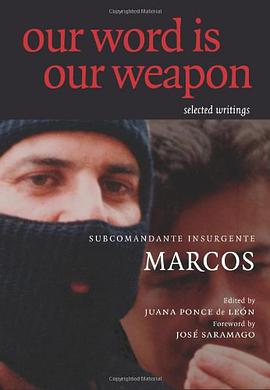
In this landmark book, Seven Stories Press presents a powerful collection of literary, philosophical, and political writings of the masked Zapatista spokesperson, Subcomandante Insurgente Marcos. Introduced by Nobel Prize winner José Saramago, and illustrated with beautiful black and white photographs, Our Word Is Our Weapon crystallizes "the passion of a rebel, the poetry of a movement, and the literary genius of indigenous Mexico."
Marcos first captured world attention on January 1, 1994, when he and an indigenous guerrilla group calling themselves "Zapatistas" revolted against the Mexican government and seized key towns in Mexico's southernmost state of Chiapas. In the six years that have passed since their uprising, Marcos has altered the course of Mexican politics and emerged an international symbol of grassroots movement-building, rebellion, and democracy. The prolific stream of poetic political writings, tales, and traditional myths that Marcos has penned since January 1, 1994 fill more than four volumes. Our Word Is Our Weapon presents the best of these writings, many of which have never been published before in English.
Throughout this remarkable book we hear the uncompromising voice of indigenous communities living in resistance, expressing through manifestos and myths the universal human urge for dignity, democracy, and liberation. It is the voice of a people refusing to be forgotten the voice of Mexico in transition, the voice of a people struggling for democracy by using their word as their only weapon.
作者简介
Subcomandante Marcos is the spokesperson for the Zapatistas, an indigenous rights movement based in Chiapas, Mexico. Marcos is author of several books translated into English, including the acclaimed children's book Story of the Colors (Cinco Puntos), and his collection with Seven Stories press, Our Word is Our Weapon, Selected Writings of Subcomandate Marcos. Juana Ponce de Leon is a writer, literary critic, and editor. She served as editor of LS, the literary supplement of the Advocate-Weekly newspapers in Connecticut and Massachusetts and now serves on the literature panel for New York Council on the Arts. Her articles have appeared in publications such as The New York Times Book Review, The Washington Post Book World, and Latina.
目录信息
Prologue: Chiapas, a Name of Pain and Hope xix
Editor's Note: Traveling Back for Tomorrow xxiii
Section I Unveiling Mexico
Part 1 Names the Unnamed
1. Twelve Women in the Twelfth Year: The Moment of War 5
2. War! First Declaration of the Lacandon Jungle 13
3. Dying in Order to Live 17
4. In Our Dreams We Have Seen Another World 18
5. Votan-Zapata or Five Hundred Years of History 19
6. A Storm and a Prophecy--Chiapas: The Southeast in Two Winds 22
7. Who Should Ask for Pardon and Who Can Grant It? 38
8. Five Hundred Years of Indigenous Resistance 40
9. Second Declaration of the Lacondon Jungle 43
10. The Long Journey from Despair to Hope 52
11. Mr. Zedillo, Welcome to the Nightmare 62
12. Come, Brothers and Sisters 72
13. The Word and the Silence 75
14. Fourth Declaration of the Lacondon Jungle (excerpt) 78
15. Closing Words to the National Indigenous Forum (excerpt) 82
16. Today, Eighty-Five Years Later, History Repeats Itself 88
17. The Unjust Sentencing of Elorriaga and Entzin 98
18. Opening Remarks at the First Intercontinental Encuentro for Humanity and against Neoliberalism 101
19. Tomorrow Begins Today: Closing Remarks at the First Intercontinental Encuentro for Humanity and against Neoliberalism 107
20. Second Declaration of La Realidad for Humanity and against Neoliberalism 116
21. Civil Society That So Perturbs 120
22. The Spiral from the End and the Beginning 125
23. An Urgent Telegram 130
24. Do the Pictures Lie? 131
25. For Those Who Protest with Us after Acteal 132
26. The Sea of My Insomnia: The Table at San Andres 137
27. Tlatelolco: Thirty Years Later the Struggle Continues 143
28. Under Siege: The Zapatista Community of Amador Hernandez 147
29. A Play (ha!) That Says What It Says 151
30. Mexico City: We Have Arrived. We Are Here: The EZLN 155
31. The Other Player 163
32. Why We Use the Weapon of Resistance 166
Part 2 One World
33. Flowers, Like Hope, Are Harvested 173
34. From Vietnam to Chiapas, Twenty Years Before 175
35. A Call to Latin America 178
36. On Independent Media 180
37. From Here to There and Back Again 183
38. On May Day and Tupac Amaru 188
39. This Ocean No Longer Separates Us 189
40. Letter to Mumia Abu-Jamal 192
41. "No!" to the War in the Balkans 196
42. For Maurice Najman, Who Keeps Feigning Death 198
43. Letter to Leonard Peltier 207
Section II Beneath the Mask
44. To Open a Crack in History 213
45. We Know What We're Doing; It is Worth It 217
46. The Library of Aguascalientes 226
47. The Retreat Is Making Us Almost Scratch the Sky 230
48. Death Has Paid a Visit 240
49. A Year of the Zapatista Government 245
50. Zapatistas, Guadalupanos, and the Virgin of Guadalupe 250
51. A Land to Harvest a Future 256
52. Letter to Eduardo Galeano 258
53. Letter to John Berger 263
54. Dignity Cannot Be Studied; You Live It or It Dies 268
55. It Continues Raining Here 271
56. Democratic Teachers and the Zapatista Dream 274
57. Closing Words at the National Encuentro in Defense of the Cultural Heritage 278
Section III Creating Memory
Part 1 Tales for a Sleepless Solitude--The Stories of Don Durito
58. Ten Years Later: Durito Found Us Again 289
59. To Mariana Moguel (age ten) 291
60. The Glass to See to the Other Side 294
61. Deep Inside the Cave of Desire 297
62. Durito and Pegasus 302
63. The Story of the Tiny Mouse and the Tiny Cat 308
64. The Story of the Cold Foot and the Hot Foot 310
65. The Story of the Bean-brown Horse 314
66. Love and the Calendar 316
67. Another Cloud, Another Bottle, and Another Letter from Durito 318
68. P.S...that Fulfills Its Editorial Duty 321
69. Durito the Pirate 322
70. The Hour of the Little Ones 331
71. The True Story of Mary Read and Anne Bonny 335
Part 2 Tales of Many Others
72. The Tale of the Ever Never 341
73. The Parrot's Victory 342
74. Tales of the Seahorse 343
75. The Tale of the Little Seamstress 345
76. The Tale of the Little Newsboy 346
77. The Tale of the Little Wisp of a Cloud 347
78. The Story of the Schizophrenic Pig 349
79. The Tale of the Lime with an Identity Crisis 351
80. The Tale of the Nonconformist Little Toad 352
81. The Tale of the Pink Shoelaces 355
82. The Tale of Always and Never 356
83. The Little Tree and the Others 357
84. A Light, a Flower, and a Dawn 359
85. The Words That Walk Truths 364
Part 3 Old Don Antonio
86. The Story of the Colors 373
87. The Story of the Mirrors 376
88. The Story of Dreams 380
89. The Story of the Seven Rainbows 383
90. The Story of Noise and Silence 386
91. Making the Bread Called Tomorrow 389
92. The Story of the Others 390
93. The Tale of the Lion and the Mirror 392
94. The Story of the Measure of Memory 395
95. The Story of One and All 397
96. The Dawn Is Heralding Heat and Flashes 399
97. The Story of the Milky Way 402
98. The Story of the False Light, the Stone, and the Corn 405
99. The Night Is Ours 407
100. The Story of the Questions 413
Afterword: Chiapas, the First Postmodern Revolution 417
Zapatista Timeline 445
Bibliography 453
Contributors 455
· · · · · · (收起)
读后感
用户评价
我购买这本书,很大程度上是被它的名字所吸引,一种大胆而富有挑衅意味的名字。它预示着这本书将不会是一本平淡无奇的书,而是充满了思想的碰撞和观点的交锋。我脑海中浮现的,是一个个充满力量的词语,它们如同刀剑一般,划破虚伪的迷雾,直击问题的核心。我猜想,这本书的作者可能是一位激进的改革者,或者是一位充满激情的思想家,他试图通过语言来唤醒那些沉睡的灵魂,激发人们内心深处的反抗精神。书中或许会深入剖析社会中存在的各种不公和压迫,并指出语言在其中扮演的角色,是推波助澜,还是揭竿而起。我期待书中能够提供一种新的视角,让我们重新审视我们所使用的语言,以及这些语言背后所承载的力量。它是否会探讨如何构建一种更有力量、更具建设性的语言体系,来对抗那些腐朽的、充满欺骗性的言论?我设想着,这本书的阅读过程,就像是一场精神的洗礼,让我们在震撼中成长,在觉醒中前行。它或许会让我们明白,我们的每一个词语,都承载着责任,都可能成为改变的力量。
这本书的封面设计就足够吸引人了,那种力量感和哲学意味在第一时间就抓住了我的眼球。拿到书后,迫不及待地翻开,尽管我还没有来得及深入阅读,但从开篇的文字就能感受到一种不同寻常的厚重感。作者似乎在用一种非常直接且充满冲击力的方式来表达他的观点,仿佛直接将读者拉入到一个需要深刻思考的场景之中。我猜想,这本书的核心可能围绕着“语言的力量”展开,但绝非简单的口舌之争,而是上升到了一种意识形态,一种精神的武器,用来对抗世俗的偏见、不公,甚至是思想的禁锢。我特别期待书中能够探讨语言如何塑造我们的认知,又如何在潜移默化中影响整个社会的发展。是否会有对历史事件的深刻剖析,用以证明语言作为武器的强大威力?或者,这本书更侧重于个体如何运用语言来捍卫自我,提升自我,从而在这个复杂的世界上找到属于自己的立足之地?我设想着,书中或许会引用大量的历史典故、哲学思辨,甚至可能包含一些令人振聋发聩的诗歌或演讲片段,将语言的艺术与它的力量完美结合。读到这本书,我感觉自己就像一个即将踏上战场,却又对战场充满期待的战士,手中的利剑(这本书)还未出鞘,但它的锋芒已然在空气中划过。
我对这本书的期待,更多地是源于一种对“声音”的渴望,一种想要听见更深层次、更具穿透力的声音的冲动。在信息爆炸的时代,我们充斥着各种碎片化的信息,许多声音淹没在喧嚣之中,变得微弱甚至失声。这本书的名字《Our Word is Our Weapon》,一下子就点燃了我内心深处对“发声”的渴求。我设想,这本书或许会像一面镜子,映照出我们日常生活中被忽略的声音,那些被压抑的情感,那些未被表达的诉求。它可能鼓励我们去审视自己,去倾听内心最真实的声音,然后,将这份声音化为一股力量,去影响周围的世界。我好奇作者将如何定义“我们的词语”,是指我们的言论、思想、创作,还是我们共同的信念?而“武器”又将如何解读,是攻击性的手段,还是防御性的盾牌,亦或是某种能够改变局势、推动变革的工具?我倾向于认为,它是一种积极的力量,一种能够构建而非摧毁的力量,一种能够唤醒沉睡的意识,点燃希望的火种。我期待书中能够提供一些切实可行的方法,指导我们如何去运用我们的语言,如何在不伤害他人的前提下,坚定地表达我们的立场,捍卫我们的权利,并最终为我们所珍视的价值观而战。
这本书给我一种莫名的熟悉感,仿佛它早已在我潜意识里存在,只是我从未找到合适的语言去表达。当看到《Our Word is Our Weapon》这个书名时,我内心深处似乎被触动了,一种久违的共鸣感油然而生。我想,这本书可能不仅仅是一本简单的读物,它更像是一种宣言,一种对某种普遍存在的压抑和沉默的回应。它可能是在告诉我们,我们所拥有的语言,并非仅仅是日常沟通的工具,它本身就蕴含着巨大的能量。我猜测,这本书的作者可能是一位对社会现实有着深刻洞察的人,他用犀利的笔触,揭示了语言被滥用、被扭曲的现状,以及由此带来的种种弊端。而他提出“我们的词语就是我们的武器”,则是在呼唤一种觉醒,一种对自身语言力量的重新认知和运用。我设想着,书中可能会包含一些关于言论自由的探讨,关于信息传播的批判,以及关于如何抵制虚假信息、操纵性语言的策略。我期待它能够成为一本激励人心的著作,让读者在阅读后,能够更加自信地、有意识地去使用自己的语言,去为自己发声,去为那些无声者发声,去为正义和真理发声,从而在这个世界上留下属于自己的印记。
拿到这本书,我第一眼就被它的名字《Our Word is Our Weapon》所震撼。这是一种多么直接而又充满力量的表达!它瞬间点燃了我内心深处对“表达”和“力量”的思考。我脑海中浮现的,不是简单的争吵,而是那种能够改变命运、能够颠覆陈规、能够唤醒沉睡人群的强大力量。我猜测,这本书的作者可能是一位深刻的社会观察者,他用他敏锐的洞察力,发现了语言在塑造个体命运和社会进程中所扮演的关键角色。我期待书中能够深入探讨“词语”的本质,它不仅仅是符号,更是承载着思想、情感、价值观的载体。而“武器”,则是一种比喻,象征着语言的强大影响力,它可以用来捍卫真理,对抗谎言,也可以用来构建新的世界,或者揭露旧世界的黑暗。我设想着,书中可能会包含对历史事件的精彩解读,用以证明语言在其中发挥的决定性作用;又或者,它会提供一系列关于如何有效运用语言的策略,引导读者去认识并发挥自己语言的潜能。这本书,对我来说,就像是一张通往更深刻理解世界的地图,让我充满期待地想要去探索语言背后的无限可能。
Postcolonial Turn. Fall 2011. w/ Sheetal Majithia.
Postcolonial Turn. Fall 2011. w/ Sheetal Majithia.
Postcolonial Turn. Fall 2011. w/ Sheetal Majithia.
Postcolonial Turn. Fall 2011. w/ Sheetal Majithia.
Postcolonial Turn. Fall 2011. w/ Sheetal Majithia.