
具体描述
Today's embedded and real-time systems contain a mix of processor types: off-the-shelf microcontrollers, digital signal processors (DSPs), and custom processors. The decreasing cost of DSPs has made these sophisticated chips very attractive for a number of embedded and real-time applications, including automotive, telecommunications, medical imaging, and many others-including even some games and home appliances. However, developing embedded and real-time DSP applications is a complex task influenced by many parameters and issues.
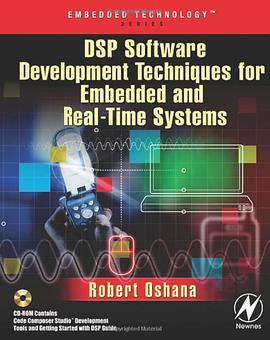
This introduction to DSP software development for embedded and real-time developers shows how to use digital signal processors efficiently in embedded and real-time systems. It covers software and firmware design principles, from processor architectures and basic theory to the selection of appropriate languages and basic algorithms. The reader will find practical guidelines, diagrammed techniques, tool descriptions, and code templates for developing and optimizing DSP software and firmware. The book also covers integrating and testing DSP systems as well as managing the DSP development effort. The accompanying CDROM contains the code from the design examples as well as design tools and product demos.
*Digital signal processors (DSPs) are the future of microchips!
*Includes practical guidelines, diagrammed techniques, tool descriptions, and code templates to aid in the development and optimization of DSP software and firmware
*Accompanying CD-ROM contains code from the design examples used in the book, so developers can easily use it in their own designs