
具体描述
Thirty years ago, biologists could get by with a rudimentary grasp of mathematics and modeling. Not so today. In seeking to answer fundamental questions about how biological systems function and change over time, the modern biologist is as likely to rely on sophisticated mathematical and computer-based models as traditional fieldwork. In this book, Sarah Otto and Troy Day provide biology students with the tools necessary to both interpret models and to build their own.
The book starts at an elementary level of mathematical modeling, assuming that the reader has had high school mathematics and first-year calculus. Otto and Day then gradually build in depth and complexity, from classic models in ecology and evolution to more intricate class-structured and probabilistic models. The authors provide primers with instructive exercises to introduce readers to the more advanced subjects of linear algebra and probability theory. Through examples, they describe how models have been used to understand such topics as the spread of HIV, chaos, the age structure of a country, speciation, and extinction.
Ecologists and evolutionary biologists today need enough mathematical training to be able to assess the power and limits of biological models and to develop theories and models themselves. This innovative book will be an indispensable guide to the world of mathematical models for the next generation of biologists.
- A how-to guide for developing new mathematical models in biology
- Provides step-by-step recipes for constructing and analyzing models
- Interesting biological applications
- Explores classical models in ecology and evolution
- Questions at the end of every chapter
- Primers cover important mathematical topics
- Exercises with answers
- Appendixes summarize useful rules
- Labs and advanced material available
作者简介
目录信息
Chapter 1: Mathematical Modeling in Biology 1
1.1 Introduction 1
1.2 HIV 2
1.3 Models of HIV/AIDS 5
1.4 Concluding Message 14
Chapter 2: How to Construct a Model 17
2.1 Introduction 17
2.2 Formulate the Question 19
2.3 Determine the Basic Ingredients 19
2.4 Qualitatively Describe the Biological System 26
2.5 Quantitatively Describe the Biological System 33
2.6 Analyze the Equations 39
2.7 Checks and Balances 47
2.8 Relate the Results Back to the Question 50
2.9 Concluding Message 51
Chapter 3: Deriving Classic Models in Ecology and Evolutionary Biology 54
3.1 Introduction 54
3.2 Exponential and Logistic Models of Population Growth 54
3.3 Haploid and Diploid Models of Natural Selection 62
3.4 Models of Interactions among Species 72
3.5 Epidemiological Models of Disease Spread 77
3.6 Working Backward--Interpreting Equations in Terms of the Biology 79
3.7 Concluding Message 82
Primer 1: Functions and Approximations 89
P1.1 Functions and Their Forms 89
P1.2 Linear Approximations 96
P1.3 The Taylor Series 100
Chapter 4: Numerical and Graphical Techniques--Developing a Feeling for Your Model 110
4.1 Introduction 110
4.2 Plots of Variables Over Time 111
4.3 Plots of Variables as a Function of the Variables Themselves 124
4.4 Multiple Variables and Phase-Plane Diagrams 133
4.5 Concluding Message 145
Chapter 5: Equilibria and Stability Analyses--One-Variable Models 151
5.1 Introduction 151
5.2 Finding an Equilibrium 152
5.3 Determining Stability 163
5.4 Approximations 176
5.5 Concluding Message 184
Chapter 6: General Solutions and Transformations--One-Variable Models 191
6.1 Introduction 191
6.2 Transformations 192
6.3 Linear Models in Discrete Time 193
6.4 Nonlinear Models in Discrete Time 195
6.5 Linear Models in Continuous Time 198
6.6 Nonlinear Models in Continuous Time 202
6.7 Concluding Message 207
Primer 2: Linear Algebra 214
P2.1 An Introduction to Vectors and Matrices 214
P2.2 Vector and Matrix Addition 219
P2.3 Multiplication by a Scalar 222
P2.4 Multiplication of Vectors and Matrices 224
P2.5 The Trace and Determinant of a Square Matrix 228
P2.6 The Inverse 233
P2.7 Solving Systems of Equations 235
P2.8 The Eigenvalues of a Matrix 237
P2.9 The Eigenvectors of a Matrix 243
Chapter 7: Equilibria and Stability Analyses--Linear Models with Multiple Variables 254
7.1 Introduction 254
7.2 Models with More than One Dynamic Variable 255
7.3 Linear Multivariable Models 260
7.4 Equilibria and Stability for Linear Discrete-Time Models 279
7.5 Concluding Message 289
Chapter 8: Equilibria and Stability Analyses--Nonlinear Models with Multiple Variables 294
8.1 Introduction 294
8.2 Nonlinear Multiple-Variable Models 294
8.3 Equilibria and Stability for Nonlinear Discrete-Time Models 316
8.4 Perturbation Techniques for Approximating Eigenvalues 330
8.5 Concluding Message 337
Chapter 9: General Solutions and Tranformations--Models with Multiple Variables 347
9.1 Introduction 347
9.2 Linear Models Involving Multiple Variables 347
9.3 Nonlinear Models Involving Multiple Variables 365
9.4 Concluding Message 381
Chapter 10: Dynamics of Class-Structured Populations 386
10.1 Introduction 386
10.2 Constructing Class-Structured Models 388
10.3 Analyzing Class-Structured Models 393
10.4 Reproductive Value and Left Eigenvectors 398
10.5 The Effect of Parameters on the Long-Term Growth Rate 400
10.6 Age-Structured Models--The Leslie Matrix 403
10.7 Concluding Message 418
Chapter 11: Techniques for Analyzing Models with Periodic Behavior 423
11.1 Introduction 423
11.2 What Are Periodic Dynamics? 423
11.3 Composite Mappings 425
11.4 Hopf Bifurcations 428
11.5 Constants of Motion 436
11.6 Concluding Message 449
Chapter 12: Evolutionary Invasion Analysis 454
12.1 Introduction 454
12.2 Two Introductory Examples 455
12.3 The General Technique of Evolutionary Invasion Analysis 465
12.4 Determining How the ESS Changes as a Function of Parameters 478
12.5 Evolutionary Invasion Analyses in Class-Structured Populations 485
12.6 Concluding Message 502
Primer 3: Probability Theory 513
P3.1 An Introduction to Probability 513
P3.2 Conditional Probabilities and Bayes' Theorem 518
P3.3 Discrete Probability Distributions 521
P3.4 Continuous Probability Distributions 536
P3.5 The (Insert Your Name Here) Distribution 553
Chapter 13: Probabilistic Models 567
13.1 Introduction 567
13.2 Models of Population Growth 568
13.3 Birth-Death Models 573
13.4 Wright-Fisher Model of Allele Frequency Change 576
13.5 Moran Model of Allele Frequency Change 581
13.6 Cancer Development 584
13.7 Cellular Automata--A Model of Extinction and Recolonization 591
13.8 Looking Backward in Time--Coalescent Theory 594
13.9 Concluding Message 602
Chapter 14: Analyzing Discrete Stochastic Models 608
14.1 Introduction 608
14.2 Two-State Markov Models 608
14.3 Multistate Markov Models 614
14.4 Birth-Death Models 631
14.5 Branching Processes 639
14.6 Concluding Message 644
Chapter 15: Analyzing Continuous Stochastic Models--Diffusion in Time and Space 649
15.1 Introduction 649
15.2 Constructing Diffusion Models 649
15.3 Analyzing the Diffusion Equation with Drift 664
15.4 Modeling Populations in Space Using the Diffusion Equation 684
15.5 Concluding Message 687
Epilogue: The Art of Mathematical Modeling in Biology 692
Appendix 1: Commonly Used Mathematical Rules 695
A1.1 Rules for Algebraic Functions 695
A1.2 Rules for Logarithmic and Exponential Functions 695
A1.3 Some Important Sums 696
A1.4 Some Important Products 696
A1.5 Inequalities 697
Appendix 2: Some Important Rules from Calculus 699
A2.1 Concepts 699
A2.2 Derivatives 701
A2.3 Integrals 703
A2.4 Limits 704
Appendix 3: The Perron-Frobenius Theorem 709
A3.1: Definitions 709
A3.2: The Perron-Frobenius Theorem 710
Appendix 4: Finding Maxima and Minima of Functions 713
A4.1 Functions with One Variable 713
A4.2 Functions with Multiple Variables 714
Appendix 5: Moment-Generating Functions 717
Index of Definitions, Recipes, and Rules 725
General Index 727
· · · · · · (收起)
读后感
用户评价
这本书在排版和配图上的用心程度,值得特别赞扬。在处理涉及复杂动态系统和相平面分析时,清晰的图形是理解核心概念的生命线。令人欣慰的是,这本书的插图质量极高,线条锐利,标签明确,而且往往能够一图胜过千言万语地展示模型的行为特征。例如,在分析自洽性反馈机制时,作者提供的图形不仅准确描绘了系统的稳定点和极限环,还巧妙地通过色彩或阴影变化暗示了参数敏感性。此外,即使是那些需要大量推导的数学证明,也被分解成了易于消化的小块,并且通过精心的留白和合理的字体选择,极大地减轻了长时间阅读带来的视觉疲劳。总而言之,这是一本在内容深度和阅读体验上都达到了极高水准的综合性著作。
我对这本书的阅读体验,更像是一场与知识的深入对话,而非单向的灌输。作者在引导读者理解那些高深莫测的数学概念时,采取了一种近乎耳语般的耐心和循序渐进的方式。我特别欣赏它在引入每一个新的建模技术时,都会先将其置于一个非常具体的、读者能够感同身受的生态学场景之中。比如,讲解种群动态模型时,它没有直接抛出复杂的微分方程,而是先从捕食者和猎物之间看似简单的互动开始,逐步揭示隐藏在背后的数学机制。这种“脚踏实地”的教学方法,极大地降低了非专业背景读者的学习门槛,让我感觉自己不是在被动接受信息,而是在积极地参与到科学思维的构建过程中。它成功地搭建了一座坚固的桥梁,连接了直观的生物学观察与抽象的数学逻辑,这对于任何希望跨学科学习的人来说,都是无价的财富。
从一个长期关注生物学交叉领域的学习者的角度来看,这本书的真正价值在于其对“思维模式”的培养。它不仅仅是在教你如何运用特定的数学工具,更重要的是,它在训练你如何像一个生态学家那样去思考——即如何将一个复杂的、充满随机性的自然现象,抽象化、理想化,并最终用一套简洁有力的语言(数学)来描述它。书中对于模型假设的讨论尤为精彩,作者从不回避模型本身的局限性,反而鼓励读者批判性地审视这些简化是如何影响最终预测结果的。这种对不确定性和简化艺术的深刻理解,是从事任何前沿科学研究都不可或缺的素质。它引导我不断地追问:“这个模型在什么条件下失效?”和“我们还能如何改进它来更贴近真实?”这比单纯学会解一个方程要重要得多。
这本书的结构安排堪称教科书级别的典范,其逻辑推演的流畅性令人叹服。它并非简单地罗列各种模型,而是构建了一个内在的知识体系,让读者可以清晰地看到不同模型之间的继承和演化关系。从基础的指数增长模型,到更复杂的空间分布模型,每一步的推进都显得那么水到渠成,前一个章节的结论自然而然地成为了后一个章节的起点。我尤其关注了它在案例选择上的独到之处,那些从经典文献中提炼出的,同时又具有现代研究价值的实例,使得理论不再是空中楼阁。读完某个章节后,我常常会合上书本,在脑海中迅速重构一遍作者的论证链条,而这种清晰度,正是衡量一本优秀教材的关键指标。这种对叙事逻辑的极致追求,让这本书的价值远超出了其作为工具书的定位。
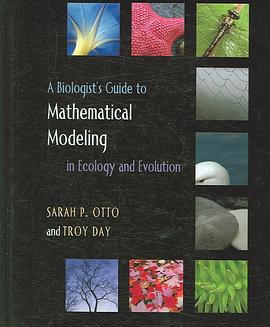
这本书的封面设计给我留下了非常深刻的印象,那种深邃的蓝色调和上面精妙的图表构图,立刻就传达出一种严谨而又充满探索欲的氛围。我常常在书店里流连于各种科学类书籍的架位,但很少有哪本书能像它这样,仅仅通过视觉语言就激发了我深入了解其内容的强烈好奇心。它并非那种堆砌着枯燥公式的教科书模样,反而更像是一份精心准备的探险地图,预示着读者即将踏入一个由数字和自然规律交织而成的奇妙世界。这种对设计美学的坚持,无疑为这本书增添了极高的价值,使得它在众多同类专业书籍中脱颖而出,成为那种你会愿意摆在咖啡桌上,时不时翻阅,并向朋友炫耀一下的“硬核”读物。初次翻阅时,我尤其留意了它对复杂生态系统的简化模型是如何通过优雅的数学框架进行描述的,那种从混沌到有序的提炼过程,本身就是一种艺术享受。
很喜欢这本。简洁清楚。先放着吧……老了再读lol
很喜欢这本。简洁清楚。先放着吧……老了再读lol
很喜欢这本。简洁清楚。先放着吧……老了再读lol
很喜欢这本。简洁清楚。先放着吧……老了再读lol
很喜欢这本。简洁清楚。先放着吧……老了再读lol