
具体描述
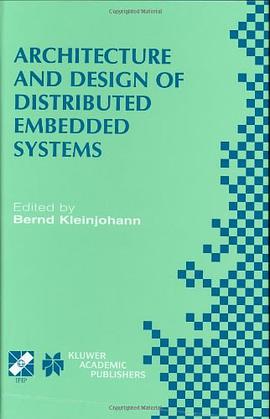
Due to the decreasing production costs of IT systems, applications that had to be realised as expensive PCBs formerly, can now be realised as a system-on-chip. Furthermore, low cost broadband communication media for wide area communication as well as for the realisation of local distributed systems are available. Typically the market requires IT systems that realise a set of specific features for the end user in a given environment, so called embedded systems. Some examples for such embedded systems are control systems in cars, airplanes, houses or plants, information and communication devices like digital TV, mobile phones or autonomous systems like service- or edutainment robots. For the design of embedded systems the designer has to tackle three major aspects: The application itself including the man-machine interface, The (target) architecture of the system including all functional and non-functional constraints and, the design methodology including modelling, specification, synthesis, test and validation. The last two points are a major focus of this book. This book documents the high quality approaches and results that were presented at the International Workshop on Distributed and Parallel Embedded Systems (DIPES 2000), which was sponsored by the International Federation for Information Processing (IFIP), and organised by IFIP working groups WG10.3, WG10.4 and WG10.5. The workshop took place on October 18-19, 2000, in Schloss Eringerfeld near Paderborn, Germany. Architecture and Design of Distributed Embedded Systems is organised similar to the workshop. Chapters 1 and 4 (Methodology I and II) deal with different modelling and specification paradigms and the corresponding design methodologies. Generic system architectures for different classes of embedded systems are presented in Chapter 2. In Chapter 3 several design environments for the support of specific design methodologies are presented. Problems concerning test and validation are discussed in Chapter 5. The last two chapters include distribution and communication aspects (Chapter 6) and synthesis techniques for embedded systems (Chapter 7). This book is essential reading for computer science researchers and application developers.
作者简介
目录信息
读后感
Automatic Code Generation for Multirate Simulink Models with Support for the OSEK Real-Time Operating System http://2.taobao.com/item.htm?id=41776278434&grade=7.0
Automatic Code Generation for Multirate Simulink Models with Support for the OSEK Real-Time Operating System http://2.taobao.com/item.htm?id=41776278434&grade=7.0
Automatic Code Generation for Multirate Simulink Models with Support for the OSEK Real-Time Operating System http://2.taobao.com/item.htm?id=41776278434&grade=7.0
Automatic Code Generation for Multirate Simulink Models with Support for the OSEK Real-Time Operating System http://2.taobao.com/item.htm?id=41776278434&grade=7.0
Automatic Code Generation for Multirate Simulink Models with Support for the OSEK Real-Time Operating System http://2.taobao.com/item.htm?id=41776278434&grade=7.0
用户评价
这本书的魅力在于其鲜明的“面向实践”的立场。它不像有些学术著作那样高高在上,而是牢牢扎根于当前的工业需求。例如,书中对于边缘计算节点与云端协同的架构模式,提供了多套可选的设计方案及其适用场景,并且对每套方案的功耗特性、延迟表现进行了量化对比,这对于需要进行项目选型决策的技术负责人来说,简直是如获至宝。我特别欣赏作者没有回避特定厂商或平台的局限性,而是以一种客观、中立的态度,分析不同技术栈下的工程约束。它真正做到了“授人以渔”,让你学会如何根据实际的成本、性能指标和未来扩展性来裁剪技术选型,而不是盲目追随最新的热门框架。这本书的每一页都充满了可以立即投入使用的洞察力。
不得不提的是,作者在探讨系统级功耗优化时展现出的深度,这在许多同类书籍中往往是被一笔带过的。这本书详尽地剖析了时钟门控、电源域切换以及动态电压频率调节(DVFS)在分布式系统中的复杂交互。作者清晰地论证了,在嵌入式系统中,软件架构决策如何直接决定了最终产品的能效比——这是一个常常被软件工程师忽视的关键维度。他用严谨的数学模型和实际的系统级测量数据,证明了某些看似微小的软件设计差异,在数百万设备上累积起来会造成巨大的能源浪费。这种从宏观架构到微观能耗的无缝切换能力,使得本书的价值超越了单纯的“设计方法论”,更像是一本面向可持续和高效能系统的操作手册。阅读它,你会深刻体会到,嵌入式系统的设计是一门精妙的平衡艺术。
阅读体验方面,这本书的结构安排堪称典范。它遵循了一种渐进式的学习路径,从最基础的资源管理和任务调度开始,逐步过渡到跨域通信和异构多核集成。这种层层递进的设计,极大地降低了复杂技术栈的学习门槛。特别是作者在阐述数据一致性模型时,使用了非常形象的比喻和图示,使得CAP理论在嵌入式上下文中的具体含义变得清晰易懂。我甚至感觉到,这本书仿佛是作者多年来所有失败与成功案例的精华提炼,它避免了让你去重蹈覆辙。它不仅仅是在传授知识,更是在传递一种严谨的工程哲学:在设计之初就必须充分预估最坏情况。对于那些身处快速迭代环境,却又需要保证长期稳定性的团队而言,书中关于OTA(空中下载更新)策略的讨论,提供了宝贵的参考蓝图。
这本书的深度和广度令人印象深刻,它绝不是一本浅尝辄止的入门读物,而是直击分布式嵌入式系统设计核心的专业著作。作者在对时间敏感性网络(TSN)和实时操作系统(RTOS)的比较分析部分,展现了惊人的细致度,每一个参数的选择、每一个协议的权衡,都经过了近乎苛刻的推敲。我发现自己不得不时常停下来,查阅一些相关的标准文档,以确保完全理解作者所引用的每一个技术细节。这种对细节的执着,反而铸就了本书极高的可信度和实用价值。它强迫你走出舒适区,去面对现实世界中非完美、充满限制的硬件环境。书中对于容错机制和安全隔离的讨论尤为精彩,它超越了教科书式的描述,引入了基于故障注入测试的实际数据,让抽象的“鲁棒性”变得具体可感,读起来酣畅淋漓,受益匪浅。
这本书的叙述风格着实引人入胜,仿佛作者正坐在我面前,用他深厚的专业知识和丰富的实践经验,为我勾勒出一幅幅生动的系统图景。它没有那种枯燥的理论堆砌感,而是将复杂的概念巧妙地融入到实际的案例分析之中。尤其是在讨论系统架构的演进时,作者的笔触充满了洞察力,他不仅展示了“是什么”,更深入剖析了“为什么会这样”,以及在资源受限的环境下,工程师们是如何权衡取舍,最终达成最优解的。我特别欣赏他对底层硬件约束与上层软件抽象之间关系的细腻处理,这种贯穿始终的视角,使得整本书的逻辑链条异常坚实。读完一个章节,我总有一种豁然开朗的感觉,仿佛过去在实际项目中遇到的那些似是而非的难题,都有了清晰的理论支撑和可行的设计指导。对于那些渴望从“会写代码”跃升到“会设计系统”的工程师来说,这本书无疑是极佳的引路人,它提供了一套扎实的思维框架,而非仅仅是零散的技巧集合。