
具体描述
All living things are remarkably complex, yet their DNA is unstable, undergoing countless random mutations over generations. Despite this instability, most animals do not grow two heads or die, plants continue to thrive, and bacteria continue to divide. Robustness and Evolvability in Living Systems tackles this perplexing paradox. The book explores why genetic changes do not cause organisms to fail catastrophically and how evolution shapes organisms' robustness. Andreas Wagner looks at this problem from the ground up, starting with the alphabet of DNA, the genetic code, RNA, and protein molecules, moving on to genetic networks and embryonic development, and working his way up to whole organisms. He then develops an evolutionary explanation for robustness.
Wagner shows how evolution by natural selection preferentially finds and favors robust solutions to the problems organisms face in surviving and reproducing. Such robustness, he argues, also enhances the potential for future evolutionary innovation. Wagner also argues that robustness has less to do with organisms having plenty of spare parts (the redundancy theory that has been popular) and more to do with the reality that mutations can change organisms in ways that do not substantively affect their fitness.
Unparalleled in its field, this book offers the most detailed analysis available of all facets of robustness within organisms. It will appeal not only to biologists but also to engineers interested in the design of robust systems and to social scientists concerned with robustness in human communities and populations.
Review
"Wagner contributes significantly to the emerging view that natural selection is just one, and maybe not even the most fundamental, source of biological order. His two-page epilogue throws out seven open questions for systems biologists and neo-Darwinians to consider; hopefully they will do so."---Greg Gibson, Science
"This book is invaluable for everybody interested in robustness. . . . I predict that for many years to come, Wagner's book will be the bibliographic reference work of choice for research on robustness."---Claus O. Wilke, BioScience
"Wagner's treatise is more than good biology; it is also very interesting biology. The picture is painted by talented hands. . . . If I have a favorite aspect of the book, it is the meticulous yet insightful analysis of neutral spaces and their relevance for the main themes of the book."---Eörs Szathmáry, Nature
"Unparalleled in its field, this book offers the most detailed analysis available of all facets of robustness within organisms. It will appeal not only to biologists but also to engineers interested in the design of robust systems and to social scientists concerned with robustness in human communities and populations.", Ethnology, Ecology, and Evolution
Review
"This is a timely book that should appeal to biologists, engineers, and applied mathematicians."―David C. Krakauer, Santa Fe Institute
From the Back Cover
"This is a timely book that should appeal to biologists, engineers, and applied mathematicians."--David C. Krakauer, Santa Fe Institute
"This is a major contribution, addressing what are perhaps the central questions in the subject of complex adaptive systems: What makes systems robust and how does selection at different levels of organization act to shape robustness? It is a well-written, well-organized, provocative piece of scholarly work that will be widely read and debated."--Simon Levin, Princeton University
作者简介
Andreas Wagner is professor of biochemistry at the University of Zurich. He studies the evolution of biological systems on all levels of organismal organization, from genes and genomes to gene networks and embryonic development
目录信息
读后感
用户评价
这本书的语言风格有一种古典的学术美感,每一个句子都经过了反复的锤炼,力求信息密度最大化。阅读过程中,我常常需要停下来,反复咀嚼那些描述复杂动态过程的定语和状语,以确保没有遗漏任何细微的限定条件。书中对生命系统的“适应性景观”的描述尤其精妙,它将演化路径描绘成一条在多维能量地形中蜿蜒前行的过程,鲁棒性确保了系统不会过快地跌入局部最优的陷阱,而可演化性则保证了系统有能力攀越那些高耸的“山脊”去探索更广阔的区域。这种具象化的比喻,极大地帮助我理解了那些原本抽象的数学概念。此外,它对“自组织临界性”在生物系统中的体现也有独特的见解,探讨了生命如何巧妙地运行在稳定与混沌的边缘,以最大化其响应能力。这种对生命哲学的深刻洞察,使得这本书不仅仅是一部技术手册,更像是一部关于生命本质的精妙论述。它教会我的,是如何在追求确定性的同时,拥抱不确定性带来的无限可能,这对于身处快速变革时代的所有人来说,都是极具启发性的教诲。
这本书的行文风格可以说是极其内敛且严谨,几乎没有丝毫煽情的笔墨,完全是教科书式的精确表达。它不是为了取悦大众,而是致力于建立一个清晰、无歧义的知识体系。我花了很长时间才适应这种风格,因为它要求读者必须对背景知识有相当的储备,否则很容易在专业术语的海洋中迷失方向。最令我感到惊喜的是,它对“可演化性”的论述。这部分内容超越了一般的进化生物学范畴,引入了计算复杂性和信息论的视角来量化一个系统未来产生新功能或新结构的潜力。作者似乎在暗示,一个“健壮”的系统不应是僵死的,而应该像一个精心规划的城市,拥有足够的预留空间和灵活的交通网络,以便在未来面对未知的挑战时能够快速重构。这种前瞻性的视角,让我开始重新审视那些看似效率不高的生物结构——也许它们并非“浪费”,而是为了保障长期的进化可能性而设置的“保险机制”。书中对不同时间尺度下,鲁棒性与可演化性之间可能存在的权衡关系进行了深入的剖析,这种权衡在不同环境下如何动态调整,是全书最引人入胜的部分之一。这种高度凝练的学术探讨,非常适合需要进行深度理论构建的研究生和学者。
读完这本书,我产生了一种强烈的职业冲击感,它彻底颠覆了我对工程学中“可靠性设计”的固有认知。以往我们总倾向于通过增加冗余和标准化来提升系统的可靠性,追求绝对的“零缺陷”。然而,这本书清晰地展示了,生命系统在资源受限的自然选择压力下,所发展的鲁棒性策略远比我们想象的要精妙得多。它不是简单地增加副本,而是通过网络拓扑结构的优化,例如模块化设计和中心节点的保护机制,来实现高效且低成本的稳定性。更重要的是,它强调了“演化”作为一种持续的、动态的优化过程,而非一个孤立的事件。书中对“演化潜力”的探讨,特别是在基因调控网络中,如何通过轻微的突变就能解锁新的表型空间,这与我所熟悉的传统工程学中的容错设计形成了鲜明的对比。作者似乎在邀请工程师们向生物界学习,设计出那些“既能抗住今天的小故障,又能为明天的重大变革做好准备”的复杂系统。这种跨领域的借鉴价值,使得这本书的受众范围远超生物学领域,对于人工智能、材料科学和复杂网络工程领域的同仁而言,都具有极高的参考价值。
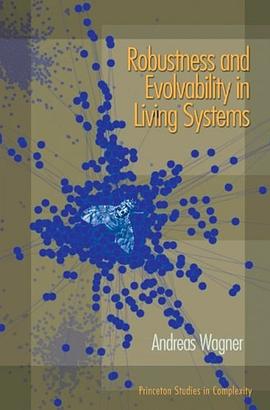
这本书的封面设计就透露出一种严肃的学术气息,那种深沉的蓝色调和清晰的字体排版,让人立刻意识到这不是一本轻松的休闲读物。我最初翻开它,是被“生命系统”这个宏大的概念所吸引。它试图探讨的,是生物体在面对外界干扰时,如何维持其功能和结构的稳定,这本身就是一个跨学科的难题。书中对不同生物层级——从分子到生态系统——的鲁棒性机制进行了细致的梳理,比如蛋白质折叠的稳定性、细胞信号网络的冗余设计,以及种群对环境波动的抵抗力。作者的笔触非常扎实,引用了大量的实验数据和数学模型来支撑论点,使得论证过程逻辑严密,几乎不留给读者去质疑的空间。尤其让我印象深刻的是,它并没有将“鲁棒性”简单地等同于“不变性”,而是深入探讨了在维持核心功能不变的前提下,系统如何允许某些部分的灵活变化以适应长期演化需求。这种对稳定与灵活性的辩证思考,极大地拓宽了我对生命复杂性的理解。虽然某些章节涉及复杂的动力学方程,初读起来确实需要极大的耐心,但一旦掌握了其内在逻辑,便会发现其理论框架的普适性和强大解释力。对于任何一个希望深入理解生命体适应机制的生物学或系统科学研究者来说,这无疑是一部必不可少的案头工具书,它提供了理解生命现象的全新视角。
这本书的阅读体验是漫长而艰苦的,它更像是一部精密的百科全书,而不是一本能让人一口气读完的小说。它的结构组织非常严密,每一章的论述都建立在前文的基础上,逻辑链条环环相扣,不允许有丝毫的跳跃。我特别欣赏作者在论述中对不同理论模型的对比和批判。例如,在讨论鲁棒性如何促进新功能出现时,书中细致地比较了突变累积模型与间歇性平衡模型在解释系统对环境变化的反应速度上的优劣。这种学术上的坦诚和对现有知识局限性的清晰界定,使得整本书的论述显得格外可信。它没有给出万能的答案,而是提供了一整套分析问题的框架和工具。我个人发现,在试图将书中的抽象概念应用于我自己的研究课题时,最大的挑战在于如何将这些高度简化的理论模型,映射到真实世界中那些充满了噪声和不确定性的复杂实验数据上。这本书迫使我不断地反思:我的模型是否遗漏了关键的“软约束”?我的系统是否因为过于追求短期效率而牺牲了长远的生存潜力?这是一次深刻的思维训练。