具体描述
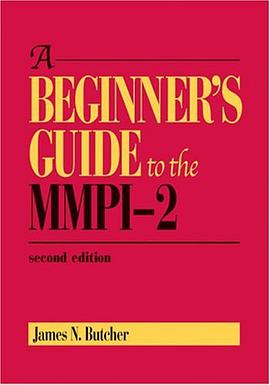
A Beginner's Guide to the MMPI-2: Navigating the Landscape of Psychological Assessment This comprehensive volume serves as an indispensable primer for anyone stepping into the intricate world of the Minnesota Multiphasic Personality Inventory-2 (MMPI-2). Far from being a mere manual reprint, this guide focuses on demystifying the assessment process, providing practical, context-rich explanations necessary for proper administration, scoring, and interpretation. It is tailored specifically for graduate students in counseling, psychology, and related fields, as well as newly licensed clinicians who require a solid foundation before tackling complex clinical cases. The book begins by situating the MMPI-2 within the historical framework of psychological testing. It carefully traces the lineage from earlier personality inventories, emphasizing the theoretical underpinnings that shaped the development of the MMPI and its subsequent revisions. Understanding why the test is structured the way it is—its empirical keying approach, its emphasis on psychopathology, and its broad scope—is crucial for ethical application, and this section provides that necessary background without getting bogged down in exhaustive psychometric minutiae best reserved for advanced statistical texts. A significant portion of the guide is dedicated to the practical mechanics of test administration. We explore the nuances of ensuring standardized conditions, a cornerstone of valid assessment. This includes detailed discussions on rapport building, managing test anxiety in diverse populations, and addressing common issues arising from computerized versus paper-and-pencil formats. Critical attention is paid to ethical considerations during administration, particularly concerning informed consent, confidentiality, and the linguistic appropriateness for non-English speakers or individuals with cognitive limitations. The core of the guide tackles the structure of the MMPI-2 itself. We break down the various scales systematically: 1. Validity Scales: These are introduced not just as a checklist, but as the primary defense against invalid profiles. Detailed case examples illustrate the interpretation of inflated defensiveness (e.g., K scale elevation), inconsistent responding (VRIN/TRIN), and blatant faking (F scale patterns). The emphasis here is on clinical judgment—when does an elevated F scale warrant profile rejection versus requiring deeper clinical exploration? 2. Clinical Scales (The Basic Scales): Each of the ten clinical scales is explored individually, moving beyond simple label association. For example, Scale 2 (Depression) is analyzed not merely as a measure of sadness, but in relation to underlying cognitive distortions, vegetative symptoms, and potential suicidal ideation. The guide stresses the importance of viewing these scales in combination, moving from univariate interpretation to understanding the profile configuration. Techniques for identifying common and significant profile types (e.g., Type 2-7/7-2 elevations) are introduced using simplified graphical representations and narrative descriptions of potential underlying psychological structures. 3. Restructured Clinical (RC) Scales: Recognizing the shift in modern practice, the RC scales are presented as essential tools for understanding basic trait elevations independent of Harris-McKhinnon confounding. The text provides a comparative analysis, explaining how the RC scales clarify the interpretation of the basic scales, particularly in differentiating primary symptomatology from co-occurring distress. Beyond the core metrics, the book dedicates substantial chapters to the supplemental scales and code types, which often provide the richness necessary for a nuanced formulation. We examine high-utility scales such as Anxiety, Hostility, Substance Abuse, and Paranoia, demonstrating how these scales contextualize the primary clinical elevations. For instance, how does a high Sc (Schizophrenia) scale present differently when accompanied by elevated Anxiety versus elevated Paranoia? Crucially, this guide places heavy emphasis on Interpretation Strategies. It moves the reader from simply reading scale numbers to constructing a coherent clinical narrative. This involves: Configural Analysis: Interpreting the overall shape and pattern of the profile before diving into individual scores. Considering Context: Integrating MMPI-2 results with collateral information (interviews, history, behavioral observations). The guide repeatedly cautions against "test-centric" diagnoses, asserting that the MMPI-2 is an adjunct to, not a replacement for, thorough clinical assessment. Writing Effective Reports: Practical advice is given on structuring the findings section of a psychological report, ensuring that interpretations are data-driven, clearly linked to criterion groups, and presented in language accessible to referring parties (e.g., courts, psychiatrists, or primary care physicians). Templates for common referral questions (e.g., differential diagnosis, risk assessment, treatment planning input) are provided as instructional aids. Finally, the book addresses the practical implementation of MMPI-2 results in various settings. While the primary focus remains clinical psychology, dedicated sections explore its use in forensic evaluations, employment screening (with strong ethical caveats regarding bias and relevance), and vocational counseling. The guide ensures the reader is aware of current controversies surrounding the test, including issues of cultural bias, the interpretation of elevated scores in non-clinical populations, and the necessity of understanding the test’s limitations, especially when dealing with complex comorbid conditions. This book aims to build competence and confidence, transforming the daunting task of mastering the MMPI-2 into a manageable, systematic process grounded in best clinical practice. It is designed to be worked with—filled with notes, revisited during case conceptualization, and ultimately, used as a reliable reference throughout a developing clinical career.