
具体描述
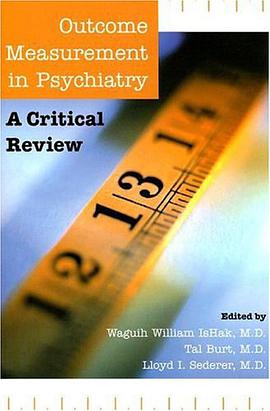
The past several decades of price wars in medicine have taken their tollAand nowhere has the impact been greater than in the field of psychiatry. Today, patients and physicians alike are protestingAlouder than everAthat quality patient care is being sacrificed to cost-cutting goals. What is quality patient care? Quality measures (i.e., validity, reliability, feasibility, usability, and comparability) link the care rendered to the results (i.e., outcomes) of that care, enabling us to define, measure, publicly report, compare, and ultimately improve care. This remarkable volume offers a critical analysis of outcome assessment, in psychiatry, which allows us to assess not only the measurable domains (i.e., symptoms, functioning, quality of life, and perception of care), but also the standards and instruments used to judge the quality of care. Divided into three major sections, this comprehensive textbook is more than just an inventory or nosology of measures; rather, it holds existing instruments to clear standards. -Section I, Understanding Outcomes Assessment, details the many fundamental concepts that underlie outcome measurement, including a Asituational analysisA of outcome assessment, the scientific underpinnings of the field, and its important constructs (e.g., process and outcome, efficacy and effectiveness, basis statistics, quality improvement). -Section II, A Critical Review of the Instruments, critiques a wide variety of instruments that have high clinical utility, are in the public domain or of low cost and burden, and meet many of the quality standards of validity, reliability, feasibility, usability, and comparability. Organized by patient population (age, diagnoses, and disorders), these chapters describe both general and disorder-specific measures, with respondents that include patients, families, and clinicians. Data generated by these instruments therefore can be used to assess outcomes for individual patients, populations, and programs. -Section III, Challenges and Opportunities, discusses the obstacles to implementing assessment programs, regulatory and accreditation demands, confidentiality and training, and the technology of measurement and proven solutions, including a final chapter on future innovations using various types of brain imaging; laboratory tests (e.g., for homovanillic acid); immunological tests (e.g., G-protein and plasma prolactin, the hypothalamic-pituitary-adrenal axis); and acoustic (e.g., the Aflat affectA of a patientAs voice) and other technological tests. The three editors of this meticulously researched and written compilation have brought together the work of 48 distinguished contributors who, responding to todayAs mandate of public accountability, provide clinicians and clinical leaders with the tools they need to meaningfully incorporate quality measurement into clinical practice.
作者简介
目录信息
读后感
用户评价
我发现这本书最大的魅力在于其极强的实践指导性,但这种指导并非是那种简单的“操作指南”,而是高屋建瓴的策略规划。它仿佛一位经验丰富的大师,指着地图上的关键隘口告诉我:“如果你想在临床效果评估中站稳脚跟,你必须首先跨越这几道难关。”特别是关于自动化评估和机器学习在精神卫生数据分析中的应用潜力那几章,展现了作者对未来趋势的敏锐洞察力。它没有沉溺于现有技术的讨论,而是前瞻性地探讨了,当数据维度呈指数级增长时,我们现有的测量框架将如何应对挑战。这本书的语言流畅,尽管内容深度极高,但作者通过精心设计的图表和流程图,将复杂的层级结构清晰地呈现出来。读完后,我感到自己的“测量焦虑”得到了极大的缓解,因为我清晰地看到了,如何将一个宏大的研究目标,拆解成一系列逻辑清晰、可执行的评估步骤,每一步都有坚实的理论依据作为支撑。
这本书给我的感觉,更像是在走一趟深入复杂迷宫的考古之旅。我原本以为这会是一本关于具体操作手册的堆砌,但事实远比我想象的要深邃得多。它没有急于展示那些光鲜亮丽的统计结果,而是花费了大量的篇幅来探讨“什么是真正的改善”这一哲学层面的问题。作者似乎在不断地拷问我们:我们测量的,究竟是症状的减轻,还是患者生活质量的提升?这种对核心概念的反复解构与重构,对于长期处于“数据驱动”压力下的临床工作者来说,无疑是一剂清醒剂。我特别欣赏其中关于跨文化适应性评估的部分,它揭示了许多国际通用的量表在不同文化背景下可能出现的严重偏差,这远超出了我预期的范畴。它不是那种读完就能立刻写出一篇高分论文的“速成书”,而更像是一个资深导师,在你耳边低语,让你对每一个选择背后的伦理与科学重量保持敬畏。每一章都像是一块打磨精细的砖石,共同构建起一个坚不可摧的测量框架,即便初读时略感晦涩,但随着阅读的深入,那种豁然开朗的满足感是无与伦比的。
这本书的叙事风格非常独特,它不像许多专业书籍那样采用单向度的说教口吻,反而更像是一场高级研讨会的完整记录。作者似乎在引导读者进行一场连续的、多角度的辩论。我尤其欣赏其中穿插的那些历史案例分析,它们展示了历史上几次重大的测量范式转换是如何一步步实现的,充满了戏剧性的转折和学术上的“宫廷政变”。这种历史感的引入,使得原本枯燥的统计学概念变得生动起来,让人理解到今天的“最佳实践”并非一成不变,而是无数次争论和修正的结果。对于那些渴望了解精神病学评估领域“幕后故事”的人来说,这本书简直是宝藏。它教会我,评估的每一次进步,都伴随着对现有局限性的深刻认识。它提供的不是一个可以立即套用的模板,而是一种“研究者的心智模型”,教你如何在新情境下,为自己构建一套站得住脚的、可辩护的测量系统。
这部厚重的著作,乍看之下,似乎是为那些已经深谙精神病学研究方法论的行家们准备的“武功秘籍”。我原本期待它能为我揭示一些关于临床试验设计中那些难以捉摸的“陷阱”与“奥秘”,尤其是在评估新型干预措施的长期疗效方面。然而,当我翻阅目录时,发现它更像是一份详尽的、近乎教科书式的指南,着重于如何将那些原本模糊不清、主观性极强的临床观察,转化为可量化、可重复的指标体系。书的结构组织得极为严谨,从基础的信效度检验,到各种复杂的统计模型应用,无不体现出作者对严谨科学态度的执着。阅读过程中,我深刻体会到,在精神卫生领域,要真正得出“有效”这个结论,背后的数据构建过程是何等艰难且充满哲学思辨。它不是简单地告诉你“该做什么”,而是深入剖析了“为什么我们必须这样做”以及“不这么做会有什么后果”。对于一个致力于优化自身研究流程的研究生而言,这本书提供了无价的参照系,让你在设计问卷、选择量表时,能更有底气地去质疑那些看似成熟的标准,转而去探寻最能代表患者真实体验的测量工具。它更像是一面镜子,映照出当前临床实践中测量工具的固有局限性,并引导我们如何带着批判的眼光去使用它们。
坦白说,这本书的阅读体验是极具挑战性的,它对读者的预备知识要求相当高。我感觉自己像是被推到了一个极高海拔的学术平台,周围环绕着复杂的统计术语和理论模型,空气稀薄,需要集中全部心神去理解那些关于测量不变性(Invariance)的论述。它对传统上被视为“标准”的工具的批判,是那种不动声色却极具颠覆性的。举例来说,关于如何处理缺失数据或基线不平衡的章节,与其说是方法介绍,不如说是对过往许多研究有效性的深刻质疑。我不得不时常停下来,结合自己手头正在进行的项目去反思,我们过去处理这些问题的方式是否过于草率?这本书的价值恰恰在于,它不提供捷径,而是迫使你面对现实的复杂性。它成功地将“量化”的冰冷技术,与精神健康评估中固有的“人性化”需求进行了艰难的平衡,展示了在追求科学严谨性的同时,如何避免将人简化为一组数字的艺术。