
具体描述
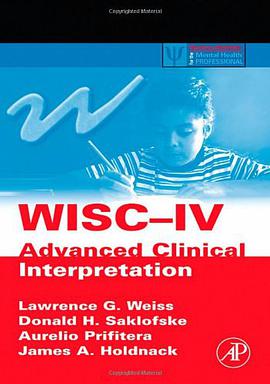
For both experienced psychologists and graduate students, this book moves quickly through the essentials of WISC-IV interpretation and onto an insightful analysis of the major cognitive domains assessed by WISC-IV. It is the intention of the editors to raise the standard of practice from a simplistic 'test-label-place' model to a clinical model of assessing to understand and intervene. In the first chapter, the reader is presented with a comprehensive array of societal and home environment factors for which there is empirical evidence indicating their impact on the development of children's cognitive abilities, and ultimately their scores on intelligence tests. Subsequent chapters address issues related to the assessment of cognitive abilities that compose 'g', with special emphasis on the clinical correlates of working memory and processing speed from both neuropsychological and cognitive information processing perspectives. Each new chapter builds on material presented in previous chapters and progresses the reader purposefully through deeper levels of understanding of WISC-IV and cognitive assessment in general. Two chapters explicate the processing approach to interpretation that is the corner stone of the WISC-IV Integrated. A further chapter addresses the interpretation of WISC-IV findings within the context of other instruments as part of a full psychological evaluation. The final chapter provides an extensive case example of how to write psychological evaluation reports from a child-centered rather than a score-centered perspective that can have transforming impact on parents and teachers approach to the child. Overall, these four authors are the architects of a masterful new book on advanced WISC-IV interpretation from a clinical perspective, Together with the complimentary book, WISC-IV Clinical Assessment and Intervention, Second Edition these books provide the complete spectrum of information needed by all psychologists who use the WISC-IV in clinical practice.
* The Wechsler scale is the most widely used assessment of children's intelligence
* Authored by assessment experts including Harcourt Assessment staff with exclusive data on the WISC-IV
* Discusses interpretation of 4 index scores of WISC-IV
* Examines the WISC-IV in relation to other frequently used psychological tests
* Describes the importance of the WISC-IV integrated in clinical assessment
* Predicts scholastic achievement based on WISC-IV subtest scores
* Discusses modification of score interpretation based on culture, SES, & other contextual factors
作者简介
目录信息
读后感
用户评价
这本书的深度和广度简直是令人咋舌。我花了整整一个周末的时间沉浸其中,感觉就像是完成了一次智力上的马拉松。首先,它对量表间差异的剖析达到了教科书级别的严谨性,那种细致入微的解读方法,让我对WISC-IV的各个子测验之间的微妙联系有了全新的认识。比如,关于处理速度与工作记忆之间相互影响的讨论,作者不仅仅是停留在现象描述上,而是深入挖掘了背后的认知机制,引用了大量的经典实验证据来支撑其观点,读起来酣畅淋漓。特别是对于那些边缘情况或结果模棱两可的案例,书里提供的多维度评估框架,远超出了我以往接触到的任何临床手册。它鼓励临床医生跳出简单的分数对比,转而关注个体认知图谱的复杂性。这种严谨又不失灵活的叙事方式,极大地提升了我处理复杂案例的信心。那些关于特定神经心理学障碍在WISC-IV上可能呈现的独特模式的章节,简直是为我量身定制的“秘籍”,让我对如何识别和区分细微的认知缺陷有了更清晰的蓝图。
坦白地说,这本书的阅读体验充满了挑战性,但这种挑战性恰恰是其价值所在。它不是一本供你在咖啡馆里轻松翻阅的读物,更像是一本需要配上荧光笔和笔记本,反复研磨的工具书。作者对统计学概念的运用达到了炉火纯青的地步,尤其是在解释回归均值现象以及如何将其纳入临床判断时,表述得极为透彻。我过去对这个概念的理解一直停留在表面,但通过书中清晰的图示和案例推演,我终于明白了它在解释智力波动和复测结果时的关键作用。书中提供的大量复杂案例研讨,每一个都像是一个微型的研究项目,展示了如何系统地整合来自不同信息源(包括背景资料、行为观察和标准化分数)的数据。这套严谨的整合流程,对于年轻的临床工作者来说,是构建扎实解释基础的无价之宝。它教会我如何抵御快速下结论的诱惑,坚持多路径论证的科学态度。
如果说市面上大部分WISC指南是教你如何“读懂”分数,那么这本书则是在教你如何“利用”分数去构建一个完整的认知画像。最让我印象深刻的是关于“报告撰写”的章节,它超越了标准的APA格式要求,深入探讨了如何用清晰、有力且对非专业人士(如家长或学校老师)具有教育意义的语言来传达复杂的临床发现。作者强调了报告作为一种沟通工具的责任,而不是仅仅作为一种存档记录。书中提供了许多高情商的措辞范例,教你如何在指出缺陷的同时,巧妙地突出个体的优势和潜在的适应性资源。这种对“临床产出”的关注,是许多纯理论著作所缺乏的。通过阅读这些案例,我深刻体会到,一个优秀的解释不仅仅是诊断,更是一种赋能——它为后续的干预和支持奠定了坚实、积极的基调。这本书真正实现了从理论到实践的完美桥接。
与我之前阅读的几本侧重于纯粹量化分析的指南相比,这本书的叙事风格简直是一股清流,充满了人文关怀和临床直觉的融合。它没有将评估过程变成冷冰冰的数字游戏,而是将每一个分数都赋予了鲜活的“生命意义”。我尤其欣赏作者在描述如何与受试者建立信任关系,以及如何通过观察非语言线索来修正或补充书面报告时的那种细腻笔触。有一章专门讨论了文化适应性和语言偏见对测试结果的影响,这在许多标准指南中往往是一笔带过,但在这里却被提升到了核心地位,作者提供了大量的实践建议,教你如何在不同文化背景下解读那些看似“异常”的反应。这种对评估过程“艺术性”的强调,让我重新审视了自己的临床实践方式。它让我意识到,最精准的解释,往往来自于对分数背后的“人”的深刻理解,而不仅仅是统计学上的显著性。读完后,我感觉自己从一个技术操作者,更像是一个认知“翻译家”。
这本书的结构组织堪称典范,逻辑链条极其紧密,从基础理论的快速回顾,到复杂交互作用的深入探讨,过渡得非常自然,没有任何生硬的跳跃感。我喜欢它在每一章结尾设置的“关键思考点”环节,这些总结性的问题往往能精准地刺中我在实际工作中遇到的困惑点,迫使我去内化和批判性地思考所学内容。例如,在讨论“全量表智商(FSIQ)的局限性”时,作者详细分析了在哪些特定临床群体中,FSIQ的数值会严重低估或高估个体的真实能力,并且提供了替代性的整合解释模型。这种前瞻性的分析视角,极大地拓宽了我的解释视野。此外,书中对“指数间差异的临床意义”的讨论,不仅仅是简单地列出差异值,而是结合了最新的认知神经科学发现,解释了为什么这种差异会出现,以及它预示着哪些潜在的认知资源受损或优势。这使得解释报告不再是简单的描述性文字,而是具有高度预测性和干预指导性的专业文件。