
具体描述
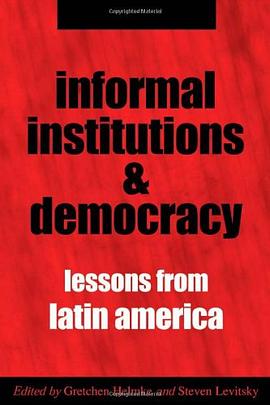
This volume analyzes the function of informal institutions in Latin America and how they support or weaken democratic governance. Drawing from a wide range of examples—including the Mexican dedazo, clientelism in Brazil, legislative "ghost coalitions" in Ecuador, and elite power-sharing in Chile—the contributors examine how informal rules shape the performance of state and democratic institutions, offering fresh and timely insights into contemporary problems of governability, "unrule of law," and the absence of effective representation, participation, and accountability in Latin America.
The editors present this analysis within a fourfold conceptual framework: complementary institutions, which fill gaps in formal rules or enhance their efficacy; accommodative informal institutions, which blunt the effects of dysfunctional formal institutions; competing informal institutions, which directly subvert the formal rules; and substitutive informal institutions, which replace ineffective formal institutions.
作者简介
目录信息
读后感
用户评价
An apposite typology dealing with the relationship between formal and informal institutions, substantive chapters are generally solid. Could be better if the question of when to focus on informal institutions is addressed.
An apposite typology dealing with the relationship between formal and informal institutions, substantive chapters are generally solid. Could be better if the question of when to focus on informal institutions is addressed.
Helmke和Levitsky对四种非正式制度种类的划分是开创性的,但正如书中其他作者所说的那样,某一种特定的现象/制度并不一定只属于这四种中的其中一种。比如Clientelism,两位编者都倾向于认为它对民主是有害的,是竞争性的非正式制度,但事实上clientelism在洪都拉斯就表现出了替代性的特征,它代替了正式制度(国会)发挥了地方利益代表性的功能,使得政治家即使在正式制度无法约束他们的时候也要积极回应选民诉求,为地方利益服务。
Levitsky 那篇理论框架是Informal institution 研究必读了。其它翻翻感兴趣的就好。
An apposite typology dealing with the relationship between formal and informal institutions, substantive chapters are generally solid. Could be better if the question of when to focus on informal institutions is addressed.