
具体描述
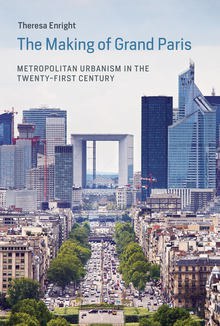
In 2007 the French government announced the “Grand Paris” initiative. This ambitious project reimagined the Paris region as integrated, balanced, global, sustainable, and prosperous. Metropolitan solidarity would unite divided populations; a new transportation system, the Grand Paris Express, would connect the affluent city proper with the low-income suburbs; streamlined institutions would replace fragmented governance structures. Grand Paris is more than a redevelopment plan; it is a new paradigm for urbanism. In this first English-language examination of Grand Paris, Theresa Enright offers a critical analysis of the early stages of the project, considering whether it can achieve its twin goals of economic competitiveness and equality.
Enright argues that by orienting the city around growth and marketization, Grand Paris reproduces the social and spatial hierarchies it sets out to address. For example, large expenditures for the Grand Paris Express are made not for the public good but to increase the attractiveness of the region to private investors, setting off a real estate boom, encouraging gentrification, and leaving many residents still unable to get from here to there.
Enright describes Grand Paris as an example of what she calls “grand urbanism,” large-scale planning that relies on infrastructural megaprojects to reconfigure urban regions in pursuit of speculative redevelopment. Democracy and equality suffer under processes of grand urbanism. Given the logic of commodification on which Grand Paris is based, these are likely to suffer as the project moves forward.
Endorsements
“As Paris enters a remake not unlike the upheavals of the late nineteenth and mid-twentieth centuries, Theresa Enright’s fascinating book offers an indispensable guide to the global city region's newly networked future.”
—Roger Keil, York Research Chair in Global Sub/Urban Studies, York University, Toronto, editor of Suburban Governance: A Global View
“In this investigation of the contemporary politics of ‘Grand Paris’ and its contradictions, Theresa Enright powerfully contributes to our understanding of emergent patterns and pathways of competitive metropolitan development in France, Europe, and beyond. Behind the ideological progressivism and monumental ambition surrounding such ‘grand projects,’ Enright’s study reveals a growth-oriented, profit-driven, speculative, and broadly neoliberalizing approach to urbanism that will, she argues, reproduce the sociospatial inequalities they are ostensibly meant to counteract. This book is a key contribution to our understanding of metropolitan governance restructuring, as well as a useful intervention into broader debates regarding the variegated political-institutional forms in which neoliberal urbanism is being pursued.”
—Neil Brenner, Professor of Urban Theory, Harvard Graduate School of Design, author of New State Spaces and Critique of Urbanization
“The Making of Grand Paris introduces the notion of grand urbanism as a way of making sense of how some cities are seeking to author their own redevelopment. Giving us more, much more, than a single case study, Theresa Enright has delivered a book that goes straight to the top of the must-read list of any serious urban scholar.”
—Kevin Ward, Professor, University of Manchester, coeditor of Mobile Urbanism: Cities and Policymaking in the Global Age
“Grand Paris, ‘L’imagination au pouvoir?’ Theresa Enright brings to light the contradictory forces surrounding ‘Grand Paris’—the dreamed world metropolis. She examines ‘grand urbanism’ in terms of the ideas of architects, the rescaling of governance, and the hard realities of various economic interests. A great read.”
—Patrick Le Galès, FBA, Research Professor Sciences Po/CNRS, Centre d’Etudes Européennes, Dean, Sciences Po Urban School
作者简介
Theresa Enright is Assistant Professor in the Department of Political Science at the University of Toronto.
目录信息
读后感
用户评价
从文字风格上来说,这本书的语言密度非常高,几乎没有一句是多余的,但同时,它的句式结构却又充满了古典的韵味,像是一首被精心打磨过的十四行诗。我常常需要借助词典来理解某些特定历史语境下的术语,这无疑增加了阅读的门槛,但回报是巨大的。作者对于十九世纪末期那种精英阶层特有的“审美焦虑”捕捉得入木三分,那种对“完美秩序”的狂热追求,以及随之而来的对“不完美现实”的排斥与清除,被描绘得既残酷又迷人。我仿佛能听到那些规划师在图纸上挥洒雄心壮志时的呼吸声,那种将个人意志强加于土地之上的傲慢与激情。这本书的价值在于,它拒绝提供简单的答案,而是将所有的问题都抛给了读者,让你自己去面对历史的复杂性和人性的幽暗面。它不是在赞颂,也不是在谴责,而是在一种近乎冷峻的、科学家的客观中,解剖着一个时代的灵魂。
这本书的叙事节奏把握得非常老道,它有一种近乎电影蒙太奇的跳跃感,从一个看似不相关的历史片段,突然切入到另一个看似无关的社会现象,但最终,这些碎片化的线索被一种看不见的力量巧妙地缝合在一起。我发现自己需要时不时地停下来,回溯前文,去确认作者是如何在看似松散的章节之间搭建起那座坚实的逻辑桥梁的。这绝不是一本轻松的读物,它要求读者保持高度的专注力,去捕捉那些一闪而过的暗示和隐喻。我尤其被其中关于“空间政治”的论述所吸引,作者似乎在揭示一个秘密:真正的权力斗争往往不是在议会厅里,而是在街道的宽度、公园的选址,乃至一盏路灯的高度中决定的。这种深入骨髓的批判性思维,让我对城市规划的“中立性”产生了深深的怀疑。它迫使我以一种全新的、带有解构意味的眼光去看待我们周围的环境,每一次行走都变成了一次对既有秩序的重新解读。
这本书的结构极其大胆,它没有采用传统的线性时间推进方式,反而像是将整个城市的历史层层剥开,就像剖析一个洋葱,每一层都带着不同的气味和质地。我最欣赏它对不同领域知识的跨界融合,从城市美学到社会学理论,再到工程学的细节,作者信手拈来,构建了一个多维度的分析框架。这让阅读体验变得极其丰富,每一次翻页都像是在进行一次知识的“空间跳跃”。它没有满足于描述表面的辉煌,而是深入挖掘了那些为了实现宏伟蓝图而付出的隐性成本——那些被边缘化的群体、被抹去的记忆。这种“自下而上”与“自上而下”视角之间的不断切换和碰撞,产生了一种强烈的阅读张力,让人欲罢不能。它成功地做到了,让一个已经耳熟能详的城市,在你面前重新焕发出陌生的、充满争议的光彩。
这本书读起来就像是漫步在一条铺满历史尘埃的塞纳河畔小径,空气中弥漫着旧时光的味道。作者的笔触细腻得像一幅印象派的画作,不是那种直白地告诉你“这里发生了什么”的记叙,更像是在引导你沉浸到一种氛围之中。我尤其欣赏他对城市肌理变迁的观察,那种对建筑细节的执着,仿佛能透过文字触摸到每一块石头的温度和纹理。它没有给我一个宏大的、教科书式的巴黎历史叙事,而是更聚焦于那些看不见的、潜藏在日常表象之下的力量——权力如何塑造空间,艺术如何渗透到市政规划的骨骼里。读完后,我感觉自己对巴黎的理解不再停留在那些明信片上的地标,而是对这座城市“如何成为它现在这个样子”有了一种更深层次的共鸣。那种缓慢渗透、逐渐形成的张力,被描绘得淋漓尽致,让人不得不停下来,反思我们习以为常的城市景观背后隐藏的复杂博弈。整本书读下来,与其说是知识的灌输,不如说是一种感官的唤醒,对巴黎的迷恋因此又加深了一层。
读完之后,我最大的感受是震撼,这种震撼并非来自于某个耸人听闻的事件,而是源于一种深层次的智力挑战。作者的论证过程如同一个精密运作的钟表,每一个齿轮——无论是档案资料、个人日记,还是建筑手稿——都必须严丝合缝地咬合在一起,才能驱动起整个论点的前进。这本书的行文风格有一种学院派的严谨,但又避免了枯燥的说教,因为它始终将理论的探讨根植于具体的、可感知的物质现实之中。它让我开始思考,我们今天所珍视的“经典”景观,究竟有多少成分是历史的必然,又有多少是特定人物在特定权力结构下的选择与偏好。这本书与其说是在讲述一个城市的故事,不如说是在提供一套理解所有复杂人类造物群落的分析工具。它要求你做的不只是阅读,而是参与到一场持续的、对“何为伟大”的严肃对话之中。