
具体描述
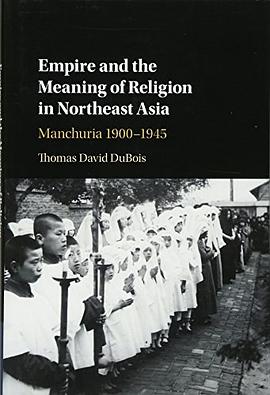
Manchuria entered the twentieth century as a neglected backwater of the dying Qing dynasty, and within a few short years became the focus of intense international rivalry to control its resources and shape its people. This book examines the place of religion in the development of Manchuria from the late nineteenth century to the collapse of the Japanese Empire in 1945. Religion was at the forefront in this period of intense competition, not just between armies but also among different models of legal, commercial, social and spiritual development, each of which imagining a very specific role for religion in the new society. Debates over religion in Manchuria extended far beyond the region, and shaped the personality of religion that we see today. This book is an ambitious contribution to the field of Asian history and to the understanding of the global meaning and practice of the role of religion.
作者简介
Thomas David DuBois is a leading scholar of religion in East Asian history, and is the author of Religion and the Making of Modern East Asia (Cambridge, 2011) and Sacred Village: Social Change and Religious Life in Rural North China (2005). His work has been published in Arabic, Chinese and Russian translation.
目录信息
Manchuria: Land of Progress
But Is It Religion?
Manchuria in a Global World
Sectoral Silos and Structural Resonance
Neo-empire and Spiritual Engineering
Structure of This Book
1. Foundations of Religion in Society in Manchuria
Political Religion before the Qing Dynasty
Political Religion under Qing Rule
Migration
Conclusion: Faith on the Frontier
2. From the Blood of the Martyrs: Violence and the Transformation of Religious
Mission
Catholic Mission to 1900
Protestant Mission to 1900
Boxers and Christians
Mission Methods Following the Boxer Suppression
God’s Kingdom Comes to Manchuria
Mode, Moment, and Miracle
Conclusion: A Time to Suffer, A Time to Prosper
3. The Mind of Empire: Manchuria and Religion in the Eyes of Asian Social Science
Indigenization of Social Science in Japan
Social Science and Social Reform in China
Universities in Manchuria: The Role of Institutions
Japanese Social Science and Manchurian Religion
Conclusion: Scholarly Formation of the Spiritual-Imperial Self
4. Piety in Print: Religion in the Pages of the Manchurian Press
Commerce and Community
Nakashima Masao and Japanese Journalism in China
Religion and Social Reform: 1906–1924
Reaching the Masses: 1925–1935
Religious Patriotism and National Spirit: 1936–1944
Conclusion: Marketplace of Ideas, Ideas in the Marketplace
5. The Laws of Men: Law and Religion in Manchukuo
Beyond Code and Church
Precedents: Law and Religion in China and Japan
Manchukuo: Rule of Law under an Illegal Regime
Absolute Values: Statutory Law
Surveillance and Control: Religion in Policy
By Any Other name
Judicial Decisions
Conclusions
6. A Charitable View: New Religions and the Birth of Public Philanthropy
New Religions in Republican China
Confucian Revival and the Turn to Charity
Spread to Manchuria
Conclusion: New Religions, “Redemptive Societies,” and Secular Charities. What’s
Really in a Name?
7. Manchukuo’s Filial Sons: Graveside Piety and the Transformation of Popular
Practice
State Perspectives on Confucian Ritual
A Tale of Two Sons
Filial Wang
Filial Li
A Death Cult Lives On
A Tomb to Remember
Conclusion: Orthodoxy, Orthopraxy, or Something Else?
8. May God Bless Manchukuo: Religion and Diplomacy in Northeast Asia
Transformations of Catholic Mission in East Asia
From Paris to Rome: The Waning of National Mission
A Church of One’s Own
Developments in Manchuria
Catholic Church during the Transition to Japanese Rule
The Diplomatic Stance: The Mandate of Gaspais
Rites and Religion: A Church for Manchukuo
Concluding Thoughts
Discourse and Differentiation
· · · · · · (收起)
读后感
用户评价
我必须说,作者在处理跨文化交流的复杂性上,展现出了惊人的平衡感和客观性。这本书并没有采取那种居高临下的评判姿态,而是真正尝试沉浸到研究对象的语境之中去理解他们的行为逻辑。特别欣赏的是其中对于信息流动的追踪,作者没有将信息视为静态的教条,而是将其视为一种在不同社会阶层和地域间不断被重新诠释和地方化的动态过程。这种动态的视角,极大地丰富了我们对“影响”这一概念的理解——它不是自上而下的灌输,而更像是一种渗透与再创造。比如,对某个宗教文本在不同群体中的接受程度的对比分析,揭示了权力结构如何微妙地筛选和利用特定的符号系统来巩固其地位,同时,底层民众又是如何通过“误读”或“挪用”这些符号来抵抗或适应现有秩序。这种细致入微的分析,使得整部书读起来酣畅淋漓,因为它打破了许多陈旧的二元对立,引导读者进入一个更加多层次、更具弹性的理解世界。
阅读这本书的过程,体验如同在迷雾中航行,作者不断地为你点亮新的灯塔,指出那些容易被主流叙事所忽略的幽暗角落。我尤其对其文献的广度和批判性的运用印象深刻。它似乎将冷门的档案、地方志、甚至民间口述资料熔于一炉,构建了一个极其扎实的论证基础。然而,其真正的力量在于,它没有让这些繁复的史料淹没论点,反而使论点如磐石般坚固。最让我感到震撼的是,作者对于“边界”这一概念的处理方式。它不是被描绘成一道清晰的、不可逾越的地理分界线,而是一个持续被协商、被模糊、被重新界定的社会心理空间。这种对动态边界的关注,使得历史不仅仅是关于谁“赢了”或“输了”,而是关于不同群体如何在不断变化的摩擦地带中,共同编织出他们赖以生存的意义网络。
坦率地说,这本书的写作风格是极其内敛而有力的。它很少使用煽情的语言,所有的论证都建立在无可辩驳的细节之上,这使得它更具说服力。读到某个关于早期教育体系如何被用于社会控制的章节时,我反复停下来深思,作者是如何从看似毫无关联的教育法令中,抽丝剥茧地揭示出其背后的权力意图的。这种对微观机制的精准捕捉,是本书区别于其他宏大历史著作的关键所在。它教给我的不仅仅是知识,更是一种观察世界的方式:即任何看似“自然”或“永恒”的社会结构,都必然是特定历史条件和权力博弈的产物。它迫使你对日常生活中那些习以为常的现象保持一种健康的怀疑态度,去追问“为什么会是这样?”而不是满足于“事情就是这样”。
如果说有什么能概括这本书的精髓,那便是它对“意义建构”的执着探究。作者似乎始终在追问:在一个充满不确定性和冲突的社会环境中,人们是如何为自己的存在和行为找到合理性的支撑的?这本书的结构巧妙地将宏观的政治经济变迁与微观的个体精神世界连接起来,展示了后者是如何对前者作出反应,有时是顺应,有时是微妙的抵制。特别是关于文化符号在不同政治光谱中的“身份认同”功能被反复利用的案例分析,极为精妙。它揭示了身份从来不是一个固定的标签,而是一系列不断被重新协商的叙事集合。因此,读完此书,我感觉自己对理解当代社会中身份政治的根源性问题,有了一种更为扎实、也更为审慎的基础。这是一部真正拓展了思维边界的杰出作品。
这部作品展现了一种对历史进程和文化变迁的深刻洞察力,它不仅仅是简单地梳理了某个特定时期的政治事件,而是深入挖掘了那些看似微不足道的社会互动如何共同塑造了我们今日所见的格局。作者的笔触细腻而富有穿透力,尤其在描绘不同文化群体的内心挣扎与适应过程时,读来令人感同身受。比如,对于某一特定边境地带的经济活动分析,不仅仅停留在贸易额的增减,而是对底层民众在权力更迭中的生存策略进行了详尽的描摹,这使得宏大的历史叙事瞬间变得鲜活起来,充满了人性的复杂与真实。整体上,它提供了一个极佳的框架,让我们得以超越传统的民族中心主义视角,去审视更广阔的地理空间内,人类社会是如何在持续的张力与融合中寻求平衡的。每一次翻阅,都能从字里行间捕捉到新的微妙之处,这无疑是一部值得反复研读的力作,其思想的深度和广度远超一般学术著作的范畴,更像是一部关于人类如何定义“家园”与“他者”的哲学探讨。
宗教,满洲,discourse
宗教,满洲,discourse
宗教,满洲,discourse
宗教,满洲,discourse
宗教,满洲,discourse