
具体描述
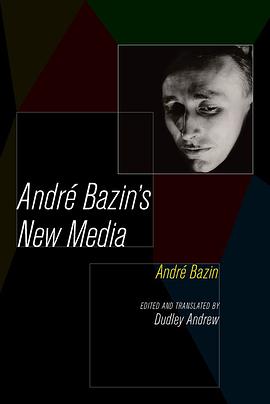
André Bazin’s writings on cinema are among the most influential reflections on the medium ever written. Even so, his critical interests ranged widely and encompassed the “new media” of the 1950s, including television, 3D film, Cinerama, and CinemaScope. Fifty-seven of his reviews and essays addressing these new technologies—their artistic potential, social influence, and relationship to existing art forms—have been translated here for the first time in English with notes and an introduction by leading Bazin authority Dudley Andrew. These essays show Bazin’s astute approach to a range of visual media and the relevance of his critical thought to our own era of new media. An exciting companion to the essential What Is Cinema? volumes, André Bazin’s New Media is excellent for classroom use and vital for anyone interested in the history of media.
作者简介
André Bazin (1918–1958) was the premier film theorist of the first century of cinema. Primarily associated with the journal Cahiers du cinéma, which he cofounded in 1951, he wrote for many other journals as well.
Editor and translator Dudley Andrew is R. Selden Rose Professor of Film and Comparative Literature at Yale University. His books include The Major Film Theories, Concepts in Film Theory, André Bazin, Film in the Aura of Art, Sansho Dayu, Mists of Regret: Culture and Sensibility in Classic French Film, and Popular Front Paris and the Poetics of Culture.
目录信息
Introduction: André Bazin Meets the New Media of the 1950s
PART ONE. THE ONTOLOGY AND LANGUAGE OF TELEVISION
1. The Aesthetic Future of Television
2. In Quest of Télégenie
3. Television Is Unbeatable for Live Coverage
4. Was It Live? Preserve Our Illusions
5. The Talking Head: Must the Commissaire Stand on His Head for TV?
6. Television Is Neither Theater nor Cinema
7. At the Venice Festival, TV Shares the Screen
8. Voice-Overs on TV: Let the Animals Talk
9. Looking at Television
PART TWO. TELEVISION AMONG THE ARTS
10. Long Live Radio! Down with the 8th Art!
11. A Seat at the Theater
12. False Improvisation and “Memory Lapses” on TV
13. To Serve Theater, Let Television Adopt Some Modesty
14. Respect the Spirit of Theater First and Foremost!
15. TV and the Disenchantment of Theater
16. Art on Television: A Program That Loses on All Counts
17. Reporting on Eternity: TV Visits the Musée Rodin
PART THREE. TELEVISION AND SOCIETY
18. A Contribution to an Erotology of Television
19. Censors, Learn to Censor
20. You Can Now “Descend into Yourself”
21. Television, Sincerity, Liberty
22. Information or Necrophagy
23. Television as Cultural Medium and The Sociology of Television
24. Do We Really Need Those Serials?
25. A Superb Clown Made Incoherent by TV
26. TV Can Popularize without Boredom or Betrayal
PART FOUR. TELEVISION AND CINEMA
27. Television and the Revival of Cinema
28. Television and Cinema
29. Is Television a Degradation for Filmmakers?
30. Some Films Are Better on the Small Screen Than the Large
31. Should Television Be Allowed to Chop Films to Pieces?
32. From Small Screen to Widescreen
33. Sacha Guitry Is Confident about TV, Just as He Was about Cinema in 1914
34. Jean Gabin Gets TV’s “Sour Lemon” Prize
35. “The Glass Eye” Will Reveal a New Hitchcock
36. Hitchcock on TV
37. Renoir and Rossellini: Two Top Recruits for Television
38. Renoir and Rossellini Debut on TV
39. Cinema and Television: An Interview with Jean Renoir and Roberto Rossellini
40. About Television: A Discussion with Marcel Moussy and André Bazin
PART FIVE. CINERAMA AND 3D
41. New Screen Technologies
42. Cinerama: A Bit Late
43. Cinerama, a Disappointment
44. Cinema in 3D and Color: Amazing!
45. A New Stage in the Process: Math Equations for 3D
46. Will a War in Three Dimensions Take Place?
47. The Return of Metroscopix
48. The House of Wax: Scare Me . . . in Depth!
49. The Real Crime on La Rue Morgue: They Assassinated a Dimension!
50. The 3D Revolution Did Not Take Place
PART SIX. CINEMASCOPE
51. Will CinemaScope Save the Cinema?
52. CinemaScope and Neorealism
53. CinemaScope: The End of Montage
54. The Trial of CinemaScope: It Didn’t Kill the Close-Up
55. Massacre in CinemaScope
56. Will CinemaScope Bring about a Television Style in Cinema?
PART SEVEN. FINALE
57. Is Cinema Mortal?
Appendix: A Selective Reference Guide to 1950s French Television
Index
· · · · · · (收起)
读后感
用户评价
这本书的封面设计就散发着一种引人入胜的学术气息,深沉的色调搭配简洁的字体,让人立刻对书的内容产生了浓厚的兴趣。我一直对电影理论,尤其是早期电影理论的演变和发展抱有极大的热情,而安德烈·巴赞的名字在电影史学界几乎是绕不开的基石。从我个人的经验来看,对于巴赞这样一位具有深远影响力的电影评论家,他的思想不仅塑造了电影语言的理解方式,更是在数字时代到来之前,为我们思考媒介的本质提供了宝贵的思想财富。我一直非常好奇,当巴赞这样一位对现实主义电影美学推崇备至的理论家,置身于如今这个被数字媒介所彻底重塑的世界时,他的那些经典论述将如何被重新解读,又会激发出怎样的新的思考。这本书的书名《Andre Bazin's New Media》本身就预示着一种跨越时空的对话,将过去与未来、经典理论与当下现实巧妙地连接起来。我期待这本书能够深入挖掘巴赞的核心观点,并以一种创新且富有启发性的方式,将其应用于对新媒体现象的解读。这不仅仅是对一位电影大师的致敬,更是一次对我们理解“媒介”本身这一概念的深刻反思。
我迫不及待地想要翻开这本书,因为我一直觉得,在这个信息爆炸、媒介形式层出不穷的时代,我们对“真实”的感知和理解方式正在发生前所未有的变化。安德烈·巴赞,作为一位对摄影和电影的“真实性”有着深刻洞察力的理论家,他的思想对于我们理解当下至关重要。我尤其好奇,当巴赞强调电影的“本体性”和对现实的“忠实记录”时,他会对那些经过精心策划、深度编辑,甚至完全虚构的新媒体内容作出怎样的评价?这本书的书名《Andre Bazin's New Media》仿佛是一个邀请,邀请我们重新审视巴赞的经典理论,并将其置于一个全新的语境下进行考量。我想象这本书会通过对巴赞重要论述的梳理,引申出对当下各种新兴媒介,例如社交媒体、虚拟现实、人工智能生成内容等,进行深入的哲学和美学层面的探讨。这是否会让我们更清晰地认识到,在新媒体时代,“真实”的界限正在变得模糊,而我们对媒介的批判性认知能力,也面临着新的挑战?我希望这本书能够提供一种理解这种复杂性的视角,帮助读者在纷繁的新媒体现象中,找到一条清晰的思考路径。
当我看到《Andre Bazin's New Media》这个书名时,我的脑海中立刻涌现出无数关于媒介演变的疑问。巴赞,这位对电影的“写实性”和“本体论”有着深刻见解的电影理论家,他的思想体系似乎与这个充斥着数字特效、虚拟现实以及高度互动的多媒体环境有些距离。然而,正是这种潜在的张力,让我对这本书充满了好奇。我忍不住猜想,这本书会如何巧妙地将巴赞那些经典的关于“深度空间”、“蒙太奇”的讨论,置于一个全新的媒介语境下。它是否会探讨,在新媒体的“即时性”和“碎片化”特征下,巴赞所强调的“耐心观察”和“客观记录”是否还有存在的空间?亦或是,本书会揭示出,巴赞的思想中那些关于媒介本质的洞见,反而能够为我们理解当前错综复杂的新媒体现象提供一种出人意料的启发?我渴望这本书能够深入剖析巴赞的核心理论,并以一种极具创造性的方式,将其与当下最前沿的新媒体实践进行对话,从而激发出我们对“媒介”这一概念更为深刻的理解。
对于我这样一位长期关注电影语言和媒介哲学的人来说,安德烈·巴赞的名字本身就代表着一种深刻的思考和不懈的探索。而《Andre Bazin's New Media》这个书名,则像是一把钥匙,打开了我对未来媒介形态无限的想象。我一直对巴赞在不同媒介之间建立联系的敏感度印象深刻,他能够从摄影中洞察电影的潜力,也能够从早期电影的探索中看到其自身的局限。因此,我非常期待这本书能够展现出一种跨媒介的视野。我想象这本书不会仅仅停留在对巴赞理论的简单应用,而是会深入挖掘巴赞思想的精髓,探讨他对于“真实性”、“时间性”以及“观众参与”等议题的独特见解,并以此为出发点,去审视和分析当今社会中形形色色的新媒体形态。这本书是否会挑战我们对于“创作”和“观看”的传统定义?它是否会揭示出,在新媒体的互动性和参与性特征中,我们能够找到某种与巴赞所倡导的“深度空间”和“现实主义”相呼应的精神内核?我热切地期待这本书能够提供一种全新的视角,引导我们以一种更加辩证和批判性的眼光,去理解和拥抱这个日新月异的新媒体时代。
一直以来,安德烈·巴赞在电影理论界的光芒从未被遮蔽,他的“现实主义美学”和对“影像本体”的关注,构成了理解电影语言的重要基石。而《Andre Bazin's New Media》这个书名,则让我眼前一亮,仿佛是将一位电影史上的巨匠,引入了一个我们当下最熟悉也最陌生的领域——新媒体。我的第一反应是,这样的结合本身就充满了张力。我们都知道,巴赞对于摄影和电影的“记录性”有其独特的偏爱,他认为这些媒介能够更直接地捕捉现实。那么,在如今这个算法主导、信息高度可塑、甚至虚拟与现实界限模糊的新媒体时代,巴赞的这些观点将如何被“安放”?这本书是否会尝试用巴赞的视角去审视那些充斥着滤镜、特效、以及精心编排的叙事的新媒体内容?我期待着本书能够为我们提供一种理解这种“新”与“旧”的碰撞的视角。它或许会挑战我们对传统电影理论的固有认知,也可能促使我们重新思考,在新媒体浪潮下,我们是否还有可能,甚至是否仍然需要,去追求某种形式的“真实”?