
具体描述
Description
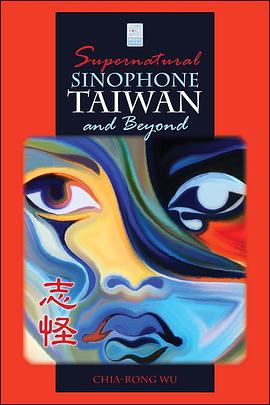
This book is in the Cambria Sinophone World Series headed by Victor H. Mair (University of Pennsylvania).
In recent years, Sinophone studies has introduced to a broader audience multiple ways of examining Chineseness beyond the traditional China-centered view. Whereas a Sinophone product, whether fiction or film, reflects on the close relationship between language and place, a localist agenda from “the margins of China and Chineseness” is brought to the fore.
It is important to consider that Sinophone literature both embodies an attachment to cultural China and encompasses vital issues of ethnicity and politics with respect to local contexts. To be more precise, Sinophone literature points to constantly evolving changes and adaptations into a profound combination of Chineseness and local identities. For example, in Sinophone Malaysian Literature: Not Made in China, author Alison M. Groppe offers a scrupulous study of Sinophone Malaysian literature, which is believed to be “incredibly rich yet remains (unjustly) marginalized.” E.K. Tan also makes important contributions in illuminating the literary representation of shifting Chinese identities in Southeast Asia in his book Rethinking Chineseness: Translational Sinophone Identities in the Nanyang Literary World.
Surprisingly, there is no scholarly monograph focusing on the literary production in Sinophone Taiwan so far, even though Taiwan is defined by Shu-mei Shih as “a major site of Sinophone literature” as a result of its “serial and layered colonial condition.” What does then Sinophone Taiwan mean? According to Shu-mei Shih, “The Sinophone Taiwan, for instance, is only an aspect of Taiwan’s multilingual community where aboriginal languages are also spoken, and postmartial law Taiwan cultural discourse is very much about articulating symbolic ‘farewells to China.’” In other words, Sinophone Taiwan is loaded with an ambivalent attitude towards the Chinese state as well as concept of cultural China while drawing on exclusively localized experiences.
This first scholarly monograph focusing on the literary and cultural geography of Taiwan through a Sinophone lens is therefore a step toward filling the gap. While reexamining the cultural and political complexities of Sinophone Taiwan, this book also recognizes the narrative of the strange as a widely adopted artistic form in highlighting Sinophone practices and experiences separated from the China-centric ideology. The study argues that the narratives of the strange in Sinophone Taiwan cross the boundaries between the living and the dead as well as the past and the present, in response to a pastiche of phantasm, Chinese diaspora, gender discourse, and transnational politics.
With detailed analysis, this book brings into focus the notion of zhiguai historiography in an attempt to shed light on the Sinophone narratives of the strange and to demonstrate how the topic can help illuminate the social and political implications of literary texts beyond contemporary China. By analyzing the literary tropes of strangeness, this research deals with the critical issues of the cultural exchange between China, Taiwan, and Sinophone Malaysia. The book explores the idea of the strange narrative as a fluid, border-crossing phenomenon that is impossible to ignore in Chinese ethnic writing. In this light, the narrative of the strange refers to the storytelling wedded to the motifs of ghost haunting and/or the figurative manifestation of anomalies.
In recounting diverse cultural spectacles of the strange, this book builds on such topics as the ghostly Chineseness, lingering aboriginal spirits, and eccentric identities with respect to ethnic and sexual complexities. Therefore, narratives of the strange are examined from three interrelated perspectives in this book. First, spectral and monstrous appearances can be associated either with a nostalgic attachment to the past or with an emotional resistance against historical traumas. Second, the scope of the strange can be expanded to bring into play the figuration of the ghostly/monstrous together with the magical representation of uncanniness, wonder, and fantasy. Third, strange figures can be posited as the invisible, marginalized subjects like sexual and ethnic minorities within a dominant social framework. Intriguingly, the equation can also be inverted by creative writers to make strange figures voiced and visible in a political light. Collectively, the scope of the strange includes the hauntology, the ghostly, the monstrous, the uncanny, the magical, and the fantastic.
Supernatural Sinophone Taiwan and Beyond will be of interest to scholars and students in Asian studies, particularly Sinophone studies as well as Chinese literature and culture.
作者简介
Chia-rong Wu is an assistant professor of Chinese Studies at Rhodes College. He holds a PhD in Comparative Literature from the University of Illinois at Urbana-Champaign. His primary research interests are modern Chinese literature and cinema with a focus on Sinophone and Taiwan Studies. Dr. Wu's other publications include articles in journals such as The American Journal of Chinese Studies, New Zealand Journal of Asian Studies, Studies on Asia, and ASIANetwork Exchange.
目录信息
Chapter 1: Tales of the Ghost Island
Chapter 2: A Gendered Discourse of Trauma
Chapter 3: Spatial Politics and Cultural Landscapes
Chapter 4: Magical Nativism in Sinophone Taiwan
Chapter 5: Magical Translocalism in Sinophone Malaysian Literature
Postscript: Strangeness in Popular Literature
Bibliography
Index
· · · · · · (收起)
读后感
用户评价
这本书读起来真是一次奇妙的旅程,它以一种极其细腻和富有洞察力的方式,描绘了当代台湾文化景观中那些深藏不露的脉络。作者的笔触非常敏锐,对于社会现象的观察入木三分,尤其是在探讨现代性与传统信仰之间张力的时候,那种复杂的情感交织被展现得淋漓尽致。我特别欣赏作者在梳理不同文化元素时所展现出的那种游刃有余的驾驭能力,仿佛他不仅是观察者,更是那个文化场域中的深度参与者。文字的节奏感很强,有时候像急流般推进,有时候又像深潭般静谧,让人在阅读过程中能真切感受到那种情绪的起伏。它不是那种平铺直叙的学术论述,而是充满了生命力和故事感的叙事,即使是对相关议题不甚了解的读者,也能被其中蕴含的文化张力所深深吸引。读完后,我感觉对台湾社会中那些“看不见”的动力有了更深层次的理解,那是一种关于身份认同和文化变迁的深刻反思,非常值得细细品味。
这是一部非常“重”的作品,这里的“重”并非指篇幅,而是指其思想的重量和意蕴的厚度。它不是那种可以轻松翻阅的小册子,而是需要你带着笔记本和提问意识去啃读的文本。作者在探讨台湾特定文化现象时,展现出惊人的跨学科视野,将人类学、社会学甚至电影理论的元素巧妙地编织在一起,形成了一张密不透风的理论之网。我必须承认,有些段落的句式结构非常复杂,需要反复阅读才能捕捉到其核心的论点,但这正体现了主题本身的复杂性。它迫使我走出舒适区,去直面那些在日常生活中被我们习惯性忽略的权力运作和文化霸权。这本书的价值在于它提供的不仅仅是信息,更是一种分析世界的工具和视角,它成功地拓宽了我理解当代亚洲社会议题的边界。
这本书的阅读体验,坦白说,有点像是进行一场精心策划的迷宫探险。作者构建了一个宏大而又充满细节的世界观,引导我们穿梭于看似无关却又紧密相连的文化节点之间。叙事的手法非常巧妙,充满了后现代的拼贴感,信息的密度很高,但又不至于让人感到压迫,反而激发了读者主动去构建意义的欲望。我特别喜欢作者处理时间线的方式,它不是线性的,而是像波纹一样扩散和重叠,很多看似已经尘封的记忆和事件,都在新的语境下被重新点燃。这本书的语言风格是那种极具个人色彩的,带着一种略显疏离的冷静,但恰恰是这种冷静,让那些本该热烈的情感显得更加震撼人心。它要求读者投入相当的精力去解码其中的隐喻和参照,但回报是丰厚的——你会发现自己对一些既有概念产生了全新的认识,那种智力上的挑战感令人兴奋。
读完这本书,我体验到一种强烈的文化上的“在场感”。作者的文字拥有惊人的画面感,仿佛每一个段落都配上了高分辨率的、带有特定光影的场景。特别是对一些仪式性或民间信仰场景的描绘,那种氛围的营造能力简直是教科书级别的。不同于那种冷冰冰的理论分析,这本书的热度来自于对具体人物和事件的细致描摹,它们构成了支撑起整个宏大论述的坚实基石。我感觉到,作者非常珍视这些个体经验,并将它们置于一个宏大的历史背景下去审视。整本书的调性是充满韧性和生命力的,即使面对困境和边缘化,其中的主题依然闪耀着一种不屈服的光芒。对于任何对台湾本土文化或其深层精神结构感兴趣的人来说,这本书无疑是一份不可多得的珍贵指南。
这本书的结构处理非常大胆,它似乎故意打破了我们对传统非虚构作品的期待。作者在叙事中频繁地插入一些看似游离但实则至关重要的田野笔记或个人反思,这种打破常规的编排方式,反而营造出一种更加真实和多维度的叙事效果。语言风格上,它展现出一种罕见的优雅和精准,用词考究,很多句子读起来都有诗歌般的韵律感,但又紧紧扎根于坚实的社会现实。最让我印象深刻的是它对“边缘”和“主流”之间互动关系的探讨,作者没有简单地对立二者,而是展示了它们之间那种持续不断的、充满张力的协商过程。这本书的洞察力在于它能够捕捉到那些稍纵即逝的文化信号,并将它们放大,让我们得以窥见台湾社会肌理深处那些持续涌动的暗流,是一部需要反复咀嚼的佳作。