
具体描述
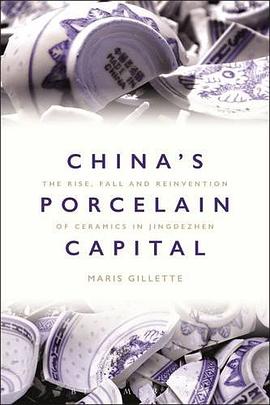
Maris Gillette's groundbreaking study tells the story of Jingdezhen, China's porcelain capital, from its origins in 1004 in Song dynasty China to the present day.
Gillette explores how Jingdezhen has been affected by state involvement in porcelain production, particularly during the long 20th century. She considers how the Chinese government has consumed, invested in, taxed and managed the local ceramics industry, and the effects of this state intervention on ceramists' lives, their local environment and the nature of the goods they produce. Gillette traces how Jingdezhen experienced the transition from imperial rule to state ownership under communism, the changing fortunes of the ceramics industry in the early 21st century, the decay and decline that accompanied privatisation, and a revival brought about by an entrepreneurial culture focusing on the manufacture of highly-prized 'art porcelain'. - See more at: http://www.bloomsbury.com/us/chinas-porcelain-capital-9781474259422/#sthash.4TQEDn9u.dpufReviews
“Historians like to boast of getting their hands dirty in the archives. In this fascinating book, Maris Gillette got her feet muddy to tell the 1000-year story of how the Chinese state, global markets and the potters of Jingdezhen have interacted to produce the most extraordinary porcelains in the world.” – Dr Steven Conn, W E Smith Professor of History at Miami University, USA
“Positioning ethnographic writing at the center of art historical and anthropological perspectives, Gillette makes an enormous contribution to our understanding of cultural production in China. This astute and intimate portrait uses first-rate scholarship and a unique apprenticeship in the community to reveal the complexities of contemporary ceramic production in Jingdezhen.” – Dr Morgan Perkins, Associate Professor of Anthropology and Art at the State University of New York, USA
“What a story, the town of Jingdezhen! It began making ceramics over a thousand years ago, produced porcelain for emperors of four dynasties while it made blue-and-white ware famous throughout the world, declined sadly under the Nationalist Republic, revived under Mao's state socialism, and was abruptly shut down in China's economic reforms of the 1990s, only to emerge for the third time as a destination for tourists and artists in the 21s century. Maris Gillette tells this story in a clear, fast-moving narrative, completely free of academic jargon, that will appeal to scholarly and popular readers alike.” – Dr Stevan Harrell, Professor of Anthropology at the University of Washington, USA
“A fascinating read providing an historic and contemporary context of a city in China, whose economic survival and worldwide fame has been uniquely due to a single product, porcelain. For me, involved in education and as an artist potter making work on a regular basis in 'Jingdezhen' it was both intriguing in its narrative and hugely informative.” – Felicity Aylieff, Head of Programme for Ceramics and Glass at the Royal Academy of Art, UK
- See more at: http://www.bloomsbury.com/us/chinas-porcelain-capital-9781474259422/#sthash.4TQEDn9u.dpuf
作者简介
Maris Boyd Gillette is the E. Desmond Lee Professor of Museum Studies and Community History and Director of the Museum Studies program. She is a sociocultural anthropologist and filmmaker who has studied porcelain workers and entrepreneurs in Jingdezhen (southeast China) and urban Chinese Muslims in Xi’an (northwest China). Gillette took her Ph.D in Anthropology from Harvard University, and has held post-doctoral fellowships at the Smithsonian Institution and the Swedish Collegium for Advanced Studies. She has curated and co-curated exhibits and installations at the Philadelphia Museum of Art, the Peabody Museum of Archaeology and Ethnology, Haverford College, and the Missouri History Museum. Her 2009 documentary Broken Pots Broken Dreams has been shown at film festivals in Russia, France, and the US. Together with Louis Massiah of Scribe Media Center, Gillette co-directed the planning phase of the community history project Muslim Voices of Philadelphia, and facilitated several community-based documentary shorts in the Philadelphia area. Recent publications include a special issue of Visual Anthropology Review on ethnographic film in China (30:1, 2014) and an article on labor in Jingdezhen’s ceramic industry (Anthropology of Work Review 35:1, 2014). Her book, China’s Porcelain Capital: the Rise, Fall, and Reinvention of Ceramics in Jingdezhen, is forthcoming from Bloomsbury Academic in November 2016.
目录信息
2. Creating a porcelain capital, prehistory to 1785
3. Decline and disarray, 1786 - 1948
4. Production and politics, 1949 - 1972
5. Dual track porcelain, 1973 - 1993
6. Porcelain capital no more, 1994 - 2010
7. From porcelain capital to heritage site
Glossary
Bibliography
Index - See more at: http://www.bloomsbury.com/us/chinas-porcelain-capital-9781474259422/#sthash.4TQEDn9u.dpuf
· · · · · · (收起)
读后感
用户评价
这部鸿篇巨制,在我手中翻阅时,带来了一种穿越时空的奇妙体验。作者似乎拥有点石成金的魔力,将那些沉睡在历史尘埃中的匠人精神和他们指尖流淌出的艺术火花,重新唤醒。我尤其欣赏书中对不同历史时期制瓷技术演变的细致描摹。比如,书中深入剖析了宋代汝窑那种温润如玉的釉色是如何通过对特定矿物配比的精妙控制实现的,那种对“天青色”的执着追求,简直让人肃然起敬。它不仅仅是枯燥的技术手册,更是一部充满人文关怀的史诗。作者没有停留在宏观叙事,而是将镜头聚焦到那些默默无闻的工匠身上,通过对他们家族世代传承的技艺、他们面对战乱和朝代更迭时的坚守与挣扎的描绘,让冰冷的瓷器拥有了鲜活的温度和故事。阅读的过程中,我仿佛能听到那拉胚时水流与泥土摩擦的低语,能闻到窑火燃烧时特有的干燥气味。它成功地将一门传统手艺提升到了哲学思辨的高度,探讨了完美主义的代价以及艺术生命力的顽强。这本书的结构布局极为巧妙,从原料的开采到烧制的最后一道工序,层层递进,逻辑清晰,却又处处穿插着动人的历史轶闻。
这本书的结构安排体现了一种高明的叙事策略,它不是简单地按照时间线索铺陈,而是采用了一种螺旋上升的方式,不断深化主题。一开始的介绍似乎是平铺直叙的,但越往后读,你越能感受到作者铺设的那些伏笔开始显现威力,不同章节的内容相互印证,构成了一个立体而坚实的知识体系。我个人对书中关于“失误之美”的探讨留下了极为深刻的印象。在那个技术远未成熟的年代,那些偶然出现的窑变、开片或流釉,往往被视为上天的旨意,或是艺术上的“意外惊喜”。书中对几件著名“残次品”的详细考证,展示了工匠们如何将“不完美”纳入到对“完美”的追求之中,这与当代社会对标准化的过度崇拜形成了鲜明的对比,发人深省。总的来说,这本书的价值远超其作为一部历史著作的范畴,它更像是一部关于专注、创新以及文化韧性的教科书,极力推荐给所有对工匠精神怀有敬意的人。
这本书的装帧和插图质量本身就堪称一件艺术品,这与它所描述的对象相得益彰。但更重要的是,作者在探讨器型演变时所采用的跨学科视角,令人耳目一新。她巧妙地将社会学、人类学甚至一些环境科学的知识融入到制瓷史的叙述中。比如,书中讨论了特定地区的水质和土壤成分如何直接影响到釉料的最终呈现效果,这种“风土决定论”的视角,极大地拓宽了我的认知边界。我特别喜欢那些关于瓷器上图案纹饰的文化解读部分。那些龙凤、花卉、山水,不再只是简单的装饰符号,而是被作者赋予了深刻的礼制、宗教或民间信仰的内涵。阅读这些章节时,我常常需要停下来,反复摩挲书中的高精度图片,试图在那些精细的笔触中捕捉到作者所揭示的文化密码。它让我明白,瓷器,作为一种物质载体,其实承载了中华文明几千年来的审美取向和社会心理结构。这绝非是一本可以一目十行读完的书,它需要细嚼慢咽,才能品味出其中蕴含的万千风味。
坦白讲,我最初拿到这本书时,有些担心它会因为主题的专业性而显得晦涩难懂,但出乎意料的是,作者的叙事节奏把握得极其到位,充满了文学性的感染力。它成功地在学术的严谨性与大众的可读性之间架起了一座坚固的桥梁。最让我拍案叫绝的是,作者没有回避技术进步带来的争议。例如,当书中谈到近代工业革命对传统手工制瓷业的冲击时,那种夹杂着对传统工艺逝去的惋惜与对新技术引入的复杂情感,被刻画得入木三分。那是一种对“效率”与“灵魂”之间永恒矛盾的深刻反思。书中引用的那些来自古代文献的记录,那些关于制瓷师的口述历史片段,读起来韵味十足,仿佛能听到那个时代特有的语调和腔调。这本书不像是写给历史学家看的,更像是写给每一个对“美学遗产”抱有敬畏之心的人。它教会了我如何用更挑剔、更富有情感的眼光去欣赏那些流传下来的青花、粉彩,不再仅仅是看看热闹,而是能从中读出历史的厚重和时间的痕迹。
读完这本书,我感觉自己像是上了一堂生动且极具沉浸感的艺术史速成课,但其深度远超任何大学课堂的讲授。作者的笔触老辣而富有洞察力,绝非是简单地罗列事实,而是构建了一个关于“极致追求”的文化图景。我特别被书中关于明清时期对外贸易中瓷器如何成为国际贸易硬通货的那几章内容所吸引。那种描绘,简直就是一部精彩的全球化早期经济史。它不仅展现了中国瓷器在海外市场引发的狂热追捧,比如欧洲贵族为了拥有一件来自东方的高级瓷器所付出的惊人代价,更剖析了这种贸易对本土社会结构产生的冲击和影响。书中对不同窑口风格差异的对比分析尤其精彩,例如,景德镇的官窑体系如何与民窑的自由创作空间形成张力,以及这种张力如何催生了无数创新。阅读这本书的过程,与其说是获取知识,不如说是一种精神上的洗礼,它让我重新审视“制造”的意义,认识到一件看似寻常的器物背后,凝聚了多少代人的智慧和心血,这远比在博物馆里走马观花地欣赏要深刻得多。
太平太淡,可以算得上是长篇报道,论点很简单:从古到今国家/中央政府的支持是景德镇瓷器业繁荣的主要原因,景德镇的衰退时代基本上都是由于失去了中央支持。夹杂着各种平铺直叙的访谈故事和口述史,基本没有什么分析内容。补全了英语世界缺少景德镇历史书写的空白。
太平太淡,可以算得上是长篇报道,论点很简单:从古到今国家/中央政府的支持是景德镇瓷器业繁荣的主要原因,景德镇的衰退时代基本上都是由于失去了中央支持。夹杂着各种平铺直叙的访谈故事和口述史,基本没有什么分析内容。补全了英语世界缺少景德镇历史书写的空白。
太平太淡,可以算得上是长篇报道,论点很简单:从古到今国家/中央政府的支持是景德镇瓷器业繁荣的主要原因,景德镇的衰退时代基本上都是由于失去了中央支持。夹杂着各种平铺直叙的访谈故事和口述史,基本没有什么分析内容。补全了英语世界缺少景德镇历史书写的空白。
太平太淡,可以算得上是长篇报道,论点很简单:从古到今国家/中央政府的支持是景德镇瓷器业繁荣的主要原因,景德镇的衰退时代基本上都是由于失去了中央支持。夹杂着各种平铺直叙的访谈故事和口述史,基本没有什么分析内容。补全了英语世界缺少景德镇历史书写的空白。
太平太淡,可以算得上是长篇报道,论点很简单:从古到今国家/中央政府的支持是景德镇瓷器业繁荣的主要原因,景德镇的衰退时代基本上都是由于失去了中央支持。夹杂着各种平铺直叙的访谈故事和口述史,基本没有什么分析内容。补全了英语世界缺少景德镇历史书写的空白。