
具体描述
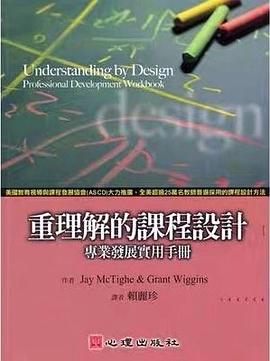
Book Description What is understanding and how does it differ from knowing? What do we want students to understand and be able to do? What enduring knowledge is worth understanding? How will we know that students truly understand and can apply knowledge in a meaningful way? How can we design our courses and units to emphasize understanding and "uncoverage" rather than "coverage"? Understanding by Design explores these questions and provides practical solutions for the teacher-designer. The book opens by analyzing the logic of backward design as an alternative to coverage and activity-oriented plans. Though backward from habit, this approach brings more focus and coherence to instruction. Authors Wiggins and McTighe propose a multifaceted approach, with the six "facets" of understanding. The facets combine with backward design to provide a powerful, practical framework for designing curriculum, assessment, and instruction. Beyond its theories, Understanding by Design offers practical design tools, including criteria for selecting "big ideas" worthy of deep understanding, strategies for framing units of study around essential questions, a continuum of assessment methods for determining the degree to which students understand, and the WHERE framework, which enhances student engagement and "rethinking." The book concludes with a unit design template and standards to support quality control at the local level. Understanding by Design will help educators enhance their understanding of understanding, so that the curriculum and assessments they design truly focus on enhancing the understanding of their students. Download Description What is understanding and how does it differ from knowledge? How can we determine the big ideas worth understanding? Why is understanding an important teaching goal, and how do we know when students have attained it? How can we create a rigorous and engaging curriculum that focuses on understanding and leads to improved student performance in today's high-stakes, standards-based environment? Authors Grant Wiggins and Jay McTighe answer these and many other questions in this second edition of Understanding by Design. Drawing on feedback from thousands of educators around the world who have used the UbD framework since its introduction in 1998, the authors have revised and expanded their original work to guide educators across the K-16 spectrum in the design of curriculum, assessment, and instruction. With an improved UbD Template at its core, the book explains the rationale of backward design and explores in greater depth the meaning of such key ideas as essential questions and transfer tasks. Readers will learn why the familiar coverage- and activity-based approaches to curriculum design fall short, and how a focus on the six facets of understanding can enrich student learning. With an expanded array of practical strategies, tools, and examples from all subject areas, the book demonstrates how the research-based principles of Understanding by Design apply to district frameworks as well as to individual units of curriculum. Combining provocative ideas, thoughtful analysis, and tested approaches, Understanding by Design, Expanded 2nd Edition, offers teacher-designers a clear path to the creation of curriculum that ensures better learning and a more stimulating experience for students and teachers alike.
作者简介
目录信息
读后感
用户评价
这本书的开篇逻辑严密得像一座精密的钟表,每一个齿轮都咬合得天衣无缝。作者并没有急于抛出宏大的理论框架,而是选择从一个非常接地气、甚至有些令人困惑的实际教学场景切入。我记得其中一个例子是关于如何设计一个让学生真正理解“气候变化”而非仅仅“背诵定义”的单元。这种“以终为始”的叙事手法,一下子抓住了我这个长期关注教育实践的读者的心。我立刻意识到,这不是一本高高在上的学术著作,而是实打实能指导我日常工作的工具书。作者在介绍“预期成果”时,所使用的语言是如此的清晰和具有操作性,他们摒弃了那些晦涩难懂的专业术语,转而使用了一种充满画面感的描述,让我仿佛能亲眼看到学生学习过程的转变。读到关于“证据(Evidence)”的部分时,我甚至不得不停下来,拿起笔在旁边空白处画下我自己的设计草图,它极大地激发了我对现有教学模式的反思。全书的论证过程就像剥洋葱,一层层深入,每揭开一层,都能看到更核心的智慧。这种步步为营、不留死角的构建方式,让人在阅读过程中有一种极强的掌控感和安全感。
这本书的封面设计简直是一场视觉的盛宴,色彩的运用大胆而富有张力,那种深邃的蓝色与少许跳跃的亮黄形成了鲜明的对比,让人在书店货架上第一眼就被牢牢吸引住。我原本对理论书籍总是抱持着一种敬而远之的态度,总觉得它们枯燥乏味,但《Understanding by Design》的排版却完全打破了我的刻板印象。字体选择典雅而不失现代感,段落之间的留白恰到好处,读起来毫不费力,眼睛能够得到很好的休息。作者似乎深谙“形式服务于内容”的道理,每一个章节的标题都设计得如同一个精心雕琢的艺术品,引导着读者自然而然地进入到下一层次的思考之中。更值得称赞的是,书中穿插的插图和图表,它们并非简单地重复文字内容,而是用极其抽象和精炼的图形语言,将复杂的概念视觉化,这对于我这种偏爱图像思维的人来说,无疑是一大福音。初次翻阅时,我甚至忍不住停下来欣赏了好几页的图表布局,它们本身就像是独立的微型艺术作品。这种对细节的极致追求,让我对书中即将呈现的知识体系充满了期待,它散发出的那种自信和专业感,是很多同类书籍所不具备的。我甚至觉得,仅仅是把这本书放在书桌上,都能提升整个工作空间的格调。
最让我感到震撼的,是这本书所传达出的那种深远的教育哲学观。它超越了单纯的课程设计技巧,直抵教育的本质——即“培养能够独立思考和解决复杂问题的公民”。书的后半部分开始探讨“元认知”和“迁移能力”时,我几乎是屏住呼吸读完的。作者对“遗忘曲线”的分析,以及如何设计能抵抗时间侵蚀的知识结构,提供了一套极具前瞻性的解决方案。他们强调的“理解”不是知识的堆砌,而是构建一个稳固的心智模型,使其能够在新的情境中被灵活调用。这种对深度学习的执着追求,让我反思了自己过去教育生涯中那些仅仅追求“覆盖率”而牺牲了“深度”的时刻。这本书仿佛是一面镜子,照出了当代教育体系中普遍存在的浮躁和浅薄。读完之后,我感到一种强烈的使命感,它不再仅仅是一本关于“如何设计课程”的书,而是一部关于“我们为何而教,学生为何而学”的宣言。它给我带来的启发,已经远远超出了书本本身的范围,影响到了我对整个学习生态的看法。
阅读这本书的过程,更像是一场与一位经验丰富、洞察力极强的导师的深度对话。作者在探讨如何设计“学习体验和教学活动”时,展现出的细腻和包容性令人印象深刻。他们没有试图提供一个“放之四海而皆准”的唯一标准答案,而是强调了情境和受众的重要性。书中有一段论述,专门讨论了如何在技术融合的背景下保持设计的灵活性,这对于我们现在这个快速迭代的时代来说至关重要。我特别欣赏作者对于“差异化教学”的阐述,他们不是把它当作一个额外的负担,而是内嵌到了设计的核心流程之中。我体会到,好的设计本身就包含了对多样性的尊重。书中举例说明了如何通过调整评估方式(比如从传统的纸笔测试转向项目式展示)来公平地衡量不同学习风格的学生的掌握程度,这种对评估“信度和效度”的深层次探讨,极大地拓宽了我对“衡量学习”的定义。这种富有弹性的思维框架,让我在合上书后,感觉自己不再是被固定教条所束缚,而是获得了一种飞翔的自由感。
这本书的语言风格是如此的迷人,它既有学术的严谨,又不失文学的韵味。尤其在阐述一些关键概念时,作者会巧妙地引用一些看似不相关的历史典故或者哲学思考,但当你把它们与前文的教学理论联系起来时,那种“顿悟”的快感是无与伦比的。比如,作者在谈及“意义的建构”时,引用了一段关于古希腊工匠如何通过对材料的深刻理解来创作传世之作的描述,瞬间将一个抽象的认知过程具体化了。这种叙事技巧非常高明,它避免了纯理论阐述的单调,让知识点在潜移默化中植入读者的心智。我发现自己常常是“笑着”读完一个章节的,因为那种被清晰、优雅的文字所引导的感觉非常愉悦。而且,这本书的行文节奏控制得极好,它知道何时该加快节奏,用一系列强有力的论据来推进观点;也知道何时该放慢脚步,留给读者足够的时间去消化那些深刻的洞察。这种对阅读体验的精妙把控,使得整本书的阅读体验达到了“享受”的层面,而非仅仅是“学习”的义务。