
具体描述
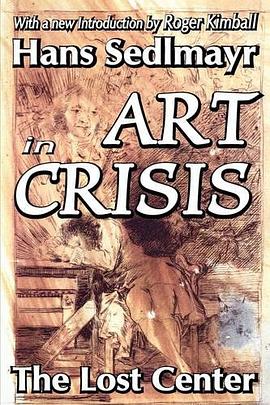
The history of art from the early nineteenth century onward is commonly viewed as a succession of conflicts between innovatory and established styles that culminated in the formalism and aesthetic autonomy of high modernism. In "Art and Crisis", first published in 1948, Hans Sedlmayr argues that the aesthetic disjunctures of modern art signify more than matters of style and point to much deeper processes of cultural and religious disintegration. As Roger Kimball observes in his informative new introduction, "Art in Crisis" is as much an exercise in cultural or spiritual analysis as it is a work of art history. Sedlmayr's reads the art of the last two centuries as a fever chart of the modern age in its greatness and its decay. He discusses the advent of Romanticism with its freeing of the imagination as a conscious sundering of art from humanist and religious traditions with the aesthetic treated as a category independent of human need.Looking at the social purposes of architecture, Sedlmayr shows how the landscape garden, the architectural monument, and the industrial exhibition testified to a new relationship not only between man and his handiwork but also between man and the forces that transcend him. In these institutions man deifies his inventive powers with which he hopes to master and supersede nature. Likewise, the art museum denies transcendence through a cultural leveling in which "Heracles and Christ become brothers" as objects of aesthetic contemplation. At the center of "Art in Crisis" is the insight that, in art as in life, the pursuit of unqualified autonomy is in the end a prescription for disaster, aesthetic as well as existential. Sedlmayr writes as an Augustinian Catholic. For him, the underlying motive for the pursuit of autonomy is pride. The "lost center" of his subtitle is God. The dream of autonomy, Sedlmayr argues, is for finite, mortal creatures, a dangerous illusion. The book invites serious analysis from art critics and theological thinkers alike. Hans Sedlmayr (1896-1984) was a founding member of the New Vienna School of art historians.His books include "The Architecture of Borromini", "The Revolution of Modern Art", and "Austrian Baroque Architecture."
作者简介
Hans Sedlmayr (born 18 January 1896 in Hornstein (Burgenland) – died 9 July 1984 in Salzburg) was an Austrian art historian. Sedlmayr was University Professor of Art History in Vienna from 1936 until 1945, then in Munich from 1951 until 1964, and finally at the University of Salzburg from 1965-69, where he established the art history curriculum. He specialized in the study of Baroque architecture and wrote a book on the churches of Francesco Borromini. A founding member of the New Vienna School of art history, which based itself on the writings of Alois Riegl, he wrote a manifesto in 1931 called Zu einer strengen Kunstwissenschaft ("Toward a Rigorous Study of Art"). He is the author of Verlust der Mitte: Die bildende Kunst des 19. und 20. Jahrhunderts als Symptom und Symbol der Zeit (1948, "Loss of the Center: the Fine Arts of the Nineteenth and Twentieth Centuries as Symptom and Symbol of the Times"), published in English in 1957 as Art in Crisis: The Lost Center.
He joined the National Socialist German Workers Party (NSDAP) in 1932 and following World War II he lost his position at the Technische Hochschule in Vienna as a result of his membership. He moved to Bavaria, joining the editorial staff of a Catholic magazine, Wort und Wahrheit ("Word and Truth"), from 1946 to 1954. In 1951 he became a professor at the Ludwig Maximilians University of Munich.
目录信息
读后感
用户评价
《Art in Crisis》这个书名,如同一个悬念,瞬间抓住了我的眼球。在如今这个被各种信息和娱乐方式充斥的世界里,艺术的存在感似乎时强时弱,它的“危机”究竟是什么?这让我产生了无限的联想。我猜测,书中或许会深入探讨艺术在当今社会所面临的多重困境。比如,艺术是否已经沦为少数精英的玩物,或是被资本市场所操控,失去了其应有的普罗大众的触达性和启蒙性?又或者,在全球化浪潮下,不同文化背景下的艺术如何保持其独特性,而不被同质化所吞噬?我甚至可以想象,作者会用犀利的笔触,揭示那些潜藏在艺术界光鲜亮丽外表下的问题,例如艺术品拍卖市场的泡沫,以及对艺术家身份和作品价值的过度解读。这本书,或许不会提供简单的答案,而是会抛出更深层次的问题,引导读者去思考艺术的本质,以及它在现代社会中所应扮演的角色。我期待它能带来一场思想的碰撞,让我重新审视那些我曾习以为常的艺术现象。
拿到《Art in Crisis》这本书,我第一反应是这本书的标题直击人心。当下社会,信息爆炸,消费主义盛行,艺术似乎也变得越来越难以捉摸,甚至有人质疑它的意义与价值。这本书的出现,就像一场及时雨,让我对接下来的阅读充满了好奇与期待。我设想着,作者可能会从艺术史的角度出发,回顾那些曾经动摇艺术根基的重大变革,例如工业革命对工艺美术的影响,又或者是两次世界大战给艺术家们带来的巨大创伤与反思。但我想,这本书更可能关注的,是当下的“危机”。这个“危机”究竟是什么?是市场对艺术品价格的过度追逐,导致艺术创作本身偏离了最初的纯粹?还是技术进步,尤其是人工智能的介入,让那些被视为人类独特创造力的领域,也面临着被复制与取代的风险?我特别想知道,作者如何定义这种“危机”,它是普遍性的,还是局部性的?是关于艺术的生存,还是关于艺术的灵魂?这本书的书名,像一个引子,邀请我进入一个关于艺术的深层对话,去探索艺术在现代社会中的定位,去审视它是否还能维持其曾经的纯粹与力量,或者,它正在经历一场不可避免的转型。
《Art in Crisis》——这书名本身就带着一种引人入胜的张力,仿佛揭示了一个隐藏在艺术世界表象之下的深刻议题。当我拿到这本书时,脑海中立刻涌现出无数种关于“危机”的猜想。这是一种关于艺术作品如何被解读、被评估的危机吗?是指在信息爆炸的时代,真正的艺术价值如何脱颖而出,不被淹没在海量的视觉信息中?又或者,它探讨的是艺术与社会现实之间的疏离感,艺术家们是否还能捕捉到时代的脉搏,并用作品引发共鸣?我特别期待,作者能够深入剖析那些让艺术陷入困境的社会、经济乃至政治因素。是否是市场化的浪潮,将艺术从精神殿堂推向了商业交易的柜台?是否是技术的进步,模糊了人造与机器创作的界限,引发了关于“创造力”的重新定义?《Art in Crisis》就像一个引人深思的信号,邀请读者去探索艺术在当代社会中所扮演的复杂角色,以及它在不断变化的世界中所面临的挑战。我希望这本书能够提供一种全新的视角,让我们重新认识艺术的价值,并思考它如何才能在“危机”中找到新的出路。
这本书的名字就足够吸引人了,《Art in Crisis》。一个词就能勾起无限的遐想,是艺术品本身的危机?还是艺术创作过程中的困境?抑或是艺术与社会变迁之间某种深刻的裂痕?当我拿到这本书时,内心涌起的是一种期待,期待它能像一面镜子,映照出现代社会中艺术所扮演的角色,以及它所面临的挑战。我猜想,作者一定是一位对艺术有着深刻洞察力的人,他/她或许会从历史的长河中梳理艺术的发展脉络,又或许会聚焦当下,剖析那些让艺术陷入“危机”的社会、经济、技术因素。我非常好奇,书中是否会探讨数字时代对传统艺术形式的冲击,比如绘画、雕塑,它们在虚拟世界的复制与传播中,其独特性与价值是否会被稀释?又或者,作者会从更宏观的角度审视,当艺术被商业化、资本化浪潮裹挟,其独立的精神性和批判性是否还能得以保全?“危机”二字,本身就带着一种紧迫感和不确定性,它暗示着一种需要被正视和解决的问题。我希望这本书能够提供一些富有启发性的思考,帮助读者更好地理解艺术的当下语境,以及它在未来可能的发展方向。也许,它会挑战我们对艺术的固有认知,甚至颠覆我们对于“美”与“价值”的定义。
《Art in Crisis》这个名字,简练却充满力量,像一句惊堂木,瞬间将我的注意力从周遭的喧嚣中拉了回来。我脑海中立刻浮现出无数种关于“艺术的危机”的解读。这是一种对艺术价值的质疑吗?是对艺术创作自由度的束缚?还是指艺术在科技飞速发展的时代,其独特性和原创性正在受到前所未有的挑战?我非常好奇,作者会从哪个角度切入,是历史的回顾,还是当下的剖析?我甚至在想,这本书是否会触及艺术市场中令人不安的现象,例如天价艺术品背后的炒作,或是快餐式文化对深度艺术体验的取代。又或者,作者会探讨艺术在社会变革中的作用,当社会面临巨变时,艺术是否能提供指引,还是本身也陷入迷茫?《Art in Crisis》这个标题,就如同一个敞开的邀请,邀请我进入一个关于艺术生存与发展的复杂议题。我期待在书中找到那些能够帮助我理解艺术当下处境的深刻见解,或许,它会揭示一些我们不曾注意到的,但却至关重要的艺术困境。
说是art,主要评的是建筑。此书初看上去很像“建筑史”,迅速地在关键点和重要人物之间往复,但是再读,充满了作者对历史进程的反思和评述。有些观点是偏颇的,甚至是极端偏颇的,但是却是有穿透力的,比如他讲Ledoux,讲Corbu。经典。
说是art,主要评的是建筑。此书初看上去很像“建筑史”,迅速地在关键点和重要人物之间往复,但是再读,充满了作者对历史进程的反思和评述。有些观点是偏颇的,甚至是极端偏颇的,但是却是有穿透力的,比如他讲Ledoux,讲Corbu。经典。
说是art,主要评的是建筑。此书初看上去很像“建筑史”,迅速地在关键点和重要人物之间往复,但是再读,充满了作者对历史进程的反思和评述。有些观点是偏颇的,甚至是极端偏颇的,但是却是有穿透力的,比如他讲Ledoux,讲Corbu。经典。
说是art,主要评的是建筑。此书初看上去很像“建筑史”,迅速地在关键点和重要人物之间往复,但是再读,充满了作者对历史进程的反思和评述。有些观点是偏颇的,甚至是极端偏颇的,但是却是有穿透力的,比如他讲Ledoux,讲Corbu。经典。
说是art,主要评的是建筑。此书初看上去很像“建筑史”,迅速地在关键点和重要人物之间往复,但是再读,充满了作者对历史进程的反思和评述。有些观点是偏颇的,甚至是极端偏颇的,但是却是有穿透力的,比如他讲Ledoux,讲Corbu。经典。