
具体描述
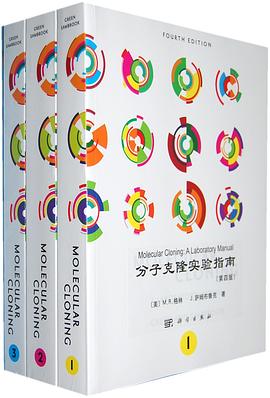
Molecular Cloning has served as the foundation of technical
expertise in labs worldwide for 30 years. No other manual has been
so popular, or so influential. Molecular Cloning, Fourth Edition,
by the celebrated founding author Joe Sambrook and new co-author,
the distinguished HHMI investigator Michael Green, preserves the
highly praised detail and clarity of previous editions and includes
specific chapters and protocols commissioned for the book from
expert practitioners at Yale, U Mass, Rockefeller University, Texas
Tech, Cold Spring Harbor Laboratory, Washington University, and
other leading institutions. The theoretical and historical
underpinnings of techniques are prominent features of the
presentation throughout, information that does much to help
trouble-shoot experimental problems.
For the fourth edition of this classic work, the content has
been entirely recast to include nucleic-acid based methods selected
as the most widely used and valuable in molecular and cellular
biology laboratories.
Core chapters from the third edition have been revised to
feature current strategies and approaches to the preparation and
cloning of nucleic acids, gene transfer, and expression analysis.
They are augmented by 12 new chapters which show how DNA, RNA, and
proteins should be prepared, evaluated, and manipulated, and how
data generation and analysis can be handled.
The new content includes methods for studying interactions
between cellular components, such as microarrays, next-generation
sequencing technologies, RNA interference, and epigenetic analysis
using DNA methylation techniques and chromatin immunoprecipitation.
To make sense of the wealth of data produced by these techniques, a
bioinformatics chapter describes the use of analytical tools for
comparing sequences of genes and proteins and identifying common
expression patterns among sets of genes.
Building on thirty years of trust, reliability, and authority,
the fourth edition of Molecular Cloning is the new gold
standard—the one indispensable molecular biology laboratory manual
and reference source.
作者简介
JOSEPH SAMBROOK:
Sambrook was educated at the University of Liverpool (BSc (hons)
1962) and obtained his PhD at the Australian National University in
1966. He did postdoctoral research at the MRC Laboratory of
Molecular Biology (1966-67) and the Salk Institute for Biological
Studies (1967-69). In 1969 he was hired by James D. Watson to work
at the Cold Spring Harbor Laboratory in New York. Watson has been
reported to say this was the best hiring decision he ever made. Joe
was responsible for creating a combative creative environment at
CSHL that fomented discovery. Subsequently he worked at the
University of Texas Southwestern Medical Center (Dallas).
Sambrook is best known for his studies on DNA tumor viruses and
the molecular biology of normal and neoplastic cells. His Tumour
Virus Group at Cold Spring Harbor identified and mapped all of the
major genes of adenoviruses and SV40, determined their
transcriptional control in infected and transformed cells, and
elucidated the mechanism of integration of these viruses into the
genome of the host cell.[citation needed] He has also made
important contributions to the understanding of intracellular
traffic and protein folding and is an influential leader in the
field of the molecular genetics of human cancer.
目录信息
Part 1: Essentials
1. Isolation and Quantification of DNA
2. Analysis of DNA
3. Cloning and Transformation with Plasmid Vectors
4. Gateway Recombinational Cloning
John S. Reece-Hoyes and Albertha J.M. Walhout
5. Working with Bacterial Artificial Chromosomes and Other
High-Capacity Vectors
Nathaniel Heintz and Shiaoching Gong
6. Extraction, Purification, and Analysis of RNA from Eukaryotic
Cells
7. Polymerase Chain Reaction
8. Bioinformatics
Jui-Hung Hung and Zhiping Weng
VOLUME 2
Part 2: Analysis and Manipulation of DNA and RNA
9. Quantification of DNA and RNA by Real-Time Polymerase Chain
Reaction
10. Nucleic Acid Platform Technologies
Oliver Rando
11. DNA Sequencing
Elaine Mardis and W. Richard McCombie
12. Analysis of DNA Methylation in Mammalian Cells
Paul M. Lizardi, Qin Yan, and Narendra Wajapeyee
13. Preparation of Labeled DNA, RNA, and Oligonucleotide
Probes
14. Methods for In Vitro Mutagenesis
Matteo Forloni, Alex Liu, and Narendra Wajapeyee
Part 3: Introducing Genes into Cells
15. Introducing Genes into Cultured Mammalian Cells
Priti Kumar, Arvindhan Nagarajan, and Pradeep D. Uchil
16. Introducing Genes into Mammalian Cells: Viral Vectors
Guangping Gao and Miguel Sena-Esteves
VOLUME 3
Part 4: Gene Expression
17. Analysis of Gene Regulation Using Reporter Systems
Pradeep D. Uchil, Arvindhan Nagarajan, and Priti Kumar
18. RNA Interference and Small RNA Analysis
Chengjian Li and Phillip D. Zamore
19. Expressing Cloned Genes for Protein Production, Purification,
and Analysis
Clara L. Kielkopf, William Bauer, and Ina Urbatsch
Part 5: Interaction Analysis
20. Cross-Linking Technologies for Analysis of Chromatin Structure
and Function
Tae Hoon Kim and Job Dekker
21. Mapping of In Vivo RNA-Binding Sites by UV-Cross-Linking
Immunoprecipitation (CLIP)
Jennifer C. Darnell, Aldo Mele, Ka Ying Sharon Hung, and Robert B.
Darnell
22. Gateway-Compatible Yeast One-Hybrid and Two-Hybrid Assays
John S. Reece-Hoyes and Albertha J.M. Walhout
Appendices
1. Reagents and Buffers
2. Commonly Used Techniques
3. Detection Systems
4. General Safety and Hazardous Material
· · · · · · (收起)
读后感
用户评价
最近我正在为一个复杂的蛋白表达项目做准备,涉及到的载体构建环节异常繁琐,需要进行多个片段的精准连接,传统的方法已经难以满足要求。我对这本书抱有极高的期望,希望它能在“复杂克隆策略”这方面给出独到的见解。我期待看到关于多片段连接技术,比如Gibson Assembly或者其他的无缝克隆方法的操作流程被详细剖析。这些高级技术的成功与否,往往取决于对DNA末端处理的精细程度。如果书中能够提供针对不同DNA末端(平末端、粘性末端)的处理方案的对比分析,并附上优缺点评估,那对我解决当前的科研瓶颈将是莫大的帮助。我希望这本书的作者不仅仅是理论专家,更是身经百战的实验操作者,能够分享那些“血泪换来”的经验教训,例如在构建高拷贝质粒时容易出现的“假阳性”筛选技巧,或者在大肠杆菌转化效率低下的疑难杂症排查思路。
这本书的封面设计简约大气,黑底白字,透着一股严谨的科学气息,光是看着就让人觉得内容一定扎实可靠。我一直对分子生物学的核心技术——克隆技术充满了好奇,但市面上的教材往往过于理论化,晦涩难懂,让人望而却步。然而,这本书的标题《分子克隆实验指南》本身就极具吸引力,它承诺的不是枯燥的原理讲解,而是实实在在的“指南”,这意味着其中必然蕴含着大量操作细节和步骤拆解。我尤其期待它能详细介绍不同载体的选择标准、PCR反应条件的优化技巧,以及琼脂糖凝胶电泳后如何精确地切胶回收目的片段等这些在实际操作中至关重要的“小窍门”。一个好的实验指南,其价值远超教科书,它应该是实验桌上可以随时翻阅的、沾着污渍的“战友”。我希望这本书能像一位经验丰富的导师,一步步引领初学者走出迷雾,让那些原本看似高深的分子克隆步骤变得清晰可循,甚至能提供一些常见失败案例的排查手册,那才是真正体现“指南”价值的地方。光是想象着手里捧着这本厚实的书,准备大展身手,心中就充满了对知识掌控的期待感。
我习惯于在阅读实验指导书时,寻找其内容的“深度”和“广度”。深度在于对原理的挖掘和细节的把控,而广度则在于它能覆盖多少应用领域。克隆技术是基础,但其应用场景极为广泛,从基础的基因功能验证到更复杂的基因治疗载体的构建,无所不包。我期待这本书能提供一个清晰的结构,将基础的TA克隆、重组克隆等经典方法,平滑过渡到针对特定物种(如酵母、哺乳动物细胞)的载体构建策略。如果书中能设置专门的章节讨论如何设计出能够高效驱动特定启动子或包含靶向序列的表达载体,那将极大地拓宽我的应用视野。一个真正全面的指南,应该能够让读者在阅读完基础部分后,有能力根据自己的研究方向,查阅特定章节,快速找到对应的优化方案,最终实现从基础操作到复杂工程设计的完美闭环。
说实话,我手里已经堆了不少分子生物学相关的参考书了,但大多数都停留在理论阐述的层面,真正能指导我从试剂配置到最终数据分析的,少之又少。我特别关注这本书在“实用性”上能做到何种程度。一个优秀的实验指南,不应该只罗列步骤,更需要对每一步背后的生化逻辑进行精炼的解释,这样才能在出现偏差时,我们能快速定位问题根源,而不是盲目地重复操作。比如,在限制性内切酶的消化过程中,缓冲液的选择、温度和时间的精确控制,这些都是决定成功与否的关键变量,我非常期望这本书能够提供一个详尽的表格,对比不同酶的特性和最佳反应条件。此外,现在分子克隆技术发展迅速,新的方法层出不穷,这本书是否涵盖了CRISPR/Cas9等前沿的基因编辑技术在克隆体系中的应用?如果能将经典克隆与现代技术相结合,形成一个完整的知识体系,那这本书的含金量无疑会大大提升,成为我未来几年实验室工作的核心参考资料。
对于我们这些经常需要独立摸索的青年科研人员来说,成本控制和效率提升是永恒的主题。因此,我非常关注这本书在“资源优化”方面的论述。一个理想的实验指南应该教导我们如何“聪明地”做实验,而不是“昂贵地”做实验。比如,关于DNA纯化试剂盒的使用和替代方案,是否有对不同品牌试剂盒的性能进行过非官方的横向对比?在需要大量制备质粒时,手动抽提与商业试剂盒的效率和成本平衡点在哪里?更重要的是,如果书中能提供一些关于试剂自制的“绿色化学”替代方案,例如某些缓冲液的廉价自制配方,那绝对是加分项。毕竟,实验室的经费总是有限的,这本书如果能帮助我以更经济的方式达到同样甚至更好的实验效果,它就不仅仅是一本技术手册,更是一份实用的财务指导了。我希望能从中找到提高整体实验通量和降低试剂消耗的切实可行的方法。
好大一本,读不完,选着看。内容涉猎广泛,但是比较浅显。亮点是每章还有实验设计举例和讲解,这样的话需要不断更新噢这本书。总的来说作为一本指南,目的达到了,基础知识部分读起来也很舒服。值得满分。
好大一本,读不完,选着看。内容涉猎广泛,但是比较浅显。亮点是每章还有实验设计举例和讲解,这样的话需要不断更新噢这本书。总的来说作为一本指南,目的达到了,基础知识部分读起来也很舒服。值得满分。
好大一本,读不完,选着看。内容涉猎广泛,但是比较浅显。亮点是每章还有实验设计举例和讲解,这样的话需要不断更新噢这本书。总的来说作为一本指南,目的达到了,基础知识部分读起来也很舒服。值得满分。
好大一本,读不完,选着看。内容涉猎广泛,但是比较浅显。亮点是每章还有实验设计举例和讲解,这样的话需要不断更新噢这本书。总的来说作为一本指南,目的达到了,基础知识部分读起来也很舒服。值得满分。
好大一本,读不完,选着看。内容涉猎广泛,但是比较浅显。亮点是每章还有实验设计举例和讲解,这样的话需要不断更新噢这本书。总的来说作为一本指南,目的达到了,基础知识部分读起来也很舒服。值得满分。