
具体描述
Content Level » Research
Keywords » Big data - CSCW - Design as research - Digital traces of behavior - Ethnography - HCI - Human computer interaction - Qualitative and quantitative - Research methodology - Research methods - Social computing - Tutorials
Related subjects » Database Management & Information Retrieval - HCI - Information Systems and Applications
→ Provides comprehensive and up-to-date coverage of current research methods in HCI
→ Equips readers to handle complex research questions
→ Includes a structured context with key references and thought-provoking exercises for students
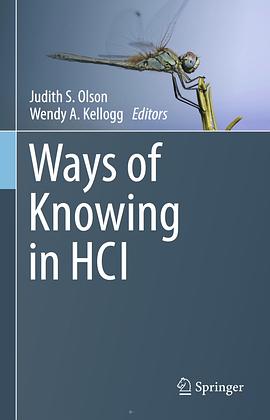
This textbook brings together both new and traditional research methods in Human Computer Interaction (HCI). Research methods include interviews and observations, ethnography, grounded theory and analysis of digital traces of behavior. The background context, clear explanations, and sample exercises make this an ideal textbook for graduate students.
Chapters are consistently structured to describe the research methods and their applications, including what they are useful for, what they are not appropriate for, and the key ingredients needed before using a method. Each chapter provides:
· A short description of the method
· Its history and evolution
· The questions it can answer
· Guidelines to ensure quality work
· References for increasing expertise
· References to examples of successful application
· Exercises suitable for further student exploration
The chapters, written by foremost experts in the field, are highly diverse. They range from grounded theory and action research to retrospective analysis, agent-based modeling, and social network analysis. Several chapters focus on system building, such as technical research, building an experimental online community, and field deployments, while others focus on design research. Experiments and surveys are covered, including their potential to benefit from crowdsourcing. New sources of digital data sensory systems, eye tracking, and log analysis are discussed. Because many of these methods extend to the world of online activity, the book concludes by exploring the ethical challenges that have surfaced.
Ways of Knowing in HCI provides a starting point toward other avenues for continued learning. Readers will gain an understanding of the type of knowledge each method provides, its disciplinary roots, and how each contributes to understanding users, user behavior, and the context of use. The book is an invaluable resource for students, researchers and professionals alike.
作者简介
目录信息
Reading and Interpreting Ethnography
Paul Dourish
Curiosity, Creativity, and Surprise as Analytic Tools:
Grounded Theory Method
Michael Muller
Knowing by Doing: Action Research as an Approach to HCI
Gillian R. Hayes
Concepts, Values, and Methods for Technical
Human–Computer Interaction Research
Scott E. Hudson and Jennifer Mankoff
Study, Build, Repeat: Using Online Communities
as a Research Platform
Loren Terveen, John Riedl, Joseph A. Konstan, and Cliff Lampe
Field Deployments: Knowing from Using in Context
Katie A. Siek, Gillian R. Hayes, Mark W. Newman, and John C. Tang
Science and Design: The Implications of Different Forms
of Accountability
William Gaver
Research Through Design in HCI
John Zimmerman and Jodi Forlizzi
Experimental Research in HCI
Darren Gergle and Desney S. Tan
Survey Research in HCI
Hendrik Müller, Aaron Sedley, and Elizabeth Ferrall-Nunge viii
Crowdsourcing in HCI Research
Serge Egelman, Ed H. Chi, and Steven Dow
Sensor Data Streams
Stephen Voida, Donald J. Patterson, and Shwetak N. Patel
Eye Tracking: A Brief Introduction
Vidhya Navalpakkam and Elizabeth F. Churchill
Understanding User Behavior Through Log Data and Analysis
Susan Dumais, Robin Jeffries, Daniel M. Russell, Diane Tang,
and Jaime Teevan
Looking Back: Retrospective Study Methods for HCI
Daniel M. Russell and Ed H. Chi
Agent Based Modeling to Inform the Design of Multiuser Systems
Yuqing Ren and Robert E. Kraut
Social Network Analysis in HCI
Derek L. Hansen and Marc A. Smith
Research Ethics and HCI
Amy Bruckman
Epilogue
Wendy A. Kellogg and Judith S. Olson
· · · · · · (收起)
读后感
用户评价
我非常喜欢这本书所展现出的那种批判性精神。在当前这个充斥着“快速迭代”和“用户满意度至上”的行业文化中,这本书像一股清流,提醒我们停下来思考更深层次的、关于“人”的问题。它没有提供任何“银弹式”的解决方案,但它赋予了读者一种更强大的“诊断工具”——即理解用户心智运作底层逻辑的能力。我尤其欣赏作者在探讨不同文化背景下的知识建构差异时所表现出的细致入微。这使得这本书的适用范围远远超出了西方主流的交互设计范畴,具有了真正的全球视野。它让我深刻认识到,我们所认为的“自然操作”,往往只是基于我们自身成长环境和文化预设的“习得性自然”。这本书的语言风格虽然学术,但充满了对人类认知复杂性的敬畏,使得阅读过程充满了一种智力上的愉悦。它不是一本告诉你怎么画出漂亮图标的书,而是一本告诉你如何与人类心智进行真诚对话的书。读完后,我感觉自己的“设计之眼”被彻底校准了一遍。
阅读体验是极其沉浸的,仿佛作者是一位经验丰富的向导,带领我穿梭于认知科学、现象学和人机交互的交汇地带。这本书最吸引我的特点是它的跨学科视野的广度和深度。它没有固步自封于计算机科学的小圈子,而是广泛借鉴了诸如维特根斯坦的语言游戏理论、梅洛-庞蒂的身体现象学等多个领域的精髓,并将这些宏大的思想体系,以一种高度精炼和聚焦的方式,应用到我们日常关注的界面交互问题上。特别是对“意义的共同建构”这一概念的探讨,让我深受启发。它挑战了那种认为界面只是一个被动接收器的传统观点,反而将界面视为用户与信息环境之间持续协商和动态形成意义的场所。我发现自己开始用一种全新的“对话”视角去看待用户与应用程序之间的关系,不再仅仅关注信息传递的效率,而是更加注重交互过程中“理解的建立”是否顺畅和自然。这本书的文字风格沉稳、精准,每一个段落都像精心打磨过的宝石,闪耀着智慧的光芒。
坦率地说,这本书的密度非常高,初次阅读时需要放慢速度,甚至需要时不时地停下来,回顾一下前面提到的关键术语和论点。但正是这种信息密度,保证了它极高的价值留存率。它不是那种读完就忘的快餐式读物,而是需要被反复咀嚼和内化的思想结晶。我对其中关于“数字世界中的在场感”(sense of presence)的论述尤为着迷。作者巧妙地将传统的心理学“在场”概念,扩展到了用户与虚拟化信息结构互动的情境中。这对于我们设计沉浸式技术,比如VR/AR应用,或者即便是设计复杂的企业级数据仪表板时,都提供了宝贵的理论基础。它让我们意识到,所谓的“沉浸”并不仅仅是视觉或听觉上的欺骗,而是一种深层次的认知投入和对环境的有效掌控感。这本书的结构设计也体现了作者的匠心独运,章节之间的逻辑递进清晰流畅,层层深入,最终构建起一个严谨而富有洞察力的认知模型。它绝对是值得所有高级UX从业者和研究人员在书架上占据重要位置的一本书。
说实话,我本来对这种听起来有点哲学意味的书持保留态度的,担心它会过于抽象,读起来像是在啃一本硬邦邦的理论教科书。但是,《人机交互中的认知方式》完全超出了我的预期。它的厉害之处在于,它能够将那些晦涩难懂的认知哲学概念,巧妙地“翻译”成一系列可以指导实践的设计洞察。比如,书中关于“具身认知”如何影响触屏手势识别的那一段论述,简直是茅塞顿开。我立刻联想到了最近在设计一个医疗设备界面时遇到的难题——为什么年长的用户总是对滑动操作感到困惑?这本书提供了一种全新的解释框架,即他们的“身体经验图谱”与现代移动设备操作的映射存在断层。作者并没有直接给出“你应该怎么做”的答案,而是提供了“为什么会这样”的深刻理解。这种由“理解”导向“设计”的过程,比任何现成的设计指南都更有力量。整本书的节奏把控得极佳,总能在理论探讨的间隙穿插恰到好处的案例分析,让读者始终保持在学习和思考的兴奋状态中。我感觉自己不是在读一本技术书籍,而是在进行一次结构性的思维重塑。
这本书的标题一下子就抓住了我的注意力,《人机交互中的认知方式》。作为一名长期在用户体验领域摸爬滚打的研究者,我一直觉得我们对“知道”这件事的理解还停留在比较表层的层面。这本书的切入点非常新颖,它不是简单地罗列各种可用性原则或设计模式,而是试图深入挖掘用户在与复杂数字系统交互时,内心深处是如何建构知识、形成理解的。我尤其欣赏作者在开篇对传统认知科学范式挑战的那种勇敢姿态。它似乎在暗示,仅仅用传统的心理学实验方法来捕捉交互中的“理解”是远远不够的,我们需要一种更具生态性和情境化的视角。阅读过程中,我不断反思自己过去在设计评估中常常忽略的那些“潜意识的推断”和“环境依赖的直觉”。它迫使我跳出“按钮在哪里”的直白问题,转而去思考“用户如何通过触摸屏幕来感知信息流的内在逻辑”。这本书的理论深度非常扎实,但行文却保持了一种难得的可读性,没有陷入纯粹的学术术语的泥潭。它更像是一场思想的邀请函,邀请我们一起重新审视“知道”在数字化生存中的真正含义。
A comprehensive book established my knowledge of the field
入门后稍微再走的深一点点。
入门后稍微再走的深一点点。
入门后稍微再走的深一点点。
A comprehensive book established my knowledge of the field