
具体描述
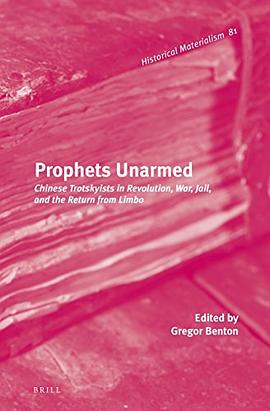
Prophets Unarmed is an authoritative sourcebook on the Chinese Communist Party's main early opposition, the Chinese Trotskyists, who emerged from the Chinese Communist Party, in China and Moscow, in reaction to its 1927 defeat. In spite of being Trotskyism's main section outside Russia, they were crushed by Stalin in Moscow and by Chiang Kai-shek and Mao Zedong in China, thus becoming China's most persecuted party. Their strategy in the Japan war, when they failed to take up arms, was short-sighted and doctrinaire, and they had scant impact on the revolution. Even so, their association with Chen Duxiu and Wang Shiwei, their attachment to democracy, and their critique of Mao's bureaucratic socialism brought them a scintilla of recognition after Mao's death. Their standpoints and proposals and their association with the democratic movement are not without relevance to China's present crisis of morals and authority.
作者简介
Gregor Benton (PhD, 1978) is Professor at Nanyang Technological University. His books include Mountain Fires, honoured as a 'special book in Asian studies’ and the Association of Asian Studies’ Best Book on Modern China. His Hu Feng’s Prison Years won the English Pen Award.
目录信息
Part I: Purgatory: The Chinese Trotskyists’ Ordeal and Struggle (Wu Jimin, 2008)
Part II: Autobiographical Accounts of Chinese Trotskyists’ Early Years
a. Unfinished Autobiography (Chen Duxiu)
b. A Consciousness Awakes (Zheng Chaolin)
c. My First Contact With New Ideas (Wang Fanxi)
Part III: Chinese Trotskyists in the Revolution of 1925–7
a. Before And After May Thirtieth (Zheng Chaolin)
b. Two Years at University (Wang Fanxi)
Part IV: Chinese Trotskyists in Moscow
a. Twelve People (Zheng Chaolin)
b. KUTV (Zheng Chaolin)
c. Chinese Students in Moscow (Wang Fanxi)
d. My Second Year in Moscow (Wang Fanxi)
e. Chinese Students at the International Lenin School in Moscow, 1926–38: Light from the Russian Archives (Alexander V. Pantsov and Daria A. Spichak)
f. Stalin and the Chinese Communist Dissidents (Alexander Pantsov)
Part V: The Unification of the Chinese Trotskyists
a. Appeal to All Comrades of the Chinese Communist Party (Chen Duxiu, 10 December 1929)
b. An Ebbing or a Flowing Tide? (Zheng Chaolin)
c. The Left Opposition (Zheng Chaolin)
d. Unification of the Four Groups (Wang Fanxi)
Part VI: Chinese Trotskyism in the 1930s and the 1940s
a. The Founding of Struggle and the Darkest Days of My Life (Wang Fanxi)
b. Chen Duxiu, the Chinese Trotskyists, and the War of Resistance (Wang Fanxi)
c. The Pacific War and a New Split in the Organisation (Wang Fanxi)
d. From War to Revolution (Wang Fanxi)
e. The Communist League of China (Frank Glass, January 1940)
Part VII: Chen Duxiu
a. Chen Duxiu, Founder of Chinese Communism (Wang Fanxi)
b. Chen Duxiu and the Trotskyists (Zheng Chaolin)
c. Chen Duxiu Had No Wish to Rejoin the CCP on Leaving Jail (Zheng Chaolin)
d. Preface to the Collected Poems of Chen Duxiu (General Xiao Ke, June 2, 1993)
Part VIII: Chen Duxiu’s Last Letters and Articles
a. Editor’s Introduction to Chen Duxiu’s Last Articles and Letters (Gregor Benton)
b. Letter to Chen Qichang and Others (21 November 1937)
c. Letter to Leon Trotsky (3 November 1938)
d. Letter to Xiliu and Others (1 March 1940)
e. Letter to Xiliu and Others (24 April 1940)
f. Letter to Xiliu (3 November 1938)
g. Letter to Liangen (31 July 1940)
h. Letter to Xiliu (September 1940)
i. My Basic Views (28 November 1940)
j. Letter to Y (19 January 1941)
k. Letter to H and S (19 January 1941)
l. A Sketch of the Postwar-World (10 February 1942)
m. Once Again on the World-Situation (19 April 1942)
n. The Future of the Oppressed Nations (13 May 1942)
o. My Feelings on the Death of Mr Cai Jiemin (Chen Duxiu)
p. On Chen Duxiu’s Last Views (Shuang Shan [Wang Fanxi])
Part IX: Peng Shuzhi and Wang Fanxi on Leon Trotsky
a. Peng Shuzhi (1976)
b. Wang Fanxi (1980)
Part X: Peng Shuzhi and Wang Fanxi: A Confrontation
a. Trotskyism in China (Peng Shuzhi, 1947)
b. Problems of Chinese Trotskyism (Wang Fanxi, 1947)
Part XI: Some Articles and Speeches by Trotsky about the Chinese Trotskyists and Some Correspondence between Him and Them
a. The Speech of Comrade Chen Duxiu on the Tasks of the Chinese Communist Party (17 May 1927)
b. A Remarkable Document on the Policy and the Régime of the Communist International (4 October 1928)
c. Peasant-War in China and the Proletariat (22 September 1932)
d. A Strategy of Action and Not of Speculation: Letter to Beijing Friends. What are, at Present, the Chief Elements of the Political Situation in China? (3 October 1932)
e. Excerpts from Letters and Materials from China Written or Copied to Trotsky (1934)
1) Letter from Frank Glass, 30 August 1934.
2) Letter from Harold Isaacs to the Central Committee of the CCP concerning China Forum, 20 May 1934.
3) Letter from Frank Glass to the International Secretariat, 26 August 1934.
4) On Peasant-War and Economic Upturn, Niel Sih, 21 September 1934.
5) Letter from Chen Duxiu to the International Secretariat, 15 May 1934.
f. Chen Duxiu and the General Council (10 August 1935)
g. Introduction to Harold R. Isaacs, The Tragedy of the Chinese Revolution (1938)
h. Letter to Frank Glass (11 March 1939)
i. China and the Russian Revolution (July 1940)
j. Leon Trotsky on Chinese Communism (Wang Fanxi) (1990)
Part XII: Chinese Trotskyist Reflections on Mao Zedong’s Revolution
a. The Causes of the Victory of the Chinese Communist Party over Chiang Kai-shek, and the CCP’s Perspectives. Report on the Chinese Situation to the Third World-Congress of the Fourth International, August–September 1951 (Peng Shuzhi, 1952)
b. Thinking in Solitude (Wang Fanxi, 1957)
Part XIII: Chinese Trotskyists and Guerrilla-War
a. The Real Lesson of China on Guerrilla-Warfare: Reply to ‘Letter from a Chinese Trotskyist’ (Chen Bilan, 1971)
b. On the Causes of the CCP’s Victory and the Failure of the Chinese Trotskyists in the Third Chinese Revolution: A Reply to Peng Shuzhi (Wang Fanxi, 1973)
Part XIV: Chinese Trotskyism and Literature
a. Chinese Trotskyism and the World of Letters (Gregor Benton)
b. Wild Lily (Wang Shiwei, 1942)
c. Politicians, Artists (Wang Shiwei, 1942)
Part XV: Prefaces to Chinese Trotskyist Memoirs and Biographies
a. Editor’s Introduction to Zheng Chaolin’s Memoirs (Gregor Benton)
b. Peng Shuzhi and the Chinese Revolution: Notes Towards a Political Biography (Joseph T. Miller)
c. Zheng Chaolin’s Preface to the Unpublished Manuscript of his Memoirs (1945)
d. Zheng Chaolin’s Postscript to the English Edition of his Memoirs (1987)
e. A Self-Description at the Age of Ninety (1 May 1990) (Zheng Chaolin)
f. Wang Fanxi’s Postscript to the Oxford Edition of Memoirs of a Chinese Revolutionary (1980)
g. Wang Fanxi’s Preface to the Morningside Edition of Memoirs of a Chinese Revolutionary (1987)
h. Wang Fanxi’s Preface to the French Edition of Memoirs of a Chinese Revolutionary (1990)
Part XVI: The Chinese Trotskyists’ Imprisonment and Release from Prison
a. Statement by Chinese Trotskyists Overseas on the CCP’s Release of Zheng Chaolin and Other Trotskyist Political Prisoners (July 24, 1979)
b. A Brief Account of My Third Spell in Prison (Zheng Chaolin)
Part XVII: Wang Fanxi Reviews Tang Baolin’s History of Chinese Trotskyism
Part XVIII: Obituaries
a. Oration at the Funeral of Mr [Chen] Duxiu (1879–1942) (Gao Yuhan)
b. Wu Jingru (1907–79) (Wang Fanxi)
c. Frank Glass (Li Furen) (1901–88) (Wang Fanxi)
d. Lou Guohua (1906–95) (Wang Fanxi)
e. Zheng Chaolin (1901–98) (Wang Fanxi)
f. Peng Shuzhi (1895–1983) and Chen Bilan (1902–87) (Cheng Yingxiang and Claude Cadart)
g. Wang Fanxi (1907–2002) (Gregor Benton)
Biographical List
Bibliographical Note
References
Index
· · · · · · (收起)
读后感
用户评价
这本书的文字功力实在令人叹服,简直可以用“骨骼清奇”来形容。它拒绝一切套路,语言的组合方式充满了跳跃性和诗意,初读时可能会有些晦涩,但一旦抓住作者的脉络,那种豁然开朗的感觉,就像是推开了一扇通往未知殿堂的古老木门。我特别喜欢作者在描述集体无意识时所采用的那种近乎梦呓般的语言风格,它将宏大的历史事件拆解成了无数个微小、却又至关重要的个人体验碎片。这种碎片化的叙事,反而构建了一个更加真实、更加立体的世界。这本书并不是用来消遣的读物,它更像是一次对心智的极限挑战,要求读者全身心地投入,去解码那些隐藏在晦涩词句下的深层意图。我发现自己开始在日常生活中不自觉地模仿书中人物的思维模式,去审视那些习以为常的社会现象,这种潜移默化的影响,是很多其他书籍无法比拟的。
从文学技巧的角度来看,这本书简直是一场结构主义的盛宴。作者对时间线的掌控达到了出神入化的地步,过去、现在、预言三者之间相互渗透、交织缠绕,使得“历史”不再是一个线性的概念,而是一个多维度的、可以随时被重新解读的文本。我尤其欣赏作者在关键转折点设置的那些“留白”,它迫使读者必须主动参与到意义的构建过程中来,而不是被动接受作者的结论。这种开放式的结局处理,让整本书的生命力得以延续,每当我合上书本,脑海中依然充斥着各种可能性和未解的谜团。这本书就像一个精心设计的迷宫,你走的每一步都可能是正确的,也可能是通往死胡同的陷阱,这种阅读的刺激感,是我近些年体验到的最棒的。
坦率地说,这本书的阅读体验是极度消耗心神的,它不像那些提供即时满足感的流行小说,它更像是一部需要“慢煮”的汤品,每一口都需要细细品味其中的层次和底蕴。书中探讨的“道德模糊地带”,是这本书最精彩也最令人不安的部分。作者刻意模糊了传统意义上的善恶界限,让那些肩负重任的角色们,不得不做出一些在常理看来近乎残忍的选择,而这些选择的唯一动机,仅仅是为了维护一种更宏大、更难以言喻的“平衡”。我读到最后一页时,内心充满了敬畏,这不是对某个英雄的敬畏,而是对这种复杂人性、对这种在极端环境下仍旧闪现的微弱光芒的敬畏。这本书迫使我重新定义了“伟大”和“失败”,它告诉我们,真正的胜利或许就藏在那些不为人知的、黯淡的角落里。
这本书的标题本身就充满了力量与悖论,读完之后,我感觉自己的世界观被彻底颠覆了。《刀剑入鞘的先知》这部作品,它并没有像传统史诗那样描绘那些手持权杖、身披金袍的伟大人物,而是深入挖掘了那些“赤手空拳”的灵魂如何在历史的洪流中挣扎求存。作者的笔触极其细腻,仿佛能穿透文字的表皮,直接触碰到人物内心的恐惧与坚韧。我特别欣赏作者对“无形之战”的描绘,那些没有刀剑,却用信念、智慧和沉默去对抗体制压迫的瞬间,震撼人心。书中对于权力结构瓦解与重建的探讨,也远超出了单纯的政治分析,它更像是一场关于人性本质的哲学辩论。我读得很慢,每读完一个章节,都需要停下来,消化那种沉重却又充满希望的张力。这本书的叙事节奏处理得炉火纯青,时而如涓涓细流般娓娓道来,时而又猛地爆发出火山般的热情,让人在不知不觉中完全沉浸其中,仿佛自己就是那个在历史边缘徘徊的见证者。
如果要用一个词来形容阅读这本书的感受,那一定是“如鲠在喉”。它讲述的故事,背景设定在一个看似熟悉却又被扭曲得面目全非的时代,那些关于“信仰与实用主义”的冲突,至今仍在我们身边上演。作者对官僚体系的解剖刀法极其精准,剖开的不是制度本身,而是制度腐蚀人心的微妙过程。我不得不一再回溯阅读那些关于“缄默的背叛”的章节,那里描绘了许多看似顺从,实则内心早已崩塌的群体形象。这些人物的悲剧性不在于他们英勇就义,而在于他们不得不以一种极其不体面的方式,苟延残喘地活着,同时眼睁睁看着自己的原则被时间磨损殆尽。这本书带来的不是简单的感动或愤怒,而是一种深沉的、对人类宿命的无奈感,它像一面冰冷的镜子,映照出我们自己灵魂深处那些不愿面对的妥协。
论文重要参考 资料翔实的中托史工具书 前言信息非常重要 书中内容大部分是中文资料翻译 中马库可查 内收吴基民的炼狱和潘佐夫对中托在苏俄的形成论述 另添加了米勒彭派视角的彭述之小传
论文重要参考 资料翔实的中托史工具书 前言信息非常重要 书中内容大部分是中文资料翻译 中马库可查 内收吴基民的炼狱和潘佐夫对中托在苏俄的形成论述 另添加了米勒彭派视角的彭述之小传
论文重要参考 资料翔实的中托史工具书 前言信息非常重要 书中内容大部分是中文资料翻译 中马库可查 内收吴基民的炼狱和潘佐夫对中托在苏俄的形成论述 另添加了米勒彭派视角的彭述之小传
论文重要参考 资料翔实的中托史工具书 前言信息非常重要 书中内容大部分是中文资料翻译 中马库可查 内收吴基民的炼狱和潘佐夫对中托在苏俄的形成论述 另添加了米勒彭派视角的彭述之小传
论文重要参考 资料翔实的中托史工具书 前言信息非常重要 书中内容大部分是中文资料翻译 中马库可查 内收吴基民的炼狱和潘佐夫对中托在苏俄的形成论述 另添加了米勒彭派视角的彭述之小传