
具体描述
The history of formal calligraphy has been thoroughly documented, and the demise of what people see as beautiful handwriting is frequently deplored, but the details of the teaching of this skill during this century have gone almost unrecorded. Everyday handwriting is ephemeral and school books soon disappear. The main purpose of this book is to create a historical record, however, techniques are illustrated that may be useful for teachers today, while the ever-changing views of the stylists provide examples, as well as a warning, to those who plan for the future. An individual sample of handwriting reflects the writer's training, character and environment. Collectively, the handwriting of a population of any period is a reflection of educational thinking, but overall it is influenced and ultimately moulded by economic need, social habits and contemporary taste. Within the short space of the period covered by this present study, the changing educational policies, economic forces and inevitable technological advance radically altered the priorities and form of handwriting. These changes show in the models and examples throughout this book as an inexorable (though not entirely smooth) journey towards speed and efficiency. The downgrading of skill training and the freeing of children’s creative talent have done the rest. You might say that at the end of the century we have the handwriting we deserve. That statement can be read several ways. It would be a pity to think that our students do not deserve to be taught strategies that enable them to write fast without pain. It might, however, mean that we are edging towards the flexible, efficient, personal handwriting needed to deal with the rapidly changing situation that is likely to face us in the next century.
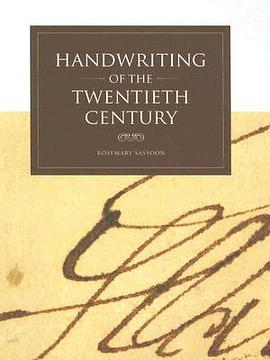
As letter-writing has fallen by the wayside, the art of lavish yet legible handwriting is no longer being taught to schoolchildren or employed in daily life—much to the dismay of those who receive hastily scrawled love notes or try to decipher a doctor’s prescription. In an age when script manuals for students are disappearing at a rapid rate and writing samples are ephemeral, Rosemary Sassoon’s Handwriting of the Twentieth Century provides the first historical record of teaching the skill of writing in the last 100 years.
In addition to illustrating the techniques used by handwriting instructors and documenting the ever-changing views of script stylists, this volume probes the development and manufacture of writing equipment as well as useful examples for today’s teachers of writing. Handwriting of the Twentieth Century is a delightful, comprehensive account of our constant quest for fluent and clear handwritten script.
“...excellent and comprehensive illustrated book—which takes us through not only what happened in the United Kingdom, but brings in information about other English speaking countries such as America and Australia as well as European scripts, providing samples and explanations that are valuable as a reference. . . . The book's well-written Epilogue merits a section being printed—It couldn't be put better by a graphologist!”—Elaine Quigley, Graphologist
作者简介
Rosemary Sassoon is an expert in handwriting, with a particular emphasis on that of children. She is the author of a number of books on handwriting and is also the creator of the Sassoon series of typefaces.
目录信息
Introduction
Chapter 1 The Influences on contemporary handwriting: A historical perspective
Chapter 2 The turn of the century
Chapter 3 Learning from copy books
Chapter 4 Simplifying letterforms
Chapter 5 Initiatives and models from 1930
Chapter 6 Educational attitudes mid-century
Chapter 7 Stylistic issues after 1950
Chapter 8 Initiatives in the 1960s
Chapter 9 From 1970 to the National Curriculum
Chapter 10 The end of the century
Chapter 11 Handwriting around Europe
Chapter 12 America and Australia
Epilogue
References
Index
· · · · · · (收起)
读后感
用户评价
对于我们这些习惯了键盘敲击的后现代读者来说,《二十世纪手写体》带来了一种强烈的“反思”冲动。它让我开始质疑,当我们所有人都使用统一的、冰冷的电子字体时,我们是否也失去了一部分作为“个体”的表达权利?书中那些充满颤抖、涂改、甚至潦草到难以辨认的字迹,反而充满了鲜活的人味和真实的情感张力。特别是关于“艺术与广告手写”的篇幅,展示了设计师如何故意模仿非标准手写体,试图重新唤起那种手工的亲近感,这本身就构成了一种有趣的悖论。作者对特定文化圈内,手写规范化(比如日本或西欧的特定书法风格)如何被挑战和解构的过程,分析得极其透彻,丝毫没有一味地美化过去。它冷静地指出,手写体的消亡并非单向度的衰退,而是一种适应媒介变化的必然结果,但同时,它也为我们留下了对“指尖记忆”的深沉怀念。
这本名为《二十世纪手写体》的书,简直是一场视觉盛宴!我原以为这只是本枯燥的字体研究专著,没想到它以一种近乎艺术展览的方式,将我们带入了一个充满历史气息和个人印记的文字世界。书中的排版设计本身就极具巧思,每一个章节的过渡都像是一次精心策划的博物馆导览。它没有过多地纠缠于复杂的学术理论,而是通过大量的、高清的、不同来源的手稿和文件样本,直观地展示了那个百年间,人们如何用笔尖记录下时代的脉搏。我尤其欣赏作者对不同社会阶层、职业群体手写风格差异的捕捉,那种微妙的笔触变化,仿佛能让你触摸到当时书写者的心情和身份。翻阅这本书,就像是在翻阅一份份尘封的私人日记和官方函件的混合体,每一个字迹背后都有着尚未被完全道出的故事。它成功地架起了历史与日常之间的桥梁,让我开始重新审视那些我们习以为常的印刷字体,以及它们背后被现代技术所掩盖的“人性”温度。这本书的厚度和内容密度都相当惊人,绝对是那种值得收藏,并且可以反复把玩细品的宝物。
坦白说,我是在一个朋友的强烈推荐下才购入《二十世纪手写体》的,起初我对“二十世纪”这个时间跨度感到有些茫然,心想这得收集多少零散的资料才能支撑起一本书的体量?然而,阅读过程却远超我的预期,它展现出一种令人惊叹的编纂逻辑。与其说这是一本关于字体的书,不如说它是一部关于“书写行为”的社会人类学著作。作者巧妙地将技术变迁、文化思潮、乃至政治风向,都融入到对笔迹细微变化的解读之中。比如,书中对比了两次世界大战期间,不同国家领导人信件的笔锋力度和书写速度的差异,那种紧张感和历史的重量感,隔着纸页都能被清晰地捕捉到。对我这个非专业人士来说,最吸引人的是它那种“寻宝”式的探索感。你永远不知道下一页会跳出哪个领域的惊喜——也许是某位著名作家的草稿,也许是早期电影的片场标注,又或者是一张退役士兵的家书。这种跨界融合的叙事方式,让原本可能略显单调的主题变得鲜活而富有生命力,极大地拓宽了我对“手写”在现代社会意义的理解。
这本书的阅读体验是分层次的,初看是惊艳于其视觉的丰富性,深读后则是折服于其史料的扎实与考据的严谨。它不仅仅是关于“写得好看”的指南,而是对一个世纪以来,人类如何通过这种最基础的沟通方式来构建自我、确认社会关系的一个百科全书式的梳理。我特别喜欢其中收录的一些“非常规”材料,比如早期的传真件边缘模糊的字符,或是电话留言纸条上匆忙写下的数字和字母,这些“边角料”往往比那些精心准备的官方文件更能揭示真相。它没有陷入对某种特定手写体的缅怀或推崇,而是保持了一种近乎科学的客观态度去观察现象。阅读结束后,我竟然重新找出了尘封已久的高级钢笔,试图在笔记本上重新找回那种久违的、墨水洇开的真实触感。这本书的价值在于,它让你意识到,每一个被记录下来的字,都是时间留下的不可磨灭的指纹。
这本书的装帧设计简直是业界标杆,那种沉甸甸的质感,拿在手上就有一种被知识包裹的踏实感。我特别关注那些关于“书写工具演变”的章节。作者不仅展示了钢笔、墨水、铅笔如何塑造了不同的线条粗细和阴影层次,还深入探讨了自动铅笔和圆珠笔普及后,手写体所经历的那场悄无声息的“革命”。在我看来,二十世纪的手写体是钢笔的黄金时代,笔尖在纸上划过时那种细微的摩擦声仿佛被定格在了那些图片中。它探讨了教育体系对手写规范化的影响,以及这种规范化如何与个性化的自由表达之间进行拉锯战。我发现了一个有趣的现象,在某些特定的年代,比如战后复苏期,人们的书写似乎变得更为工整、更加强调结构性,这无疑是对秩序和稳定的渴望的一种体现。这种将字体形态与宏大历史背景进行精妙联结的能力,是本书最令人称道之处,它不是孤立地展示字形,而是将其置于时代的洪流之中进行考察。