
具体描述
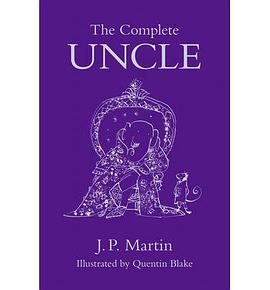
The complete set of Uncle books, by J.P Martin and illustrated by Sir Quentin Blake, is being re-published in a deluxe high-quality hardback, with a wealth of extra material, including articles by Neil Gaiman, Will Self and Kate Summerscale. Uncle is an kind-hearted elephant who lives in an endlessly massive castle, accompanied by his motley crew of companions and employees, including the Old Monkey, Goodman the Cat, the One-Armed Badger and many more. Near his castle sits Badfort, home of Uncle's enemies, a disreputable group including Hateman, Jellytussle, Hitmouse and other unpleasant characters.
Over the course of the books, Uncle and his followers find themselves mixed up with camels, dwarfs, treacle, bears, ghosts, a walrus, a singing flower, wizards, Respectable Horses and much, much more. Although the books were intended for children, they are loved by an adult audience for their wordplay, subversive and surreal humour and wonderful drawings. They are one of the great forgotten treasures of children's literature, and this is the first opportunity to buy the complete set since the early seventies. This deluxe 800-page hardback edition contains the full text of all six books, and all of the illustrations from Sir Quentin Blake. There are also articles by famous fans, contemporary reviews, an eight-page colour section showcasing the original cover art and much more. The anthology includes: Uncle, Uncle Cleans Up, Uncle and His Detective, Uncle and the Treacle Trouble, Uncle and Claudius the Camel, and Uncle and the Battle for Badgertown.
'AMAZING. It will be a fantastic book' -- Neil Gaiman
'I think Uncle stuck with me because of its combination of excess, gadgetry and eccentricity - all of which are modes of being I have attempted to emulate in my adult life. I blame J.P. Martin.' -- Will Self
'Uncle is an utterly indulgent book, which veers recklessly between the childish and the sophisticated: it is violent, anarchic and soft-hearted.' -- Kate Summerscale
'A riot of nonsense and adventure, may well become a classic in the great English nonsense tradition' -- Observer
'You ask any class 'Who's heard of Alice in Wonderland ' and up goes a forest of hands. Uncle is on the same level and should be more widely read and enjoyed.' --Junior Bookshelf Magazine
作者简介
J. P. Martin was born in Scarborough in 1880, the son and grandson of Methodist ministers. He had no great ambition to have his Uncle books published. To begin with they were not books, just stories which he used to tell his children in his deep Yorkshire voice, chuckling unashamedly at his own jokes. It was only when his children were grown up that he was persuaded to write them down, and it was his daughter who became determined that they should reach a wider audience and started submitting them to publishers.
The books, with their anarchic spirit, were ahead of their time and it took twenty years before they finally appeared in print. Intriguingly, one publisher rejected the books on the grounds that they were amoral and said Uncle was 'a fascist' whereas The Listener, reviewing the first book, said "Uncle is a savage attack on a capitalist society."
His daughter thinks of Uncle, the rich benefactor of all his neighbours, as the fantasy of a poor man, her father, who spent most of his life in slums longing but unable to alleviate the poverty by which he was surrounded. Whatever his motives, the author himself was unconscious of them. "Lots of it came to me in dreams," he said. "I would come downstairs in the morning and remember what I had been dreaming about - and there was another chapter." The author seems not to have been greatly affected by publication. "When your work is your calling," he said, "you don't worry much about anything else." Even so, he was obviously delighted by the visits of local reporters and the BBC and, in particular, the children who came to see him. In all, six Uncle books were published in the series, the last in 1973, seven years after his death.
目录信息
Uncle Cleans Up (1965)
Uncle and His Detective (1966)
Uncle and the Treacle Trouble (1967)
Uncle and Claudius the Camel (1970)
Uncle and the Battle for Badgertown (1973)
· · · · · · (收起)
读后感
用户评价
这本书的封面设计简直是艺术品,色彩的搭配和那种复古的字体选择,一下子就将我拉回了那个特定的年代感之中。我花了很长时间仅仅是端详着这个封面,想象着里面故事的基调。拿到书的质感也相当不错,纸张的厚度和翻阅时的那种沙沙声,都透露着出版方对读者的尊重。我通常对那些封面平庸的书不太抱太大期望,但这次的视觉体验完全超出了预期。我得说,光是这份对“体面”的坚持,就让我对书的内容燃起了浓厚的兴趣,仿佛作者也以同样严谨的态度对待了每一个情节的构建。我非常期待书中描绘的那个世界的细节,希望文字能像这封面一样,富有层次和深度,而不是流于表面。这种对整体美感的追求,在当下的出版物中已经非常罕见了,让人忍不住想好好珍藏起来。
故事的内核探讨的那些人性中的幽微之处,真是让人感同身受,甚至有些不寒而栗。它没有将人物脸谱化为纯粹的好人或坏蛋,而是展示了极端情境下,任何一个普通人身上都可能潜藏的、那些难以启齿的自私、恐惧与挣扎。我特别欣赏作者处理冲突的方式——那些巨大的矛盾往往不是通过激烈的外在冲突爆发的,而是通过人物内心细微的犹豫和选择,如同冰川下的暗涌,不动声色地改变着一切的走向。这使得整个阅读过程充满了一种心理上的张力,你时刻都在期待着,这个角色会为了自己的某个“小私利”而做出何种艰难(或卑劣)的妥协。这种对“灰色地带”的忠实描摹,让角色真正地“活”在了纸页上,他们的困境不再是遥远的虚构,而是现实中相似情境的折射。
我必须承认,我通常对那种篇幅浩瀚的叙事是抱持着谨慎态度的,总担心会陷入冗长而失焦的泥潭。然而,这本书的叙事节奏掌握得令人拍案叫绝。它并非那种一泻千里的快节奏小说,更像是一部精密的钟表,每一个齿轮的转动都恰到好处,既不会让人感到拖沓,也不会因为信息量过大而让人喘不过气。作者似乎深谙“留白”的艺术,总是在关键时刻戛然而止,逼迫着读者主动去填补那些未言明的空白,这种互动性极大地增强了阅读的沉浸感。我发现自己经常会放下书本,盯着天花板沉思几分钟,回味刚才读到的那段对话或者场景的潜台词。这种高质量的思考诱导,远胜于那种直白的、把所有东西都掰开揉碎了喂给读者的作品。它尊重读者的智商,并给予了适当的回报。
从文学技巧的角度来看,这本书的语言风格无疑是这本书最让人称道的一点。它没有采用时下流行的那种简洁到近乎苍白的现代白话,而是带着一种醇厚的、略显繁复却又无比精准的笔触。读起来,仿佛能嗅到旧式图书馆里木头家具散发出的那种特有的气味。句子的结构充满变化,时而长句如河流般蜿蜒,时而短句如刀锋般锐利,这种交替使用极大地丰富了阅读的听觉体验。我甚至会特意将某些描绘性的段落反复朗读几遍,仅仅是为了体会那种音韵的美感。这种对母语的深刻理解和驾驭能力,让整部作品散发出一种超越时代、近乎经典文学才有的分量感,而非昙花一现的网络热点。
我已经很久没有遇到这样一本,能让我愿意在读完之后立刻合上书,然后跑去跟朋友们大肆讨论其象征意义和哲学命题的作品了。这本书的后劲实在太强了。它不像快餐文学那样,读完就忘,而是像陈年的酒,在品尝后的数日乃至数周内,依然会在不经意间冒出新的理解和体会。我开始重新审视我生活中一些被我忽略的细节,思考那些被我草率定义的概念。这不仅仅是一本消遣读物,更像是一次深度的哲学对话,一次对既有世界观的温和挑战。我强烈推荐给那些不满足于只为娱乐而读书的人,这本书值得你投入时间,去细细品味其中蕴含的深意,它提供的是一种持久的精神滋养。