
具体描述
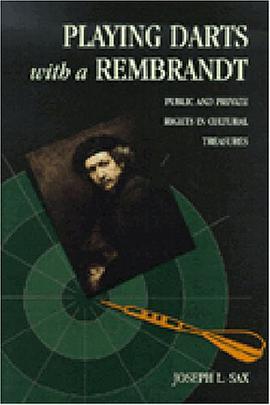
Some of the world's greatest treasures are hidden away and have not been seen publicly for decades, sometimes for centuries. Others have been destroyed. They are not stolen property. They are simply private property, and no matter their public significance, the public has no claims on them. A capricious owner of Leonardo da Vinci's notebook would be perfectly within his rights to throw it in the fireplace, as James Joyce's grandson did with letters from the author's daughter, or Warren Harding's widow did with her husband's Teapot Dome papers. This is a book about such rights and why they are wrong.Some incidents are famous. A great artist's mural is demolished because the rich man who commissioned it is offended by its political implications. One of America's most famous collections is closed to virtually every notable person in the art world, whose requests for visits produce only a postcard from the owner saying "go to Blazes." Scholars who seek access to the Dead Sea Scrolls, monopolized and secreted by a handful of individuals for nearly forty years, are dismissed as "slime," "fleas," "gang-snatchers," and "manure," and told, "You will not see these things in your lifetime.""Playing Darts with a Rembrandt" explores abuses of ownership of cultural treasures in a wide range of settings, including material of historic and scientific interest, as well as art and antiquities. It examines the claims made on behalf of the public for preservation, protection, and access to important artifacts, balancing those claims against proprietary and privacy interests, and discusses the proper role of institutions such as museums and libraries that act as repositories. Acknowledging the complexities that sometimes arise (such as the claims of history against the desire of a great figure's family to withhold private letters), "Playing Darts with a Rembrandt" proposes a new species of qualified ownership: to own an object of great public importance is to become a "fortunate, if provisional, trustee, having no right to deprive others who value the objects as much as they do themselves."The fascinating stories that comprise the bulk of the book, ranging from dinosaur excavations and the Dead Sea Scrolls to the fate of presidential papers and the secrets held by the Library of Congress, will be of interest to a wide range of general readers. The extensive discussion of collectors, and their role, should commend the book to those in the art world, as well as to those professionally associated with museums, libraries, and archives. While written in a readable and untechnical way, it should also be of interest to those in the legal community who are interested in the philosophical and theoretical underpinnings of our property system."Sax turns his attention from public rights to conserve land and water to protection of cultural treasures. As always, he sees both sides of the argument and comes to reasoned and wise conclusions, balancing private and public interests. His prose is lucid, and his examples are both instructive and entertaining. An invaluable book for anyone interested in the preservation of our cultural resources." --I. Michael Heyman, Secretary, Smithsonian InstitutionJoseph L. Sax is Professor of Law, University of California, Berkeley. He was formerly the counselor to the Secretary of the Interior and Professor of Law, the University of Michigan Law School.
作者简介
目录信息
读后感
用户评价
这部作品的语言风格展现出一种令人赞叹的复古韵味,它仿佛是从一个逝去的时代精心打捞出来的琥珀,晶莹剔透却又饱含历史的重量。作者似乎对词汇的选择有着近乎偏执的追求,每一个形容词和动词的搭配都经过了反复的斟酌,从而构建出一种既古典又极富表现力的语感。阅读过程中,我时常需要停下来,仅仅是为了细细品味某个长句的结构美感,那种层层递进、犹如精雕细琢的巴洛克式句法,读起来有一种沉浸式的快感。它的文字并非晦涩难懂,而是将复杂的意象用一种极具美感的方式呈现出来,像是一幅幅用文字绘制的油画,充满了丰富的层次感和光影变化。这种语言上的精心雕琢,使得即便是描述最平常的场景,也镀上了一层非凡的质感,极大地提升了阅读的审美体验,让文学本身的美学价值得到了最大程度的彰显。
这本精装书的装帧设计简直是一场视觉的盛宴,封面那种略带斑驳的古董纸质感,配合着烫金的书名和作者名字,散发出一种低调而奢华的历史沉淀感。我拿到手的时候,光是摩挲着封面的纹理,就已经被带入了一种略显神秘的氛围之中。内页的纸张选择也十分考究,不是那种亮得刺眼的铜版纸,而是带着淡淡米黄色的哑光纸,阅读起来非常舒适,长时间盯着也不会觉得眼睛疲劳。装订工艺无可挑剔,每一页都翻得流畅自然,让人忍不住想一口气读完。更值得称赞的是,排版设计极具匠心,字体的选择既古典又易读,行距和字距的把握恰到好处,给阅读留下了足够的“呼吸空间”。我尤其喜欢它在章节过渡页上采用的那些细微的、几乎难以察觉的装饰性纹样,它们像低语的耳语,烘托着故事的基调,却又不会喧宾夺主。这本书从物理形态上就提升了阅读的仪式感,它不仅仅是一本书,更像是一件值得珍藏的艺术品。每次把它放在书架上,它沉稳的色调和厚实的体量,都让周围的书籍显得黯然失色。
我非常欣赏作者在处理角色动机时所展现出的那种毫不妥协的复杂性。书中的每一个主要人物,其内心的驱动力都不是单一的“爱”或“恨”可以简单概括的。他们身上汇集了矛盾、欲望、责任感以及深刻的自我欺骗,这些元素交织在一起,形成了一张巨大而密不透风的心理网。你会在阅读的过程中不断地修正你对某个角色的判断,前一刻你可能还对他深感同情,后一刻又因其某个自私的决定而感到错愕。这种动态的、不断演变的角色塑造,极大地增强了故事的真实性和代入感。作者没有试图去美化或简化人性,而是勇敢地揭示了人类内在的怯懦和光辉并存的本质。这种对人性的深刻挖掘和坦诚描摹,是真正伟大的文学作品的标志,它要求读者参与到这场心理博弈中,与角色一同成长或挣扎。
作者的叙事节奏把握得犹如一位经验老到的指挥家,他懂得何时该让旋律激昂,何时又该让它沉静下来,让读者在紧张与放松之间获得完美的平衡。开篇部分的铺陈可谓是“润物细无声”,没有立刻抛出惊天动地的事件,而是耐心地、极其细腻地勾勒出人物的内心世界和他们所处的错综复杂的人际网络。我发现自己很快就被卷入了那种缓慢而坚定的情节推进之中,每一个对话片段、每一个场景切换,都像是精确计算过的音符,为后续的高潮部分积蓄着强大的能量。当关键转折点到来时,那种蓄势已久的情感爆发或事件揭露,读起来令人感到酣畅淋漓,完全没有那种为了制造戏剧性而刻意为之的生硬感。这种高超的节奏控制,让读者在阅读过程中始终保持着一种期待感,却又不会因为过于急躁而错失了对细节的品味。这种叙事张力,是我近年来阅读体验中最为精妙的一部作品。
这本书对社会阶层和权力结构之间的微妙张力的刻画,达到了令人心惊的深度。它并非简单地将人物划分为“好人”与“坏人”,而是深入挖掘了在特定社会环境下,人性的灰色地带如何被环境所塑造、扭曲甚至最终吞噬。我看到了那些身处权力顶端的人,他们看似光鲜亮丽的外表下,隐藏着多少因恐惧和猜忌而衍生的病态行为;同时也观察到那些处于底层的小人物,他们如何凭借着微弱的尊严和坚韧的生命力,在夹缝中求生存。作者对于不同社会阶层言谈举止的细微差别,观察得入木三分,无论是贵族之间那种心照不宣的暗语,还是平民之间的直白与粗粝,都处理得极其真实可信。这种对社会肌理的深刻洞察,使得整部作品不仅仅停留在情节层面,更上升到了对人类生存状态和道德困境的哲学探讨,让人读后久久无法释怀,反思自身所处的社会位置。