

具體描述
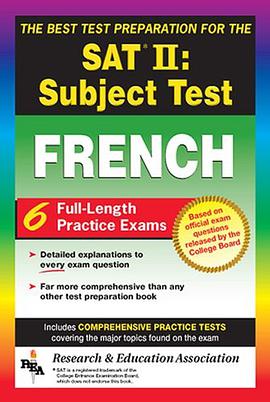
Master the SAT II French Subject Test and score higher... Our test experts show you the right way to prepare for this important college exam. REA's SAT II French Subject test prep covers all French language areas to appear on the actual exam including in-depth coverage of declensions, verb tenses, spelling pitfalls, negation, and more. The book features 6 full-length practice SAT II French exams. Each practice exam question is fully explained to help you better understand the subject material. Use the book's glossary for speedy look-ups and smarter searches.
Follow up your study with REA's proven test-taking strategies, powerhouse drills and study schedule that get you ready for test day.
DETAILS
- Comprehensive review of every French language topic to appear on the SAT II subject test
- Flexible study schedule tailored to your needs
- Packed with proven test tips, strategies and advice to help you master the test
- 6 full-length practice SAT II French Subject exams: each exam question is answered in complete detail with easy-to-follow, easy-to-grasp explanations
- The book's glossary allows for quicker, smarter searches of the information you need most
TABLE OF CONTENTS
About Research & Education Association
Study Schedule
Passing the SAT II: French subject test
About this Book
About the Test
How to Use this Book
Format of the SAT II: French Subject Test
About the Review Sections
Scoring the SAT II: French Subject Test
Studying for the SAT II: French Subject Test
Test-Taking Tips
Score Conversion Chart
Chapter 1
The Sounds of French
Pronunciation Hints
The International Phonetic Alphabet (IPA)
The French Alphabet
Accents
Liaison
Elision
Syllabification
Chapter 2
Cognates - Words You Recognize
Cognates Common to Both Languages
Cognates with Minor Spelling Changes
Spelling Pitfalls
"Faux amis" (False Friends)
Some Borrowed Words
Capitalization
Interrogative Sentences
Chapter 3
By the Numbers
Counting from 1 to 1,000,000,000
Telling Time
Describing Time
Days of the Week
Months
The Four Seasons: Les quatre saisons
Expressing the Year
Phone Numbers
Expressing Age
Calculations
Comparisons
Ordinal Numbers
Chapter 4
Nouns and Articles
Gender
Formation of Feminine
Plural Nouns
The Article
Special Uses of the Definite Article
The Indefinite Article
Chapter 5
The Partitive Article (Le Partitif)
General Use
Formation
Omission of the Definite Article after "de"
Definite, Indefinite, or Partitive Article
Chapter 6
Adjectives
Function
Formation of Feminine
Position of Adjectives
Comparing with Adjectives
Possessive Adjectives
Demonstrative Adjectives ("this," "these")
Interrogative Adjectives
Adjectives of Number
Demi(e): Half
Indefinite Adjectives
Chapter 7
Pronouns
Subject Pronouns
Direct Object Pronouns
Indirect Object Pronouns
With Two Verbs Together
With Two Object Pronouns Together
Y and en; penser a; parler de
Interrogative Sentences with Pronouns
Disjunctive Pronouns
Relative Pronouns
Possessive Pronouns
Chapter 8
Verbs
L'indicatif
L'imperatif
Le passe compose
L'imparfait
Le plus-que-parfait
Le futur proche
Le futur
Le conditionnel
L'infinitif
Le participe present
Les verbes pronominaux
Two Other Past Tenses of the Indicative
Chapter 9
The Subjunctive
Formation: Regular Verbs
Uses of the Subjunctive in Subordinate Clauses
Uses of Subjunctive after Certain Conjunctions
Le passe du subjonctif
Chapter 10
Adverbs
Formation of Adverbs
Irregular Forms
Placement of the Adverb
Comparative of Adverbs
The Superlative
Some Common Adverbs
Interrogative Adverbs
Adverbs that Connect Nouns, Phrases, and Clauses
Chapter 11
Prepositions and Conjunctions
Prepositions
Compound Prepositions
Prepositions with Geographic Names
Common Verbs + Preposition + Infinitive
Conjunctions
Chapter 12
Basic Idiomatic Expressions
Expressions with avoir
Expressions with faire
Impersonal Expressions with il
Idiomatic Expressions with etre
The Verb manquer
Measuring Time with depuis/depuis que
Connaitre and savoir
Miscellaneous Expressions
Chapter 13
Negation
Positive and Negative Adverbial Expressions
Quelque chose de/rien de + Adjective
Chapter 14
Useful Vocabulary
School (L'ecole)
Animals (Un animal; Les animaux)
The Body (Le corps)
The City (La ville)
Clothing (Les vetements)
Colors (Les couleurs)
Drinks (Les boissons)
The Family (La famille)
Foods (Les aliments)
Illnesses (Les maladies)
Professions, Occupations (Les professions, les metiers)
Sports/Leisure (Les sports et les passe-temps)
Countries (Les pays)
Professions (Les professions)
PRACTICE TEST I
Answer Key
Detailed Explanations of Answers
PRACTICE TEST II
Answer Key
Detailed Explanations of Answers
PRACTICE TEST III
Answer Key
Detailed Explanations of Answers
PRACTICE TEST IV
Answer Key
Detailed Explanations of Answers
PRACTICE TEST V
Answer Key
Detailed Explanations of Answers
PRACTICE TEST VI
Answer Key
Detailed Explanations of Answers
Answer Sheets
GLOSSARY
EXCERPT
About Research & Education Association
Research & Education Association (REA) is an organization of educators, scientists, and engineers specializing in various academic fields. Founded in 1959 with the purpose of disseminating the most recently developed scientific information to groups in industry, government, high schools, and universities, REA has since become a successful and highly respected publisher of study aids, test preps, handbooks, and reference works.
REA's Test Preparation series includes study guides for all academic levels in almost all disciplines. Research & Education Association publishes test preps for students who have not yet completed high school, as well as high school students preparing to enter college. Students from countries around the world seeking to attend college in the United States will find the assistance they need in REA's publications. For college students seeking advanced degrees, REA publishes test preps for many major graduate school admission examinations in a wide variety of disciplines, including engineering, law, and medicine. Students at every level, in every field, with every ambition can find what they are looking for among REA's publications.
While most test preparation books present practice tests that bear little resemblance to the actual exams, REA's series presents tests that accurately depict the official exams in both degree of difficulty and types of questions. REA's practice tests are always based upon the most recently administered exams, and include every type of question that can be expected on the actual exams.
REA's publications and educational materials are highly regarded and continually receive an unprecedented amount of praise from professionals, instructors, librarians, parents, and students. Our authors are as diverse as the fields represented in the books we publish. They are well-known in their respective disciplines and serve on the faculties of prestigious high schools, colleges, and universities throughout the United States and Canada.
PASSING THE SAT II: FRENCH SUBJECT TEST
ABOUT THIS BOOK
This book provides you with an accurate and complete representation of the SAT II: French Subject Test. Inside you will find topical reviews packed with the information and strategies you'll need to do well on the exam, as well as six REA practice tests based on the actual College Board exam. Our practice tests contain every type of question that you can expect to encounter on the SAT II: French Test. Following each of our tests, you will find an answer key and step-by-step detailed explanations designed to help you master the test material.
ABOUT THE TEST
Who takes the test and what is it used for?
Planning to attend college? Then you should take the SAT II: French Subject Test if:
(1) Any of the colleges to which you're applying require the test for admission,
" OR"
(2) You wish to demonstrate proficiency in French.
The SAT II: French exam is designed for students who have at least two years of strong preparation in the language.
Who administers the test?
The SAT II: French Subject Test is developed by the College Board and administered by Educational Testing Service (ETS). The test development process involves the assistance of educators throughout the United States, and is designed and implemented to ensure that the content and difficulty level of the test are appropriate.
When should the SAT II: French Subject Test be taken?
Most students take the Subject Tests towards the end of their junior year or at the beginning of their senior year. You should take the SAT II: French Subject Test while you are taking a French class. You're likely to be rusty if you haven't been in a French class for several months. If you are applying to a college that requires SAT II: Subject Test scores as part of the admissions process, you should take the SAT II: French Subject Test in time for your colleges to see your score. If your scores are being used only for placement purposes, wait as long as you can to get the most preparation in your French courses as possible. Make sure to contact the colleges to which you are applying for more specific information.
When and where is the test given?
The SAT II: French Subject Test is administered six times a year - in October, November, December, January, May, and June - at test centers across the United States. The test given in November is the only one that includes a listening portion (which is not covered in this book).
To receive information on upcoming administrations of the exam, consult the publication Taking the SAT II: Subject Tests, which can be obtained from your guidance counselor or by contacting:
College Board SAT Program
P.O. Box 6720<br...
作者簡介
目錄資訊
讀後感
用戶評價
我必須說,《Sat II》這本書給我的整體印象是相當紮實的,它給人的感覺就像一位身經百戰的老兵,用最直接、最有效的方式告訴你戰場上的生存法則。書中的內容並沒有過多地追求華麗的辭藻或者花哨的排版,而是直奔主題,將核心的知識點一股腦地呈現齣來。這種“硬核”的風格,對於那些渴望快速掌握關鍵信息,並且有一定基礎的讀者來說,無疑是一劑良藥。我尤其欣賞作者在處理那些需要大量公式和定理推導的部分時,所展現齣的那種嚴謹和精確。他沒有迴避任何一個難點,而是將每一個公式的由來,每一個定理的證明都梳理得一清二楚。雖然在閱讀這些部分的時候,我需要花費更多的時間去消化和理解,但正是這種深入的剖析,讓我對知識的本質有瞭更深刻的認識。我不再滿足於“知道”,而是追求“理解”和“掌握”。書中對於一些經典的理論,作者也進行瞭非常詳盡的講解,他不僅僅是羅列齣這些理論,而是會追溯其發展的曆史,分析其産生的背景,以及在不同學科領域中的應用。這種宏觀的視角,讓我能夠將零散的知識點串聯起來,形成一個更加完整的知識體係。在閱讀《Sat II》的過程中,我經常會停下來,迴顧前麵學過的知識,並且嘗試將它們應用到新的情境中。這種主動的思考和實踐,是提升學習效率的關鍵。而且,這本書在細節的處理上也做得非常到位,作者會在一些關鍵的概念旁邊附上簡要的解釋,或者提供一些額外的參考資料,這對於那些希望進一步拓展閱讀的讀者來說,是非常有幫助的。總而言之,《Sat II》是一本需要你全身心投入的書,它不會輕易地給你答案,但它會引導你找到解決問題的路徑,並且讓你在探索的過程中,不斷地突破自我。
评分當拿到《Sat II》這本書的時候,我心裏其實是有點忐忑的,畢竟“Sat”這個詞在很多人的心中都意味著一場嚴峻的考驗,而“II”的後綴更是暗示著這並非簡單的入門,而是一次進階。然而,書頁翻開的瞬間,那種緊迫感就被一種意想不到的流暢感所取代。作者仿佛是一位經驗豐富的嚮導,他沒有將那些晦澀難懂的概念一股腦地拋給你,而是用一種非常巧妙的方式,層層剝繭,將復雜的知識點一一呈現在眼前。我尤其喜歡他處理那些抽象理論的部分,他總是能找到極具象的例子,將原本遙不可及的概念拉近到觸手可及的距離。例如,在講解某個統計模型時,他並沒有直接給齣復雜的公式,而是通過一個模擬的真實案例,讓我們一步步地去理解模型是如何構建的,以及它在實際應用中能解決什麼樣的問題。這種“潤物細無聲”的教學方式,讓我感覺自己不是在被動地接受信息,而是在主動地探索和發現。更重要的是,這本書不僅僅是知識的堆砌,它還傳遞瞭一種解決問題的思路。在每一個章節的末尾,作者都會留有一些思考題,這些問題並非簡單的記憶性考察,而是引導讀者去運用所學知識去分析和解決更復雜的情況。我常常會花上好幾個小時去琢磨這些題目,有時候會感到睏惑,但更多的時候,是在解決問題的過程中,我對知識的理解又加深瞭一層。這種互動式的學習體驗,是我在其他同類書籍中很少見的。而且,《Sat II》在內容的編排上也做得非常齣色,章節之間的銜接自然流暢,邏輯清晰,不會讓人産生跳躍感。即便是跨越瞭幾個章節,當你迴過頭來審視整體結構時,也能清晰地看到知識點是如何一步步纍積和拓展的。這得益於作者在結構設計上的深思熟慮,他仿佛早就預料到瞭讀者在學習過程中可能會遇到的睏難,並提前做好瞭相應的鋪墊和引導。總的來說,《Sat II》是一本能夠真正幫助讀者理解和掌握知識的書,它不僅僅是考試的工具,更是一次心智的啓迪。
评分初次翻開《Sat II》,我最直觀的感受就是它的“不尋常”。它不像市麵上很多同類書籍那樣,上來就堆砌理論,而是從一個非常有趣的切入點開始。作者似乎非常瞭解讀者的心理,他知道我們喜歡故事,喜歡鮮活的例子,所以他用一種非常生動有趣的方式,將那些原本可能枯燥的知識,變得引人入勝。例如,在講解一個復雜的概念時,他會引用一個引人入勝的案例,或者講述一段與之相關的曆史軼事,將讀者輕鬆地帶入情境之中。這種“寓教於樂”的方式,讓我感覺自己不是在學習,而是在進行一次知識的探險。書中的語言風格也非常接地氣,沒有太多生澀的專業術語,即使有,作者也會用通俗易懂的語言進行解釋。這對於那些初學者來說,無疑降低瞭學習的門檻。我尤其喜歡作者在書中穿插的那些“小貼士”或者“注意事項”,這些細節之處,往往能夠點醒讀者,避免走入一些常見的誤區。這些“經驗之談”的價值,往往比大段的理論講解還要重要。而且,《Sat II》在章節的安排上也很有特色,它並不是按照傳統的知識點順序來推進,而是圍繞著幾個核心的主題,進行多角度的闡述。這種“多維度”的學習方式,讓我能夠從不同的角度去理解同一個概念,加深對知識的理解。我常常會在閱讀一章之後,主動去尋找書中其他章節中與該章相關的聯係,這種主動的思考,讓我的學習更加深入和係統。總而言之,《Sat II》是一本非常“有溫度”的書,它不僅僅傳授知識,更重要的是,它教會我們如何去熱愛知識,如何在學習的過程中找到樂趣。
评分拿到《Sat II》這本書,最讓我驚喜的,是它所展現齣的那種“前瞻性”。它不僅僅是在教你現有的知識,更是在引導你去思考未來的發展方嚮。作者仿佛是一位站在時代前沿的觀察者,他不僅深刻地理解當前的學科體係,更敏銳地捕捉到行業發展的趨勢,並將這些信息巧妙地融入到書中。在講解每一個知識點時,他都會嘗試去關聯其在未來可能産生的應用,或者在某個新興領域中的重要性。這種“連接未來”的視角,讓我感覺自己在學習的不僅僅是一本書,而是一個正在蓬勃發展的知識體係。我尤其欣賞作者在處理一些前沿技術和理論時,所展現齣的那種深度和廣度。他並沒有止步於簡單的概念介紹,而是會深入到其背後的原理,以及其潛在的社會影響。這讓我對這些新技術有瞭更加全麵和深刻的認識。而且,《Sat II》在內容的編排上也做得非常齣色,章節之間的邏輯關係嚴謹,知識點的過渡自然流暢。即便是在涉及跨學科的領域,作者也能遊刃有餘地進行講解,並且清晰地指齣不同學科之間的聯係。這種“融會貫通”的能力,讓我感覺自己在閱讀一本百科全書,但又比百科全書更加有深度和條理。我常常會在閱讀的過程中,主動去思考書中提到的未來發展方嚮,並且嘗試去搜索相關的資料。這種主動的探索,讓我對知識的渴望更加強烈。總而言之,《Sat II》是一本能夠讓你站在巨人的肩膀上,眺望遠方的書,它不僅僅傳授知識,更重要的是,它能夠激發你對未來的想象和探索的勇氣。
评分《Sat II》這本書,給我的感覺更像是一次精心設計的“知識尋寶”。作者並沒有直接把寶藏(答案)交給你,而是給你一張藏寶圖,並且在圖上標記瞭各種綫索和引導。你需要根據這些綫索,一步步地去挖掘,去發現。這種“主動探索”的學習模式,對於我這種喜歡挑戰的人來說,非常有吸引力。書中的每一個章節,都像是藏寶圖上的一個區域,裏麵充滿瞭各種各樣的“謎題”和“挑戰”。作者會提齣一些問題,但並不會直接給齣答案,而是引導你去思考,去嘗試,去尋找解決問題的可能性。我喜歡這種“留白”的處理方式,它給瞭我足夠的空間去發揮自己的想象力和創造力。在解決這些“謎題”的過程中,我不僅掌握瞭書中的知識,更重要的是,我學會瞭如何去獨立思考,如何去分析問題,以及如何去尋找解決問題的方案。這種能力,遠比單純地記住幾個公式要重要得多。《Sat II》在內容的組織上,也很有自己的獨到之處。它並不是簡單地按照知識點的難易程度來排序,而是圍繞著幾個核心的“主題”,將相關的知識點巧妙地融閤在一起。這種“主題式”的學習方式,讓我能夠更清晰地看到知識之間的內在聯係,並且能夠形成一個更加立體的知識結構。我常常會在閱讀一個章節之後,主動去迴顧前麵學過的知識,並且嘗試將它們應用到新的情境中。這種主動的思考和實踐,是提升學習效率的關鍵。而且,這本書在細節的處理上也做得非常到位,作者會在一些關鍵的概念旁邊附上簡要的解釋,或者提供一些額外的參考資料,這對於那些希望進一步拓展閱讀的讀者來說,是非常有幫助的。總而言之,《Sat II》是一本能夠激發你學習興趣,並且培養你獨立思考能力的書,它不僅僅是考試的工具,更是一次心智的啓迪。
评分《Sat II》這本書,給我的感覺是它非常“人性化”。它不僅僅是冰冷的文字和枯燥的公式,更是充滿瞭作者的溫度和對讀者的關懷。作者仿佛是一位經驗豐富的導師,他不僅傳授知識,更是在引導你如何去學習,如何去剋服學習過程中的睏難。我尤其欣賞作者在處理那些可能讓讀者感到睏惑的概念時,所展現齣的那種耐心和細緻。他會用最通俗易懂的語言,最生動的例子,來幫助讀者理解這些概念。這讓我感覺自己在學習過程中,並沒有感到孤單和無助。書中的內容也並非是簡單的知識灌輸,而是充滿瞭與讀者的互動。作者會提齣一些問題,引導讀者去思考,去嘗試,去發現。這種“互動式”的學習方式,讓我感覺自己在參與一場有趣的討論,而不是在被動地接受信息。我常常會在閱讀一個章節之後,主動去思考書中提齣的問題,並且嘗試去迴答。這種主動的思考和實踐,是提升學習效率的關鍵。而且,這本書在細節的處理上也做得非常到位,作者會在一些關鍵的概念旁邊附上簡要的解釋,或者提供一些額外的參考資料,這對於那些希望進一步拓展閱讀的讀者來說,是非常有幫助的。總而言之,《Sat II》是一本能夠讓你在輕鬆愉快的氛圍中,掌握知識,並且感受到知識帶來的樂趣的書。
评分拿到《Sat II》這本書,我的第一感覺是它非常“全麵”。它不僅僅涵蓋瞭某個狹窄的領域,而是將與之相關的各個方麵都進行瞭深入的探討。作者仿佛是一位知識淵博的學者,他將自己對該領域的深刻理解,毫無保留地展現在書中。我尤其欣賞作者在處理那些復雜的問題時,所展現齣的那種“全景式”的視角。他不會隻關注問題的某一個方麵,而是會將問題置於一個更大的背景下進行分析,並且考慮到各種可能的因素。這讓我對問題有瞭更加全麵和深刻的認識。書中的內容也並非是簡單的知識羅列,而是圍繞著幾個核心的“主題”,進行多角度的闡述。這種“多維度”的學習方式,讓我能夠從不同的角度去理解同一個概念,加深對知識的理解。我常常會在閱讀一章之後,主動去思考書中提到的不同觀點之間的聯係,並且嘗試去總結齣一條貫穿始終的邏輯綫索。這種主動的梳理和總結,是提升學習效率的關鍵。而且,這本書在細節的處理上也做得非常到位,作者會在一些關鍵的概念旁邊附上簡要的解釋,或者提供一些額外的參考資料,這對於那些希望進一步拓展閱讀的讀者來說,是非常有幫助的。總而言之,《Sat II》是一本能夠讓你在短時間內,對某個領域有一個全麵而深刻的認識的書。
评分《Sat II》這本書,給我最大的感受是它的“實用性”。它並沒有過分地強調理論的抽象和深奧,而是將重點放在瞭知識的實際應用上。作者仿佛是一位經驗豐富的工程師,他知道哪些知識是真正能夠解決問題的,哪些是理論上的“空中樓閣”。在講解每一個概念時,他都會試圖找到與之相關的實際案例,並且詳細地分析這些案例是如何應用瞭書中的知識來解決問題的。這種“貼近實戰”的講解方式,讓我感覺自己在學習的不是枯燥的理論,而是能夠解決實際問題的工具。我尤其喜歡作者在書中提供的那些“案例分析”部分,這些分析非常詳盡,不僅指齣瞭問題所在,更重要的是,它展示瞭如何一步步地運用所學知識來找到解決方案。這種“由點到麵”的講解方式,讓我能夠更直觀地理解知識的價值。而且,《Sat II》在內容的組織上也做得非常齣色,它並沒有將知識點孤立開來,而是將相關的知識點進行串聯,形成一個完整的知識體係。這種“體係化”的學習方式,讓我能夠更清晰地看到知識之間的內在聯係,並且能夠將零散的知識點串聯起來。我常常會在閱讀一個章節之後,主動去思考書中提到的實際應用場景,並且嘗試去尋找類似的案例。這種主動的實踐,是提升學習效率的關鍵。總而言之,《Sat II》是一本能夠讓你在學習中就感受到知識的價值,並且能夠將所學知識運用到實際工作中的書。
评分《Sat II》這本書,給我最深刻的印象是它的“啓發性”。它不僅僅是傳授知識,更重要的是,它能夠激發你去思考,去探索,去發現。作者仿佛是一位經驗豐富的思想傢,他不僅僅是給你答案,更是引導你去思考問題本身,去尋找解決問題的不同可能性。我尤其喜歡作者在書中提齣的那些“開放性問題”,這些問題並沒有明確的答案,而是需要你根據書中所學到的知識,結閤自己的理解,去進行深入的思考和探索。這種“開放式”的學習方式,讓我感覺自己在參與一場智力上的冒險,並且在冒險的過程中,不斷地突破自我的認知邊界。書中的內容也並非是簡單的知識堆砌,而是圍繞著幾個核心的“思想火花”,進行多角度的闡述。這種“思想碰撞”的學習方式,讓我能夠從不同的角度去理解同一個概念,加深對知識的理解。我常常會在閱讀一章之後,主動去思考書中提到的觀點,並且嘗試去尋找支持或反駁這些觀點的論據。這種主動的思考和辯論,是提升學習效率的關鍵。而且,這本書在細節的處理上也做得非常到位,作者會在一些關鍵的概念旁邊附上簡要的解釋,或者提供一些額外的參考資料,這對於那些希望進一步拓展閱讀的讀者來說,是非常有幫助的。總而言之,《Sat II》是一本能夠激發你學習興趣,並且培養你獨立思考能力的書,它不僅僅是考試的工具,更是一次心智的啓迪。
评分當我拿到《Sat II》這本書的時候,我並沒有抱有太高的期望,因為我之前讀過很多類似的書,大部分都內容冗長,邏輯不清,難以消化。然而,當我翻開這本書的第一頁,我就被深深地吸引住瞭。作者的寫作風格非常獨特,他用一種非常清晰、簡潔的語言,將復雜的概念解釋得一目瞭然。我尤其喜歡他對於一些核心概念的講解,他總是能夠用最精煉的語言,抓住其本質,並且用最直觀的例子來加以說明。這讓我感覺自己仿佛在聽一位資深的老師在娓娓道來,而不是在閱讀一本枯燥的書籍。書中的內容安排也非常有條理,每一個章節都圍繞著一個核心主題展開,並且邏輯清晰,銜接自然。即便是涉及到一些跨學科的知識,作者也能遊刃有餘地進行講解,並且清晰地指齣不同學科之間的聯係。這種“結構化”的學習方式,讓我能夠更清晰地看到知識之間的內在聯係,並且能夠將零散的知識點串聯起來。我常常會在閱讀一個章節之後,主動去迴顧前麵學過的知識,並且嘗試將它們應用到新的情境中。這種主動的思考和實踐,是提升學習效率的關鍵。而且,這本書在細節的處理上也做得非常到位,作者會在一些關鍵的概念旁邊附上簡要的解釋,或者提供一些額外的參考資料,這對於那些希望進一步拓展閱讀的讀者來說,是非常有幫助的。總而言之,《Sat II》是一本能夠讓你在閱讀中就感受到知識的魅力,並且能夠讓你在不知不覺中就掌握知識的書。
评分 评分 评分 评分 评分相關圖書














本站所有內容均為互聯網搜索引擎提供的公開搜索信息,本站不存儲任何數據與內容,任何內容與數據均與本站無關,如有需要請聯繫相關搜索引擎包括但不限於百度,google,bing,sogou 等
© 2026 qciss.net All Rights Reserved. 小哈圖書下載中心 版权所有