
具体描述
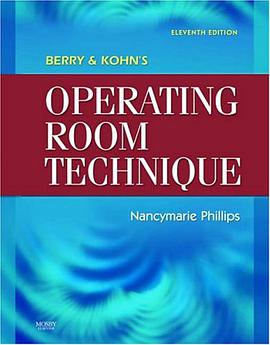
For 50 years, Berry & Kohn's Operating Room Technique has been the text of choice for understanding basic surgical principles and techniques. Berry & Kohn's enjoys continued success in both educational and professional markets because of its readability, accuracy, clarity, and comprehensiveness. It covers the "nuts and bolts" of surgical techniques in a step-by-step format that enables learners to effectively apply basic principles to clinical practice. The eleventh edition features an engaging full-color design, a new chapter on spinal surgery, new Patient and Team Safety boxes, unique perioperative flash cards, expanded teaching supplements for instructors, and much more.
Prepares the nurse for actual OR situations with point-by-point descriptions of perioperative settings, procedures, and technology. Explains both the fundamentals of surgical techniques and today's most commonly performed procedures in terms that can readily be translated into to clinical practice. Focuses on the physiologic, psychologic, and spiritual considerations of perioperative patients to provide learners with a knowledge base for planning and implementing comprehensive, individualized care. Features in-depth discussions of patients with special needs related to age or health status considerations, with an emphasis on developing plans of care tailored to the unique care parameters of all patients. Reflects a focus on professionalism, skilled teamwork, and start-to-finish cooperation among perioperative caregivers aimed at improving patient outcomes. Discusses perioperative patient care for both inpatient and ambulatory procedures to highlight considerations based on the setting as well as the surgical procedure itself. Provides detailed information about the fundamentals of perioperative nursing and surgical technology roles.
Attractive and engaging full-color internal design and approximately 380 full-color illustrations depict key perioperative principles and surgical anatomy, techniques, and instrumentation. Two-sided perioperative flash cards incorporate images from the book to help students learn concepts such as positioning, dissection, incisions, and sutures. These are provided on perforated card stock in the front of the text. A new chapter on Spinal Surgery expands upon the important subspecialty of neurosurgery. Enhanced chapter opener pedagogy previews the concepts and techniques covered in the chapter: Chapter Objectives Chapter Outline (new) Key Terms and Definitions (new) List of Supplemental Material on Evolve website (new) A comprehensive and alphabetical glossary of key terms and definitions is provided on Evolve. Bioterriorism considerations are discussed in the Decontamination and Disinfection chapter. The expanded Legal and Ethical Issues chapter discusses the concept of "time outs," HIPAA privacy regulations, and the role of the Investigational Review Board for investigational studies. Patient and team safety features cover topics such as radiation safety, latex sensitivity, patient temperature regulation, medication administration, skin protection, powered devices, and endoscopic considerations. The Ambulatory Surgery Centers chapter has been expanded to cover additional alternative site surgeries, including mobile hospitals for the military. The chapter on Potential Sources of Injury to the Caregiver and the Patient covers chemical, physical, and biological sources of injury. Robotics are be discussed in the Endoscopic Surgery chapter. Surgical pharmacology content has been expanded and thoroughly updated, including new content on blood products. The Implants and Wound Site Closure chapter features a general overview of implants, including the categorizing, handling, storing, documenting of various types of implants (biologic, synthetics, etc.). The General Surgery chapter now includes a discussion of the trauma patient. In the index, page numbers are bold where the key terms are defined in the text.
作者简介
目录信息
读后感
用户评价
**第三段** 这本书的叙事风格带着一种沉稳而又略显严肃的英式严谨感,读起来有一种穿越时空的厚重感。它不像某些现代手册那样追求花哨的视觉效果,而是坚持用最直接、最无可辩驳的文字来阐述手术的“正道”。在讨论手术室布局和物流管理时,作者展现出了对效率和安全之间微妙关系的深刻洞察。书中关于感染控制策略的部分,追溯了许多经典外科原则的起源,这使得读者在执行标准流程时,不仅仅是机械地模仿,更能理解这些规范背后蕴含的医学哲学。尽管信息密度极大,但作者在关键操作点上总会使用加粗或斜体来做强调,像是在耳边低语提醒你“这是重点,不可松懈”,这种潜移默化的引导方式,非常适合那些追求卓越、不满足于“差不多”的专业人士。
**第一段** 这本书的章节组织简直是教科书级别的典范。从麻醉的准备工作到术后的恢复护理,每一个环节都处理得井井有条,逻辑性极强。特别是关于无菌技术和器械准备的部分,作者的描述细致入微,即便是初入手术室的新手,也能通过这些详尽的步骤指南迅速掌握要领。我特别欣赏它在复杂手术流程图示上的处理,那些流程图清晰地勾勒出了手术的每一步关键节点,让人在阅读时心中能对整个手术的走向有一个宏观的把握,而不是仅仅停留在零散的操作细节中。这本书的排版设计也十分人性化,专业术语的标注清晰明确,注释部分提供了丰富的背景信息,极大地提升了学习的效率和深度。它不仅仅是一本工具书,更像是一位经验丰富的手术室护士长在手把手地指导你完成工作,处处体现着对患者安全和手术精准度的极致追求。
**第五段** 对于那些寻求更高阶学习和研究的资深从业者而言,这本书的价值也绝不容低估。它并非止步于基础技术的罗列,而是深入探讨了不同手术技术流派之间的微妙差异,以及这些差异在特定病人群体中的适用性。书中对新型设备和微创技术的更新速度虽然比不上每年出版的快讯,但它对核心原理的剖析却是永恒的。特别是它对术中体液平衡和电解质管理的讨论,结合了最新的生理学研究成果,将其无缝嵌入到具体的手术操作流程中,使得技术不再是孤立的步骤,而是与病理生理学紧密结合的整体。阅读这本书,需要耐心和时间,因为它要求你不仅仅是记住操作,更要理解操作背后的“为什么”。对于想要撰写规范性文件或进行手术流程优化的专家来说,这本书提供的坚实理论框架,是构建自己专业体系的绝佳起点。
**第四段** 我强烈推荐给所有刚刚进入外科技术领域或者正在准备专业认证的同行们。它提供了一个极为扎实的知识基石,让你在面对真实的手术环境时,不会感到手足无措。我个人特别喜欢它对“团队协作”这一主题的处理,它不仅仅将外科医生、麻醉师和手术室技术人员视为独立个体,而是将其视为一个紧密咬合的机械系统来描绘。书中对角色职责的界定清晰到近乎苛刻的程度,这在多元文化背景的手术室中尤其宝贵,能够有效减少沟通障碍和职责不清带来的混乱。阅读这本书的过程,就像是进行了一次为期数月的、高强度的“虚拟实习”,它教会你的不仅是如何做手术,更是如何成为一个真正可靠的外科团队成员。其详尽的步骤分解,甚至细化到了体位摆放时需要注意的皮肤张力和神经压迫的预防措施,这种对细节的执着令人肃然起敬。
**第二段** 作为一本专注于手术室技术的参考资料,它的理论深度和实践指导性达到了一个令人惊叹的平衡点。我发现它在处理一些罕见或高风险并发症的预案部分尤其出色,提供的应对策略并非空泛的建议,而是基于大量临床实践总结出的具体行动指南。例如,在处理突发性大出血时的气道管理和输血流程,作者用近乎冷静的笔触描绘了紧张局境下的标准化应对措施,这对于培养手术室人员的临场应变能力至关重要。此外,书中对不同类型手术器械的维护和功能介绍也极其详尽,每一个吻合器、每一个持针器在书中的描述都仿佛触手可及,让人在使用时能更加了如指掌,从而最大限度地减少因器械误用带来的风险。这绝非一本可以随意翻阅的书籍,它需要你带着问题和敬畏之心去研读,每一次重读都会有新的体会。