

具體描述
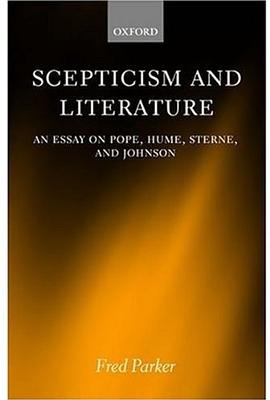
'The more we enquire, the less we can resolve,' wrote Johnson. Scepticism-a reasoned emphasis on the severe limitations of rationality-would seem to undermine the grounds of belief and action. But in some of the best eighteenth-century literature, a theoretically paralysing critique of the pretensions of reason, precept, and language went hand in hand with a vigorous intellectual, moral, and linguistic confidence. To realise philosophical scepticism as literature was effectively to transform it. Dr Parker traces the presence of this life-giving irony in works by Pope, Hume, Sterne, and Johnson, relates it more broadly to the social self-consciousness of eighteenth-century culture, and discusses its source in Locke and its inspiration in Montaigne. The argument serves as a reminder that radical scepticism is not the invention of the late twentieth century, and that its strategies and implications have never been more interestingly explored than in the eighteenth.
作者簡介
目錄資訊
讀後感
用戶評價
相關圖書












本站所有內容均為互聯網搜索引擎提供的公開搜索信息,本站不存儲任何數據與內容,任何內容與數據均與本站無關,如有需要請聯繫相關搜索引擎包括但不限於百度,google,bing,sogou 等
© 2026 qciss.net All Rights Reserved. 小哈圖書下載中心 版权所有