具体描述
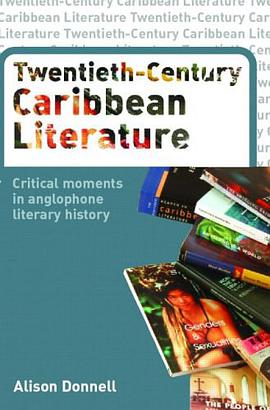
This bold study traces the processes by which a 'history' and canon of Caribbean literature and criticism have been constructed. It offers a supplement to that history by presenting new writers, texts and critical moments that help to reconfigure the Caribbean tradition. Focusing on Anglophone or Anglocreole writings from across the twentieth century, Alison Donnell asks what it is that we read when we approach 'Caribbean Literature', how it is that we read it and what critical, ideological and historical pressures may have influenced our choices and approaches. In particular, the book: addresses the exclusions that have resulted from the construction of a Caribbean canon; rethinks the dominant paradigms of Caribbean literary criticism, which have brought issues of anti-colonialism and nationalism, migration and diaspora, 'double-colonised' women, and the marginalization of sexuality and homosexuality to the foreground; and seeks to put new issues and writings into critical circulation by exploring lesser-known authors and texts, including Indian Caribbean women's writings and Caribbean queer writings. Identifying alternative critical approaches and critical moments, "Twentieth-Century Caribbean Literature" allows us to re-examine the way in which we read not only Caribbean writings, but also the literary history and criticism that surround them.
Twentieth-Century Caribbean Literature: A Voyage Through Shifting Sands and Resilient Voices The Caribbean, a mosaic of islands scattered across azure waters, has long been a crucible of vibrant cultures and compelling narratives. The literature that has emerged from this region in the twentieth century stands as a testament to its complex history, its profound joys, and its enduring struggles. Twentieth-Century Caribbean Literature offers an in-depth exploration of this rich literary landscape, tracing the evolution of themes, styles, and voices that have shaped the region's self-perception and its place in the global consciousness. This comprehensive study delves into the heart of Caribbean identity, examining how writers have grappled with legacies of colonialism, the enduring impact of slavery, the complexities of diaspora, and the constant negotiation of nationhood and belonging in a world perpetually in flux. From the early rumblings of post-emancipation societies to the burgeoning nationalisms of the mid-century and the subsequent waves of migration and globalization, Caribbean literature has served as a powerful mirror and a critical lens. It has documented the everyday lives of ordinary people – the resilience of peasant farmers, the vibrant rhythms of market women, the dreams of those yearning for a better life. Simultaneously, it has confronted the stark realities of economic exploitation, political instability, and the lingering psychological scars of historical trauma. The ensuing narratives are not monolithic; they are characterized by a remarkable diversity of perspectives, reflecting the varied colonial histories of different islands (British, French, Spanish, Dutch), the influence of indigenous traditions, and the continuous infusion of African, Indian, Chinese, and other global influences. One of the central currents running through twentieth-century Caribbean literature is the quest for identity in the wake of colonial disruption. Writers have meticulously deconstructed the imposed narratives of their colonizers, seeking to reclaim and redefine their own histories and languages. This has often involved a conscious effort to interrogate the very concept of "Caribbean," recognizing the inherent artificiality of colonial boundaries and the shared yet distinct experiences across the archipelago. The legacy of the plantation system, with its brutal hierarchies and dehumanizing practices, continues to cast a long shadow, prompting writers to explore themes of race, class, and power with unflinching honesty. The trauma of slavery, the lingering specter of its violence and its psychological impact, is a recurring motif, prompting deep introspection on inherited pain and the arduous process of healing and reconciliation. Furthermore, the phenomenon of migration, both within and beyond the Caribbean, has profoundly shaped its literary output. As individuals have moved between islands and journeyed to metropoles like London, New York, and Paris, their experiences have enriched and complicated the literary tapestry. Diaspora literature, in particular, has become a crucial sub-genre, exploring the bittersweet realities of living between worlds, the nostalgia for a homeland often idealized, and the challenges of forging new identities in unfamiliar territories. These narratives often highlight the persistent pull of ancestry and tradition, even as they embrace the transformative power of new environments. The longing for home, the fragmented memories of childhood, and the search for community among fellow expatriates are powerfully rendered, offering poignant insights into the human condition of displacement. The influence of oral traditions and folklore is another defining characteristic of much twentieth-century Caribbean literature. The rhythms of calypso, the storytelling traditions of griots, and the spiritual beliefs that have been preserved and adapted across generations have all found their way into the written word. This imbues many Caribbean texts with a musicality, a vibrant immediacy, and a rich symbolism that distinguishes them from literatures rooted in different traditions. The spoken word, with its emphasis on performance and communal engagement, informs the narrative voice, creating a sense of intimacy and direct address with the reader. Mythological elements, ancestral spirits, and folk beliefs are often woven into contemporary narratives, lending them a depth and a connection to the ancestral past that transcends mere historical retelling. The study also critically examines the evolution of literary genres and stylistic innovations. While early twentieth-century writing often adopted established European forms, the latter half of the century witnessed a surge of experimentation and the development of uniquely Caribbean literary aesthetics. The magic realism that permeates much Latin American literature finds its echo in Caribbean narratives, where the extraordinary often coexists seamlessly with the ordinary, reflecting a worldview where the spiritual and the material are inextricably linked. The playful subversion of language, the incorporation of creole dialects, and the bold reimagining of narrative structures are all indicative of a literature that is both deeply rooted in its context and audaciously modern. The experimentation with point of view, the fragmentation of narratives, and the deliberate challenging of linear temporality are further testament to the creative energy and intellectual rigor of Caribbean writers. Beyond thematic and stylistic analysis, Twentieth-Century Caribbean Literature also pays close attention to the socio-political contexts in which these works were produced and received. The rise of independent nations, the political upheavals of the Cold War era, and the ongoing struggles for economic justice have all influenced the concerns and the messages embedded within literary texts. Writers have often served as cultural commentators, activists, and conscience keepers, using their craft to critique societal ills, to advocate for social change, and to foster a sense of collective identity and purpose. The interplay between literature and politics is a dynamic one, with writers responding to and shaping the discourse surrounding national development, decolonization, and the pursuit of equitable societies. The canon itself is a subject of ongoing critical engagement. This study acknowledges the historical marginalization of many Caribbean voices, particularly those of women and writers from less prominent islands, and seeks to broaden our understanding of the literary landscape. It highlights the vital contributions of seminal figures whose works have become cornerstones of Caribbean literary heritage, while also bringing to the fore emerging talents and underappreciated gems. The notion of a singular "Caribbean literature" is challenged, giving way to an appreciation of the rich diversity of national literatures within the broader regional context, each with its unique historical trajectory and stylistic inclinations. The ongoing debates surrounding canon formation, the politics of literary recognition, and the ways in which certain voices have been amplified while others have been silenced are essential to a nuanced understanding of this literary tradition. Ultimately, Twentieth-Century Caribbean Literature is more than just an academic study; it is an invitation to embark on a profound literary journey. It offers readers the opportunity to engage with narratives that are as diverse and captivating as the region itself. Through the powerful and evocative prose of Caribbean writers, we gain a deeper appreciation for the human spirit's capacity for resilience, for creativity, and for the enduring quest for meaning and belonging in a world that is constantly being reshaped. The book illuminates how these writers, often in the face of immense adversity, have created a body of work that is not only essential for understanding the Caribbean but also offers profound insights into universal human experiences of love, loss, struggle, and hope. It underscores the vital role of literature in preserving memory, forging identity, and imagining futures, solidifying the Caribbean's place as a vital and dynamic contributor to the global literary conversation.