
具体描述
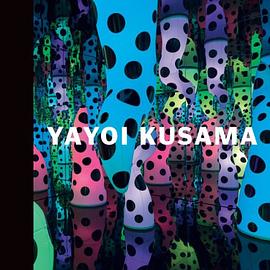
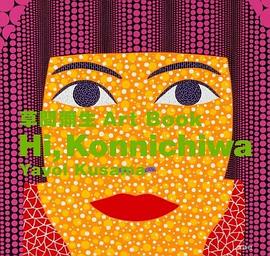
Japanese painter, sculptor, writer, installation and performance artist Yayoi Kusama has been in the vanguard of contemporary art for sixty years. Best known for her use of patterns of dots (which she claims evolved from the hallucinations she's had since childhood), Kusama, now 84 years old, is finally getting the international recognition she deserves.
Hi, Konnichiwa brings together Kusama's vivid imagery and haunting words with photos of the artist at work and at various stages in her life. The pieces are mostly from recent years (2000-2012), although there are some that go back as far as the 1950s. Here are Kusama's large-scale canvases, environmental sculptures, multi-media installations, and numerous self-portraits. Here, too, are photos of the artist at ten years old, and as a young woman in Tokyo and then New York, often wearing outrageous clothes of her own design. And we see Yayoi Kusama in recent years, working in her studio in Tokyo - minus the garish make-up and red wig. The book is a chronicle of her creative endeavors and of her life, offering a glimpse into the fevered imagination of this very complicated and fascinating woman.
Yayoi Kusama was born in 1929 in Japan, and from an early age, suffered from hallucinations, which she maintains inspired the visual language she continues to use today. At art school in Kyoto, she first began to experiment with the subversive themes that became her trademark. After leaving school, Kusama had a period of intense productivity, and by 1955, was gaining prominence as an artist in Japan.
In 1958, Yayoi Kusama moved to New York, where she was one of the pioneers of the Pop Art and performance art movements. She became a darling of the media, promoting free sex and anti-war activism. She started Kusama Fashion Company, which was quite successful -- her clothes sold in hundreds of stores including Bloomingdales
By the 1970s, the earlier energy and excitement of the New York art scene had subsided. In 1973, Kusama went back to Japan, and in 1977, took up residence in a psychiatric hospital, where she still lives. She built a large studio nearby and continues to work there.
While she certainly didn't fade into obscurity, Yayoi Kusama moved out of the spotlight. The last few years, however, have seen renewed interest in her work. In 2008, Christie's sold a painting for $5.1 million, then a record for a living female artist. A major retrospective opened at the Whitney Museum in New York in Summer 2013; and at the same she Kusama collaborated with Marc Jacobs for Louis Vuitton collection featuring her polka dots. Kusama recently signed with a new gallery in New York, and a solo show is planned for Fall 2013.
作者简介
Yayoi Kusama was born in 1929 to an upper-middle-class merchant family living in Matsumoto, about 100 miles northwest of Tokyo. Her childhood was difficult: her parents' marriage was troubled , and Kusama began suffering from hallucinations and suicidal thoughts at an early age. She says that her art has been both a manifestation of her turbulent mental state, and a cathartic act. In the early 1950s, after briefly attending art school, Kusama moved to Tokyo, where she had several solo exhibitions of her paintings. In 1957, she moved to the U.S., settling in New York City. Here, she became actively involved in the New York avant-garde and Pop Art movements. In addition to her paintings and large soft sculptures, she organized "Happenings," often involving naked people painted with polka-dots and staged as anti-Vietnam War protests. She established the Kusama Fashion Company, which produced a line of outrageous clothing, which she often wore at events. Kusama moved back to Japan in 1973 and checked herself into a mental hospital, where she continues to live. She works from a nearby studio and produces paintings, sculptures, and installations -- still incorporating her polka-dot patterns into the pieces. She's also published a book of poems and a number of novels. In 1968, she produced and starred in the film Kusama's Self-Obliteration, which went on to win several interational awards. In 1991, Kusama had the featured role in the movie Tokyo Decadence, written and directed by Ryu Murakami; and in 1993, she collaborated with British musician Peter Gabriel on an installation in Yokohama. Another documentary entitled Kusama, Princess of Polka Dots is in progress.
目录信息
读后感
用户评价
这本书的艺术气息浓厚得让人几乎可以闻到纸张上散发出的墨香。我一直认为,好的文学作品应该具备一种超越故事本身的审美价值,而此书正是如此。作者在描述环境景物时,那种对光影、色彩、声音的捕捉,简直可以用“诗意”来形容。读到某些段落,我甚至会情不自禁地停下来,反复琢磨那个措辞,感叹于作者如何能用如此朴素的词语,描绘出如此绚烂的景象。更值得一提的是,它对“边缘人物”的关注,那些在主流叙事中常常被忽略的声音,在这里得到了充分的展现和尊重。这些配角的命运线索,虽然不是主线,却为整个故事增添了厚重的历史感和人文关怀。它不是那种快餐式的娱乐读物,它需要你投入时间、情感和思考,就像对待一幅需要驻足细品的油画。读完后,我感觉自己的精神世界被拓宽了,对于生活中的一些小小细节,也多了一层温柔的理解和包容。
这是一次非常酣畅淋漓的阅读体验,它就像一场精心编排的交响乐,从宁静的序曲到激昂的高潮,再到悠远的尾声,每一个音符都恰到好处。我特别欣赏作者在处理冲突时所展现出的克制。很多作家会倾向于将矛盾升级到白热化,但这本书的高明之处在于,很多重要的冲突都是在平静的表面下暗流涌动的,那种“山雨欲来风满楼”的紧张感,比直接的争吵更具穿透力。这本书在节奏把控上达到了大师级别的水准,你知道故事会走向何方,但你完全猜不到作者会用怎样的方式让你抵达终点。此外,书中对特定历史时期或地域文化的描绘,也显示出作者扎实的研究功底,那种真实感,让人感觉仿佛进行了一次微型的文化考察。它不是简单的消遣,它更像是一次精神上的洗礼,让你在享受故事的同时,也吸收了知识,提升了认知。我毫不犹豫地会向所有追求深度阅读的同好推荐它。
这本新近读到的力作,简直让人放下了就再也舍不得撒手!作者的叙事功力着实令人惊叹,仿佛拥有一种魔力,能将读者轻而易举地拽入故事的核心。开篇的情节铺陈极其细腻,每一个场景的描绘都充满了画面感,让人如同身临其境。我尤其欣赏作者在刻画人物内心挣扎时的那种入木三分。那些细微的情绪波动,那些不为人知的隐秘心事,都被他捕捉得恰到好处,使得书中的角色鲜活得仿佛就是我们身边真实的某个人。随着故事的推进,情节的张力也逐渐增强,每一次转折都出乎意料却又在情理之中,让人忍不住屏息凝神,渴望知道接下来会发生什么。而且,这本书的语言风格也值得称道,它并非那种华丽辞藻堆砌的文字,而是带着一种沉淀下来的力量感,简洁有力,直击人心。它探讨的主题宏大而深刻,却又巧妙地融入日常生活的琐碎细节之中,让那些哲学性的思考变得触手可及。读完合上书的那一刻,心中久久不能平静,它留下来的回味,比任何一杯醇厚的陈酿都要令人沉醉。
说实话,我很少对一本书产生如此强烈的“沉浸感”。这本书的结构设计得非常精巧,像一个多层次的迷宫,每深入一层都会发现新的线索和更复杂的意义。作者在时间线的处理上玩出了新花样,时而跳跃,时而回溯,但却始终保持着清晰的逻辑主线,这对于读者来说是个不小的挑战,但也正是这种挑战性,极大地提升了阅读的乐趣。我特别喜欢那种“啊哈!”的瞬间,当几个看似无关的片段突然联系起来,真相大白的那一刻,成就感无与伦比。这本书不仅仅是在讲一个故事,它更像是在搭建一个完整的世界观,里面的社会规则、人际关系的微妙平衡,都构建得极其真实可信。书中的对话尤其精彩,充满了潜台词和言外之意,你必须非常专注地去捕捉那些没有被说出口的部分,才能真正理解角色的动机。这种需要动脑筋去解读的阅读体验,对我来说,比那种平铺直叙的故事要高明得多。它迫使我的思维高速运转,至今我还在回味那些留给读者的“空白”部分。
坦率地说,初读时我曾有些许担忧,担心作者会陷入某种刻板的模式,但我完全错了。这本书的创新之处在于它对“界限”的模糊处理。它不局限于某一种文体,你在其中能看到历史小说的影子,也能感受到悬疑的脉搏,甚至还能瞥见魔幻现实主义的一角。这种跨界的融合处理得非常流畅自然,没有丝毫的生硬拼凑感。最让我感到震撼的是作者对“道德困境”的探讨。书中人物做的每一个选择,都没有绝对的对错,只有在特定情境下的“必然”。这种对人性的复杂性和灰色地带的深入挖掘,让人在评判角色时感到无比艰难,同时也引发了我对自己过往判断的深刻反思。它成功地将一个看似简单的故事,打磨成了一块棱镜,折射出人性的多面性。这本书的后劲十足,它不是那种读完就忘的作品,它会在你日常生活中不经意间跳出来,提醒你曾经思考过的那些深刻命题。
youth, carrying with it both death and life, creeps up on you soundlessly from behind
蓬皮杜中心的图书馆
Japan Town,幾分鐘之內沒遇到大野智,就想到了奈良美智和她。
蓬皮杜中心的图书馆
Japan Town,幾分鐘之內沒遇到大野智,就想到了奈良美智和她。