
具体描述
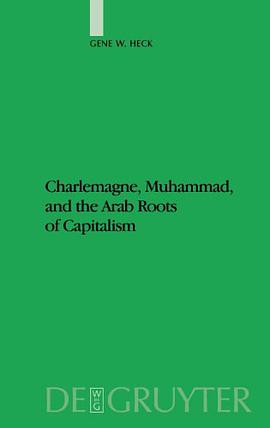
Presented in six principal analytic chapters with supporting appendices, this book explores the role of Islam in precipitating Europe’s twelfth century commercial renaissance. Employing the classic analytic techniques of economics, Gene Heck determines that medieval Europe’s feudal interregnum was largely caused by indigenous governmental business regulation and not by shifts in international trade patterns. He then proceeds by demonstrating how Islamic economic precepts provided the ideological rationales that empowered medieval Europe to escape its three-centuries-long experiment in “Dark Age economics” ― in the process, providing the West with its archetypic tools of capitalism. While treatises such as Maxime Rodinson’s excellent book, Islam and Capitalism, document the capitalistic nature of the Islamic economic system, in applying modern economic method to medieval orientalist historiography, this work is unique in capturing both the evolution and the impact of the system’s role in forging medieval history.
作者简介
目录信息
Table of Contents
Introduction
Part I: The Christian Decline
Chapter 1 Medieval Christian Europe in Stasis
Part II: The Islamic Ascendency
Chapter 2 The Muslims’ Medieval “Trade Explosion”
Chapter 3 Islamic “Free Market” Doctrine Pragmatically Applied
Chapter 4 The Fruition of “Commercial Capitalism” in Fātimid Egypt
Part III: Islam and the Christian Revival
Chapter 5 Imperatives of Trade and the Transformation of Europe
Chapter 6 Medieval Europe´s Transformation: “The Triumph Of Ideas”
Backmatter
· · · · · · (收起)