
具体描述
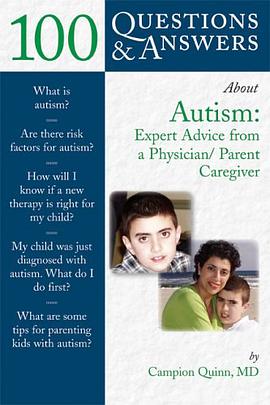
100 Questions & Answers About Autism: Expert Advice from a Physician/Parent Caregiver focuses on issues of critical importance to those who love and care for autistic children and adults. This book gives you authoritative, practical answers to the most common questions about autism, including causes, diagnosis, treatment options, sources of support, and much more. Written by a physician who is the parent of an autistic child, this text combines the author's medical knowledge, extensive research, and personal experience. The text is supplemented with thoughts and comments from other parents of autistic children, making this an invaluable resource for all loved ones of people coping with the physical and emotional turmoil of autism.
作者简介
目录信息
Part 1: The Basics 5
Questions 1–12 provide background information for understanding autism, covering
such topics as:
■
What is autism?
■
What is the prognosis for children with autism?
Part 2: Diagnosing Autism
37
Questions 13–21 describe the symptoms of autism and discuss how autism is
diagnosed:
■
Are there risk factors for autism?
■
What are some symptoms a parent should look for?
■
How do doctors diagnose autism?
Part 3: Autism Crisis
63
Questions 22–27 address the controversy over the reported rising incidence rate of
autism, as well as the roles of vaccines and mercury:
■
What have studies found regarding vaccinations and autism?
■
What should a parent do about childhood immunizations?
■
Is mercury exposure dangerous?
Part 4: Autism Therapies and Treatments
81
Questions 28–35 describe the types of treatments available for autism and address the
challenges of evaluating treatment options:
■
How will I know if a new therapy is right for my child?
■
Are there therapies besides ABA that are useful?
Part 5: Medication and the Treatment of Autism
99
Questions 36–43 cover common symptoms, side effects, and complications of autism
and its treatment:
■
Are medications useful in treating the behavioral problems of autistic children?
■
What types of medications are used to treat autistic children?
■
How are anxiety and depression treated in an autistic person?
Part 6: Alternative Treatment for Autism
115
Questions 44–50 discuss complementary and alternative treatments for autism:
■
Is there any harm in trying unproven treatments on my child?
■
Are dietary interventions helpful to autistic children?
Part 7: State and Federal Entitlement Programs
131
Questions 51–59 address entitlement programs for disabled children:
■
What is SSI?
■
How does the government decide if a child is disabled?
■
What health care services are available to my child?
Part 8: Caring for Your Child After You’re Gone
147
Questions 60–69 discuss wills, trusts, and guardianship:
■
What is a will?
■
What is a special needs trust?
■
What is guardianship?
Part 9: Education of Autistic Children
161
Questions 70–79 discuss educational resources available for autistic children:
■
What is the Individuals with Disabilities Education Act?
■
What is special education?
■
How do I choose the best special education program for my child?
Part 10: Living with Autism
183
Questions 80–94 address the challenges of daily life with an autistic child:
■
What are some tips for parenting kids with autism?
■
How can I help my other children form a relationship with their autistic sibling?
■
How do I make my home safe for my autistic child?
Part 11: Stress
219
Questions 95–99 discuss coping with the stress of autism:
■
What are some ways that parents can reduce their stress?
■
What can I do about my children’s stress?
Appendix
233
Question 100 is a list of web sites, organizations, and literature to help families
of autistic people find additional resources on general and specific topics related
to autism.
Glossary
Index
· · · · · · (收起)
读后感
用户评价
虽然是多年前的书,但问题本身并不落后。 和同事粗略译完了整本。
虽然是多年前的书,但问题本身并不落后。 和同事粗略译完了整本。
虽然是多年前的书,但问题本身并不落后。 和同事粗略译完了整本。
虽然是多年前的书,但问题本身并不落后。 和同事粗略译完了整本。
虽然是多年前的书,但问题本身并不落后。 和同事粗略译完了整本。