具体描述
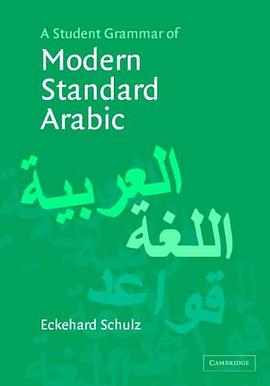
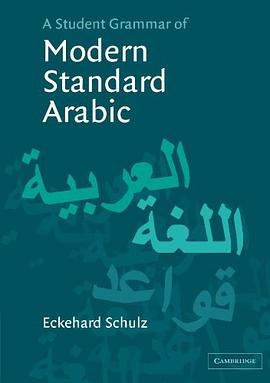
A Reference Grammar of Modern Standard Arabic is a comprehensive handbook on the structure of Arabic. Keeping technical terminology to a minimum, it provides a detailed yet accessible overview of Modern Standard Arabic in which the essential aspects of its phonology, morphology and syntax can be readily looked up and understood. Accompanied by extensive carefully-chosen examples, it will prove invaluable as a practical guide for supporting students' textbooks, classroom work or self-study, and will also be a useful resource for scholars and professionals wishing to develop an understanding of the key features of the language. Grammar notes are numbered for ease of reference, and a section is included on how to use an Arabic dictionary, as well as helpful glossaries of Arabic and English linguistic terms and a useful bibliography. Clearly structured and systematically organised, this book is set to become the standard guide to the grammar of contemporary Arabic.
A Comprehensive Guide to Contemporary Arabic Linguistics This volume delves into the intricate structures and nuances of Modern Standard Arabic (MSA), offering a detailed exploration of its grammatical framework. It serves as an invaluable resource for students, scholars, and anyone seeking a profound understanding of how this dynamic language functions. Phonetics and Phonology: The Soundscape of MSA The journey begins with an in-depth examination of the phonetic and phonological systems that underpin MSA. We meticulously analyze the distinctive sounds of Arabic, including the emphatic consonants and guttural sounds that are characteristic of the language, and their precise articulation. The chapter elucidates the phonemic inventory of MSA, differentiating between sounds that carry distinct meanings. Furthermore, it explores the rules of phonological assimilation and dissimilation, demonstrating how sounds interact and change in connected speech. The concept of prosody, including stress and intonation patterns, is also discussed, highlighting their role in conveying meaning and emphasis within sentences. The intricate relationship between written diacritics and pronunciation is also addressed, offering clarity on how to accurately pronounce words based on their written form. Morphology: Building the Blocks of Meaning Moving beyond the sounds, the book systematically dissects the morphological structures of MSA. It provides a thorough treatment of root-and-pattern morphology, the cornerstone of Arabic word formation. The three-consonant root system is explained in detail, illustrating how various verbal and nominal forms are derived from these roots. The chapter categorizes and analyzes different patterns (awzān) for verbs, explaining their semantic implications and grammatical functions. Similarly, the derivation of nouns, adjectives, and other word classes from roots is meticulously outlined. The complexities of grammatical gender, number, and definiteness for nouns and adjectives are thoroughly explored, along with the mechanisms of affixation and inflection that mark these categories. The formation of diminutives, augmentatives, and other derived nominal forms also receives careful attention, revealing the expressive power of Arabic morphology. Syntax: Weaving Sentences into Meaningful Discourse The core of this work lies in its extensive exploration of MSA syntax. The book meticulously details the fundamental sentence structures, beginning with nominal sentences (jumla ismiyya) and verbal sentences (jumla fi'liyya). The roles and positions of subject, predicate, direct and indirect objects, and adverbials within these structures are clearly delineated. The chapter delves into the intricacies of verb conjugation and agreement, covering tense, aspect, mood, and voice. The formation and function of various types of clauses, including relative clauses, conditional clauses, and subordinate clauses, are thoroughly explained with numerous illustrative examples. The use of prepositions and their impact on sentence meaning is also analyzed, along with the syntax of negation and interrogation. The book further investigates more advanced syntactic phenomena, such as ellipsis, topicalization, and clefting, demonstrating how speakers manipulate word order and structure to achieve specific rhetorical effects and emphasize particular elements of a sentence. The principles of coordination and subordination are explored, illustrating how simple and complex sentences are constructed. Semantics and Pragmatics: Unveiling Deeper Meanings Beyond the grammatical rules, this volume also explores the semantic and pragmatic dimensions of MSA. It examines the principles of lexical semantics, including polysemy, synonymy, and antonymy, and how these relationships influence word meaning. The book discusses the semantic roles of arguments in sentences and the underlying conceptual structures that inform meaning. Furthermore, it delves into the realm of pragmatics, investigating how context influences interpretation and how language is used in real-world communication. The chapter explores speech acts, implicature, and the role of politeness in Arabic discourse. The nuances of register and style in MSA are also considered, highlighting how language use varies across different social contexts and communicative purposes. The book also touches upon the metaphorical and idiomatic expressions that enrich the language, providing insights into the cultural underpinnings of MSA. Lexicon and Vocabulary Development: A Rich Tapestry of Words A dedicated section of the book focuses on the Arabic lexicon, tracing the origins and evolution of key vocabulary. It explores the process of neologism and the adoption of loanwords in contemporary Arabic. The book provides an overview of common thematic vocabulary sets and discusses strategies for vocabulary acquisition and retention for learners. The interplay between morphology and semantics in shaping word meaning is further elaborated within this section. Style and Register: Adapting Language to Context The final chapters of this comprehensive guide examine the stylistic variations and registers of Modern Standard Arabic. It explores the differences in language use between formal writing, journalistic prose, academic discourse, and public speaking. The book analyzes the stylistic features that distinguish these registers and provides guidance on how to adapt one's language use appropriately. The impact of cultural norms and social conventions on linguistic choices is also considered, offering a holistic perspective on the effective and appropriate use of MSA. The book concludes by emphasizing the dynamic nature of MSA and its continued evolution in response to global and local influences.